The Truth About Sports Recovery | Christie Aschwanden
Chris Williamson (host), Christie Aschwanden (guest)
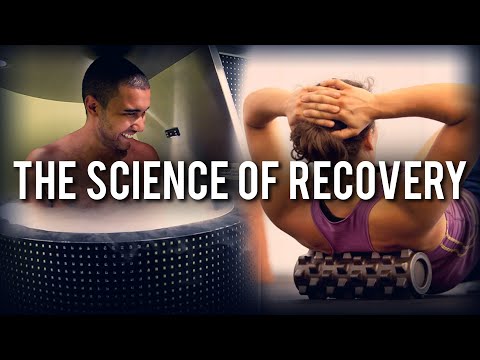
In this episode of Modern Wisdom, featuring Chris Williamson and Christie Aschwanden, The Truth About Sports Recovery | Christie Aschwanden explores debunking Recovery Myths: Sleep, Stress, Placebos, and Real Gains Christie Aschwanden discusses the science of exercise recovery, contrasting traditional rest with today’s booming market of recovery gadgets, spas, and protocols.
Debunking Recovery Myths: Sleep, Stress, Placebos, and Real Gains
Christie Aschwanden discusses the science of exercise recovery, contrasting traditional rest with today’s booming market of recovery gadgets, spas, and protocols.
She explains that the real foundations of recovery are simple but often neglected: adequate sleep, managing overall life stress, and sensible nutrition, while many high-tech tools offer marginal or mainly placebo-driven benefits.
Subjective perception turns out to be a powerful metric: how you feel, your mood, and desire to train are better indicators of recovery and overtraining than most physiological data points.
The conversation also explores placebos, extreme modalities like cryotherapy and IV drips, individual variation in recovery capacity, and the danger of obsessing over minor tactics instead of big fundamentals.
Key Takeaways
Prioritize sleep above all other recovery tools.
For athletes, sleep is the primary driver of adaptation and recovery; without sufficient, quality sleep (typically 7–8+ hours), most other interventions are largely irrelevant ‘icing’ on a missing cake.
Get the full analysis with uListen AI
Treat emotional and life stress as real training load.
The body responds similarly to physical and psychological stress, so work, relationship, or academic pressures can undermine recovery just like extra intervals; true rest days must also reduce life stress where possible.
Get the full analysis with uListen AI
Use subjective feelings as a key recovery metric.
Mood, desire to train, and general sense of fatigue often outperform blood markers and gadgets in predicting overtraining; feeling irritable, low, or chronically unmotivated is often your body saying, “Back off.”
Get the full analysis with uListen AI
Focus on total nutrition, not magic timing or products.
Carbohydrates and protein are important for recovery, especially with age and hard training, but the notion of a tiny post-workout ‘anabolic window’ is overstated—getting enough across the day matters far more than precise minutes.
Get the full analysis with uListen AI
Massage and foam rolling help mainly via relaxation, not ‘breaking tissue.’
Evidence doesn’t support claims about flushing lactic acid or mechanically fixing fascia; their main value appears to be activating the parasympathetic nervous system and facilitating deep relaxation—and that’s still useful if it makes you feel and function better.
Get the full analysis with uListen AI
Be skeptical of high-tech recovery modalities and grand claims.
Cryochambers, IV vitamin drips, oxygen cans, and similar tools lack strong evidence for meaningful performance or recovery benefits; any effects may be largely placebo plus the simple benefit of taking time to rest.
Get the full analysis with uListen AI
Don’t let recovery routines themselves become a source of stress.
If chasing rare foods, elaborate supplements, or complex routines raises anxiety, you may negate any small physiological benefit; simple, sustainable habits usually outperform fragile, high-maintenance protocols over time.
Get the full analysis with uListen AI
Notable Quotes
“Recovery is really about a return to readiness.”
— Christie Aschwanden
“The top 10 or top 20 things that work for recovery are sleep, sleep, sleep, sleep, sleep.”
— Christie Aschwanden
“Nothing really trumps just this qualitative measure of, how are you feeling?”
— Christie Aschwanden
“We’ve been sold this idea that everything has to be optimal, but our bodies are really, really good at adapting.”
— Christie Aschwanden
“If you’re one of those people, I hereby give you license to not foam roll.”
— Christie Aschwanden
Questions Answered in This Episode
How can an everyday athlete practically distinguish between healthy fatigue that requires pushing through and early signs of overtraining that demand rest?
Christie Aschwanden discusses the science of exercise recovery, contrasting traditional rest with today’s booming market of recovery gadgets, spas, and protocols.
Get the full analysis with uListen AI
If subjective feeling is such a powerful metric, how should athletes structure daily or weekly ‘check-ins’ to systematically track mood and readiness?
She explains that the real foundations of recovery are simple but often neglected: adequate sleep, managing overall life stress, and sensible nutrition, while many high-tech tools offer marginal or mainly placebo-driven benefits.
Get the full analysis with uListen AI
Where is the ethical line between using placebo-driven recovery tools for performance and misleading athletes or consumers about how they work?
Subjective perception turns out to be a powerful metric: how you feel, your mood, and desire to train are better indicators of recovery and overtraining than most physiological data points.
Get the full analysis with uListen AI
Given limited time and money, what would an evidence-based, minimalistic recovery routine look like for someone training 5–6 times per week?
The conversation also explores placebos, extreme modalities like cryotherapy and IV drips, individual variation in recovery capacity, and the danger of obsessing over minor tactics instead of big fundamentals.
Get the full analysis with uListen AI
How should coaches adjust training and recovery plans for athletes with naturally fast versus slow recovery profiles without creating perceptions of unfairness?
Get the full analysis with uListen AI
Transcript Preview
(wind blowing) Hello, friends. I'm finally back in the UK, and you will be delighted to hear that that means a return to the twice-a-week podcast publishing schedule, so let's get into it. This week, I'm sitting down with Christy Aschwanden, who is the author of Good to Go: What the Athlete in All of Us Can Learn from the Strange Science of Recovery. Now, one of my favorite episodes so far was with Alex Hutchinson on the limits of human performance, as he explained what he discovered during research for his book Endure. And today, we're going to look at everything on the opposite end of that spectrum. So, from fancy foam rollers to cryogenic therapy, saunas, sleep optimization, uh, those compression pant things, those weird compression pant things, and every other form of recovery that you can think of and you've seen athletes (laughs) using on Instagram, we're gonna go through them today. Christy has done a fantastic analysis of all of the different ways that people are trying to recover, and assessed just what sort of impact they're having. So, if you are an athlete, or you know one who is looking to improve their recovery, then today is absolutely for you. Please welcome Christy Aschwanden. (instrumental music) Christy Aschwanden, how are you today?
I'm great. Thanks for having me.
Thank you for coming on. So, what are we going to learn about today?
(laughs) Exercise recovery, all things that have to do with exercise recovery.
Okay. Recently, some of the guests will know there are a, a spot on the back of your book that Mr. Alex Hutchinson, the, uh, the man behind Endure is, uh, a, a big proponent, a big, big supporter of your book. And obviously, what he was talking about was a lot of the things to do within training, what's happening while you train, and, and the experiences that you go through during a session, and you're now talking about everything else, I guess.
Yeah, that's right. And I think that the two really make nice companion books. Um, his, his book is all about training self, whereas mine is about the recovery process and, and all of these adaptations and things that happen in between workouts.
Fantastic. So, where does the book begin?
Um, it actually begins at a place called Denver Sports Recovery, which is one of many, I like to think of them as recovery spas, that have popped up all around the US. I'm not sure actually, are, are these a thing in the UK as well?
I, I f- I'm gonna guess, is it one of those places where there's a cryo-chamber, and you can get an IV drip of s- of, uh, nutrients and stuff like that?
Yes.
Right.
Exactly.
No.
Exactly. (laughs)
We are, unfortunately, in the, in the UK, that's, uh, that's reserved for kind of elite level athletes. It's not the sort of thing ... You can go to a spa and have a massage and, and go in a hot tub, but there's, uh, that's probably about the top end, I think, of, uh, of what you can get in the UK, unfortunately.
Install uListen to search the full transcript and get AI-powered insights
Get Full TranscriptGet more from every podcast
AI summaries, searchable transcripts, and fact-checking. Free forever.
Add to Chrome