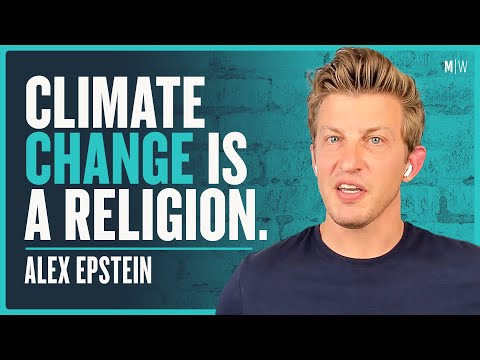
Does The World Need More Fossil Fuels, Not Less? - Alex Epstein
Alex Epstein (guest), Chris Williamson (host)
In this episode of Modern Wisdom, featuring Alex Epstein and Chris Williamson, Does The World Need More Fossil Fuels, Not Less? - Alex Epstein explores alex Epstein Argues Humanity Needs More Fossil Fuels, Not Less Alex Epstein contends that global energy shortages and rising prices are largely caused by deliberate suppression of fossil fuel investment driven by ESG, net-zero policies, and anti-fossil-fuel activism, rather than by market forces alone.
Alex Epstein Argues Humanity Needs More Fossil Fuels, Not Less
Alex Epstein contends that global energy shortages and rising prices are largely caused by deliberate suppression of fossil fuel investment driven by ESG, net-zero policies, and anti-fossil-fuel activism, rather than by market forces alone.
He argues that fossil fuels are uniquely capable of providing low-cost, reliable energy at scale and that billions of people still live in energy poverty, making rapid decarbonization both harmful and morally questionable.
Epstein’s core framework contrasts a “human flourishing” goal (maximizing human well-being) with what he calls an “anti-impact” or quasi-religious environmental ideology that seeks to minimize human impact on nature at any cost.
He claims climate risks and CO2 impacts are systematically exaggerated while the benefits of energy and climate mastery are ignored, pointing to a 98% decline in climate-related disaster deaths as evidence that more energy has made us safer, not more vulnerable.
Key Takeaways
Energy prices are high primarily because of long-term political and financial suppression of fossil fuel supply.
Epstein argues that net-zero agendas, ESG mandates, and anti-fossil-fuel policies discouraged investment in oil, gas, coal, and related infrastructure for over a decade, so when post-pandemic demand rebounded, constrained supply drove prices sharply upward.
Get the full analysis with uListen AI
Billions still live in severe energy poverty, making rapid fossil fuel elimination harmful.
He notes that around three billion people use less electricity than a typical American fridge, and a third of the world relies on wood and dung for cooking and heating; cutting off fossil fuels without a proven replacement risks worsening poverty, food insecurity, and mortality.
Get the full analysis with uListen AI
ESG and stakeholder capitalism often undermine shareholder value and energy security.
Epstein claims ESG embeds ideological goals—like mandated net-zero, board quotas, and anti-fossil-fuel norms—into corporate governance, amplified by index-fund giants (BlackRock, Vanguard, State Street) that wield huge proxy voting power, pushing companies into economically damaging commitments.
Get the full analysis with uListen AI
Solar and wind add cost and depend on reliable backup; they are not on track to replace fossil fuels.
Because wind and solar are intermittent, grids must still maintain nearly 100% backup from controllable sources (fossil, nuclear, hydro), leading to “infrastructure duplication” and higher prices; Epstein highlights that these technologies currently supply ~3% of global energy and rely heavily on mining and conventional power.
Get the full analysis with uListen AI
Climate risk should be evaluated by weighing both benefits and harms, including human climate mastery.
He argues that discussions fixate on CO2’s warming downsides and ignore its fertilization benefits and the role of abundant energy in irrigation, air conditioning, heating, warning systems, and infrastructure—all of which have contributed to a claimed 98% drop in climate-related deaths over the last century.
Get the full analysis with uListen AI
The dominant environmental narrative is, in his view, anti-human and quasi-religious.
Epstein says many activists and institutions implicitly treat “unimpacted nature” as sacred and human impact as sinful, leading to policies that prioritize emissions reduction over human well-being and frame climate events as moral punishment rather than practical management challenges.
Get the full analysis with uListen AI
A clear personal epistemic framework can help withstand social and reputational attacks.
He emphasizes separating reality from others’ beliefs, being willing to change one’s mind when shown to be wrong, and structuring one’s career to preserve intellectual independence—an approach he credits with helping him handle accusations, hostile media, and being out of step with mainstream opinion.
Get the full analysis with uListen AI
Notable Quotes
“The rate of climate-related disaster deaths is down 98% over the last century.”
— Alex Epstein
“We live in an energy-starved world from our perspective… six billion people use a level of energy that you and I would consider unacceptable.”
— Alex Epstein
“The idea of net zero is like saying, ‘Let’s have ten holocausts.’”
— Alex Epstein
“Our leaders ignore the benefits of fossil fuels and catastrophize the side effects.”
— Alex Epstein
“Most people are really poor and from your perspective live in an apocalypse.”
— Alex Epstein
Questions Answered in This Episode
How robust is the evidence that climate-related disaster deaths have declined by 98%, and how do critics of Epstein interpret the same data?
Alex Epstein contends that global energy shortages and rising prices are largely caused by deliberate suppression of fossil fuel investment driven by ESG, net-zero policies, and anti-fossil-fuel activism, rather than by market forces alone.
Get the full analysis with uListen AI
What specific policy mix, in Epstein’s view, would both expand fossil fuel use now and responsibly manage long-term climate risks?
He argues that fossil fuels are uniquely capable of providing low-cost, reliable energy at scale and that billions of people still live in energy poverty, making rapid decarbonization both harmful and morally questionable.
Get the full analysis with uListen AI
How would his human flourishing framework handle worst-case climate scenarios (e.g., higher-end warming, sea-level rise) for vulnerable coastal and agricultural regions?
Epstein’s core framework contrasts a “human flourishing” goal (maximizing human well-being) with what he calls an “anti-impact” or quasi-religious environmental ideology that seeks to minimize human impact on nature at any cost.
Get the full analysis with uListen AI
What role, if any, does Epstein see for nuclear, hydro, and emerging technologies like advanced geothermal in a pro-human, energy-abundant future?
He claims climate risks and CO2 impacts are systematically exaggerated while the benefits of energy and climate mastery are ignored, pointing to a 98% decline in climate-related disaster deaths as evidence that more energy has made us safer, not more vulnerable.
Get the full analysis with uListen AI
How should societies balance the risk of over-reliance on any single energy source—fossil or otherwise—against the moral imperative he describes to alleviate global energy poverty?
Get the full analysis with uListen AI
Transcript Preview
If you actually quantify what's been happening as we've been using more fossil fuels, admitting more CO2, we can document how many people are dying from climate-related disasters, such as storms and flood, extreme temperatures. And the rate of climate-related disaster that's, is down 98% over the last century. It's crazy, like we're so much safer from climate than we used to be, and yet nobody talks about this. (wind blows)
Alex Epstein, welcome to the show.
Good to see you again.
Good to see you again. How are you?
(smacks lips) I am good. We got to meet in person a couple of months ago, which was, which was fun.
One hell of an adventure. You took us out on Palmer Luckey's ex-Navy Seals extraction boat that does 60 knots, and we terrified everybody in Lido, Lido Isle.
Lido Isle, yeah, in Newport Beach.
Yeah. That was funny. So Saturday morning, and we're pulling out of this sort of beautiful bay, and there's people on kayaks and paddleboarding and doing little, like, pedalo things, and then there's people on party boats. And then there's this huge, big, gray monster with .50-cal machine guns with no ammunition mounted on the sides of it, and we're just slowly chugging along next to them. That was a sight to behold.
Yeah, I don't know if your, your listeners ever heard, but yeah, you were, you were nice enough to come out and, and be the interviewer for this thing I did with Peter Thiel, uh, and Palmer Luckey for the launch of the event. And yeah, since P- Palmer had graciously agreed to host it, and if people don't know who Palmer is, he's a very impressive guy. Uh, he founded Oculus and sold it to Facebook for over two billion dollars when he was 21, and then got fired from Facebook, mostly related to giving less than $10,000 to a pro-Trump, uh, group. And then he started a very successful, really cool defense startup, so he's very int- uh, very into defense, very into technology, very into weapons. And, uh, he, yeah, he, he's a kinda fan of my work and so he agreed to host this event, and Peter was on the stage and you came and he's like, "Oh, I have this MKV Navy Seal boat, so why don't you guys take a ride on that and go visit an off-shor- shore oil platform." So it's nice to have acquaintances who, uh, have cool ideas and the means to execute them.
And cool toys that you can piss about on.
Yes.
We got to drive it a little bit. We got to steer it with one of the guys as well.
Yeah, we got to drive it.
Which was-
Yeah, for sure.
... yeah, wild. One of the wildest pieces of kit. And the guys were telling us about how, uh, so you can imagine the back of this boat, uh, opens down kind of like a low loader on a U-Haul or something, but this opens down into the water so the Navy Seals that are being extracted from wherever they've just kicked in some doors and S- got some bad guys or whatever, they get onto the little sort of rubber dinghy crafts and they'll blast along. And they don't even slow down. Apparently they just hit the back of this boat and slide up straight onto it, come to a halt. All the guys get out. Some of them get onto the, um, belt-fed .50-cal machine guns, some of them strap themselves in, some of them go and do other stuff. It's like, it was, it was pretty cool. Pretty, pretty cool.
Install uListen to search the full transcript and get AI-powered insights
Get Full TranscriptGet more from every podcast
AI summaries, searchable transcripts, and fact-checking. Free forever.
Add to Chrome