Why Do People Go To Nightclubs? | Ashley Mears | Modern Wisdom Podcast 212
Ashley Mears (guest), Chris Williamson (host), Ashley Mears (guest)
In this episode of Modern Wisdom, featuring Ashley Mears and Chris Williamson, Why Do People Go To Nightclubs? | Ashley Mears | Modern Wisdom Podcast 212 explores nightclubs, Status, and Champagne: Inside the Economics of Nightlife Sociologist Ashley Mears explains the social and economic logic behind high‑end nightclubs, especially bottle service venues where men spend huge sums on champagne and tables to display wealth and status. She frames nightlife through concepts like conspicuous consumption, collective effervescence, and the gift economy, showing how promoters, models, and wealthy clients mutually construct value. Mears details how female beauty operates as "bodily capital" while men primarily leverage financial capital, creating gendered asymmetries in access, power, and long‑term relationship prospects. The conversation also touches on COVID-era nightlife disruptions, the experience economy, and broader questions about inequality, dating markets, and shifting norms around status and attraction.
Nightclubs, Status, and Champagne: Inside the Economics of Nightlife
Sociologist Ashley Mears explains the social and economic logic behind high‑end nightclubs, especially bottle service venues where men spend huge sums on champagne and tables to display wealth and status. She frames nightlife through concepts like conspicuous consumption, collective effervescence, and the gift economy, showing how promoters, models, and wealthy clients mutually construct value. Mears details how female beauty operates as "bodily capital" while men primarily leverage financial capital, creating gendered asymmetries in access, power, and long‑term relationship prospects. The conversation also touches on COVID-era nightlife disruptions, the experience economy, and broader questions about inequality, dating markets, and shifting norms around status and attraction.
Key Takeaways
Bottle service is engineered for conspicuous consumption and status display.
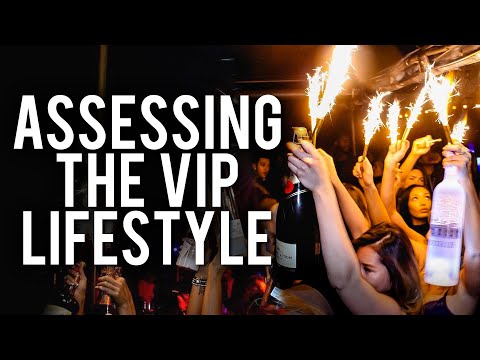
High table minimums and champagne parades with sparklers turn spending itself into a performance, allowing wealthy men to publicly signal resources in a tightly curated, high-status environment.
Get the full analysis with uListen AI
Nightclubs sell collective effervescence: losing yourself with others.
Loud music, dim lighting, and shared rituals (singing, dancing, chants) create what Durkheim called “collective effervescence,” a temporary dissolution of self into an energized group experience.
Get the full analysis with uListen AI
Female beauty functions as critical “bodily capital” in nightlife.
Models and “girls” are selected for a rarefied, fashion-industry-defined beauty that communicates prestige; their presence raises the perceived value of the room and justifies extreme male spending, even though they are personally devalued as serious partners.
Get the full analysis with uListen AI
Promoters operate a gift-based relational economy, not just a cash market.
They invest time and resources—free dinners, rides, attention—into models to build obligations and loyalty, illustrating how gifts forge ties and ensure girls reciprocate by attending tables that generate club revenue.
Get the full analysis with uListen AI
Being paid changes women’s category from ‘fun guest’ to stigmatized worker.
Many women avoid direct payment to protect their self-image and social status; once money changes hands for presence, they are perceived as adjacent to sex work, which carries heavy stigma in this scene.
Get the full analysis with uListen AI
Nightlife reproduces gender and class hierarchies under the guise of fun.
Men can trade money, connections, or celebrity for entry, while women are screened primarily on looks; affluent men tend to marry similarly educated, high-class women, while models are valued as décor but dismissed as long-term partners.
Get the full analysis with uListen AI
The experience economy depends on curated exclusivity and social construction.
Venues that seem magical at night are physically ordinary by day; their value is manufactured through scarcity, selective access, Instagrammable moments, and participants’ shared belief in the venue’s status and stories.
Get the full analysis with uListen AI
Notable Quotes
“It's a clear case of conspicuous consumption. It affords an opportunity to show off in this kind of club world.”
— Ashley Mears
“What people seek out in nightlife experiences is the opportunity to kind of lose oneself in the moment, in the music.”
— Ashley Mears
“Models are creating so much profit, and yet as people, models are really seen as worthless.”
— Ashley Mears
“There's really no such thing as a free lunch. The gift always has a counter-gift.”
— Ashley Mears
“Nightclubs are sadly an industry that was designed to transmit a virus.”
— Chris Williamson
Questions Answered in This Episode
In what ways could nightlife be redesigned to maintain collective effervescence without reinforcing such rigid gender and class hierarchies?
Sociologist Ashley Mears explains the social and economic logic behind high‑end nightclubs, especially bottle service venues where men spend huge sums on champagne and tables to display wealth and status. ...
Get the full analysis with uListen AI
How might the growing financial power of young female influencers change the assumed male-spender, female-decoration model in high-end clubs?
Get the full analysis with uListen AI
If gifts always generate obligations, where is the line between mutual reciprocity and exploitation in promoter–model relationships?
Get the full analysis with uListen AI
How does participation in bottle-service culture shape attendees’ self-concepts and future expectations about status, dating, and success?
Get the full analysis with uListen AI
Post-COVID, will demand return for tightly packed, high-contact nightlife, or will new, more “wholesome” experience formats permanently reshape the club economy?
Get the full analysis with uListen AI
Transcript Preview
There's a lot of different types of nightclubs. The clubs that I studied are, they offer what's called bottle service, where instead of waiting at the bar to get your drink, you can pay a pretty high price, you know, starting at $500 on up to $5,000 or more to sit at a table and basically rent the table for the night, and then bottles of alcohol get brought to your table, and then people use this as an opportunity to show off how much money they can spend on champagne, because the big expensive bottles come out with sparklers or they, you know, are brought to the table by very attractive, uh, young women that are called bottle girls. So, it's a clear case of conspicuous consumption. It affords an opportunity to show off in this kind of club world. (wind blows)
I'm joined by Ashleigh Mayers. Ashleigh, welcome to the show.
Hi. Good to be here.
Great to have you here. Tell me your background. Tell everyone that's listening what you're- the 30,000-foot view of who you are.
(laughs) Okay. Um, so I'm a sociologist. I, I, I teach in, I teach courses in pop culture and economic sociology and gender. Um, and my research kind of broadly is in what we could call cultural economics, but, um, basically the cultural foundations of, um, value, um, and how that plays out in different markets, and I've focused on pretty atypical cases for social scientists, and that is, um, the fashion modeling industry, which was my dissertation and became a book later called Pricing Beauty, and then my most recent book is about, um, high-end nightclubs and the, uh, the effect of champagne waste. (laughs) So-
(laughs)
... I know I describe it in fairly bland terms somewhat deliberately, because as an academic, you know, there's an impetus to kind of be serious and present your stuff in kind of theoretically and conceptually recognizable terms. Uh, but yeah, I, I study in this kind of fun worlds. (laughs)
I listened to your episode Convers- on Conversations with Tyler-
Yeah. Yeah.
... um, uh, talk- talking about this stuff, and hearing two academic ... You, you remained mostly academic, but he is pure ... Like, he was asking a question of, like, why is the music so ... Why does the music have to be-
(laughs)
... so loud in nightclubs, which is just, like, just the most pure academic question, and he said, "Well, actually, that's fairly good." So, I wanna, I wanna try and take-
(laughs)
... a, an academic's perspective, a sociological, anthropological perspective of n- nightclubs and nightlife. How do you-
Okay.
How would you lay it out? Imagine I'm another academic, I've never been in a nightclub, I don't know why people go.
(laughs)
I don't know what the purpose is. Give e- give us the full monte.
Install uListen to search the full transcript and get AI-powered insights
Get Full TranscriptGet more from every podcast
AI summaries, searchable transcripts, and fact-checking. Free forever.
Add to Chrome