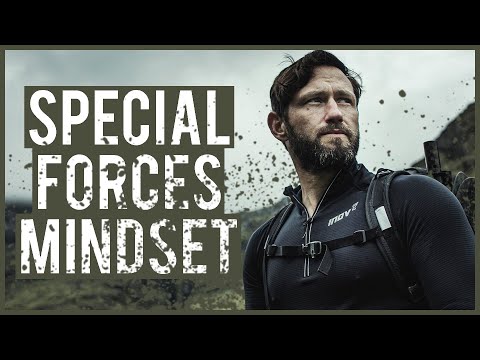
Jay Morton - Building A Special Forces Mindset | Modern Wisdom Podcast 246
Jay Morton (guest), Chris Williamson (host)
In this episode of Modern Wisdom, featuring Jay Morton and Chris Williamson, Jay Morton - Building A Special Forces Mindset | Modern Wisdom Podcast 246 explores ex-SAS Jay Morton Explains Special Forces Mindset And Embracing Discomfort Jay Morton, former SAS and two-time Everest summiteer, compares the challenges of Special Forces selection with climbing Everest, arguing that Everest is physically and mentally more exhausting due to extreme altitude and prolonged discomfort.
Ex-SAS Jay Morton Explains Special Forces Mindset And Embracing Discomfort
Jay Morton, former SAS and two-time Everest summiteer, compares the challenges of Special Forces selection with climbing Everest, arguing that Everest is physically and mentally more exhausting due to extreme altitude and prolonged discomfort.
He outlines the core values and mindset that shaped his 14-year military career—relentless pursuit of excellence, honor, humility, and discipline—and how these translate into civilian life and his book, *Soldier*.
Morton and host Chris Williamson explore how people can build discipline, recognize and exploit opportunities, and deliberately seek hardship to counter the softness of modern life.
They conclude that voluntarily embracing discomfort—whether through physical challenges, cold showers, or difficult self-reflection—is a key pathway to resilience, meaning, and psychological health.
Key Takeaways
Everest is far from easy despite its commercial image.
Morton stresses that six weeks at altitude, minimal sleep, and a brutal summit push make Everest more taxing than many military experiences, especially because basic tasks become exhausting in thin air.
Get the full analysis with uListen AI
Special Forces culture is built on relentless incremental improvement.
Values like a ‘relentless pursuit of excellence,’ honor, humility, and discipline drive operators to constantly refine skills—shooting, surveillance, physical fitness—without ever assuming they’ve ‘arrived’.
Get the full analysis with uListen AI
Discipline grows from small daily behaviors, not motivation alone.
Morton advocates simple rules—set an alarm, always wash the plate you just used, walk daily, read a book each month—as micro-practices that compound into the discipline needed for major goals.
Get the full analysis with uListen AI
Opportunities follow a three-step process: encounter, recognize, exploit.
You must place yourself where opportunities can occur, train your ‘gut’ to notice when something could change your life positively, and then fully commit to exploiting it so it opens further doors.
Get the full analysis with uListen AI
Humor is a powerful tool for managing fear and trauma.
In combat situations, soldiers often respond to terrifying events with jokes and laughter; this social humor diffuses tension, normalizes mistakes, and helps them psychologically process danger.
Get the full analysis with uListen AI
Modern comfort creates psychological fragility; humans need hardship.
Both men argue that an abundance of safety and convenience leaves people with surplus time to be offended and anxious, and that voluntary suffering (e. ...
Get the full analysis with uListen AI
Deep self-reflection and personality insight improve life direction.
Morton recommends tools like the Myers-Briggs test and conscious self-analysis to understand your tendencies, motivations, and team role so you don’t drift into an unchosen, regrettable life path.
Get the full analysis with uListen AI
Notable Quotes
“Everest is by no means an easy feat; I've never been that fatigued and exhausted as I was on that mountain.”
— Jay Morton
“In the absence of a real crisis, we create our own. In the presence of a real crisis, we recenter our priorities.”
— Chris Williamson
“The human body needs suffering. You take all that suffering away and make an easy life, and people just don't know how to suffer anymore.”
— Jay Morton
“You can read books and listen to podcasts for motivation, but essentially you've got to make the choice that you want more discipline in your life.”
— Jay Morton
“You can very easily live a life that you regret without even realizing that you're walking down the path.”
— Chris Williamson
Questions Answered in This Episode
How can someone living a very comfortable, urban life practically introduce the kind of ‘useful suffering’ you describe without going to extremes like Everest or the military?
Jay Morton, former SAS and two-time Everest summiteer, compares the challenges of Special Forces selection with climbing Everest, arguing that Everest is physically and mentally more exhausting due to extreme altitude and prolonged discomfort.
Get the full analysis with uListen AI
What specific mental strategies did you use on Everest when you were utterly exhausted but still had to keep moving for hours at altitude?
He outlines the core values and mindset that shaped his 14-year military career—relentless pursuit of excellence, honor, humility, and discipline—and how these translate into civilian life and his book, *Soldier*.
Get the full analysis with uListen AI
Are there aspects of Special Forces culture—like dark humor and emotional suppression—that become unhelpful or risky once you transition back to civilian life?
Morton and host Chris Williamson explore how people can build discipline, recognize and exploit opportunities, and deliberately seek hardship to counter the softness of modern life.
Get the full analysis with uListen AI
How do you personally distinguish between a genuinely valuable opportunity and a distraction that only looks exciting in the moment?
They conclude that voluntarily embracing discomfort—whether through physical challenges, cold showers, or difficult self-reflection—is a key pathway to resilience, meaning, and psychological health.
Get the full analysis with uListen AI
For people afraid of deep self-reflection, what’s a simple first exercise to start understanding their own motivations and personality without feeling overwhelmed?
Get the full analysis with uListen AI
Transcript Preview
Everest is... It's a big misconception for some people, because a lot of people think that because of the amount of people that go up and caliber of people that go up, it's an easy thing to do. And coming from someone who's done a lot of difficult things in their life, Everest is by no means an easy feat. It just seems to attract people who can afford it because it comes with a very high price tag, and you do end up with a lot of dross on the mountain which doesn't give it a very good reputation. It's six weeks of living at altitude. If you stand up and walk 10 meters at sea level, it's fine, right? You don't think about it. But if you're at 6,000, 7,000 meters in the sky and you stand up and walk 10 meters, you're taking a couple of steps, stopping, breathing, taking a couple of steps, stopping, breathing. So like everything that you deemed easy at sea level is magnified in difficulty the further up you go. (whoosh)
Jay, welcome to the show.
How's it going, Chris? You good?
Very well. I'm in Dubai. Now how could I not be well? I do need to hold my hands up for everyone that is watching on YouTube. Yes, I'm wearing a vest. Yes, I caught a little bit of sun today, tiny little bit, just a bit flush, right? But I haven't seen sunshine for like six months, so give me a break. I've also got you currently, Jay, you're balanced on an upturned bin, uh, in my hotel room.
(laughs)
And I'm doing this after tethering to my phone on roaming data, so God knows how much this is going to cost, but it's more than worth it. So thank you very much for coming on, man.
Too easy. Yeah, you never see what's in the background, do you, of what you've got -
Chaos.
... I was gonna say, man. Where you've just got to balance your phone and, and whatever's going on in the background, so yeah.
Absolute chaos, mate. It's just a-
And you're a northerner too, you're a fellow northerner, so don't do well in the sun.
Look, I- I've got two ginger parents, but thankfully...
(laughs)
I don't think I've fully inherited their skin. But you're totally right, man, when you're from Winterfell, you, you don't tan, don't tan exactly well.
Exactly. You just, you go white. You just seem to go white.
Yeah. And that leads me quite nicely into talking about the temperature, leads me quite nicely into something I wanted to ask, which is which is more difficult, the selection process for Special Forces or climbing Everest twice?
Um, I have to say climbing Everest. Um, selection, you know, six months... SA selection just seems to... It's drawn out over six months, right? And when you start, you're already a, you're already a seasoned soldier. Like for me, I've done one tour of Iraq and two tours of Afghanistan. So you almost get to that stage where you, you want to prove yourself as, as a soldier. And I was, you know, 24 years old, like full of testosterone. Um, so like you go on selection with a bunch of other lads and you're all, you know, you've got this unified kind of cause that you're all trying to... that you're all going for at the same time. Um, and I actually enjoyed selection for that reason. Um, because you meet, you know, you end up all, all... You know, you start with maybe 150, 170 people. Um, after the first three weeks, you're kind of down to 50, and then after the next six weeks, you, you're kind of down to maybe 20, 25 people. And these 20, 25 people have been through, through absolute shit. So you end up forming this like super tight bond where you're all really close and, and all really clicky. And then you get to the end of selection after that six months, you get given your stable belt and your beret, and you get like a picture took, uh, next to the clock tower. You shake everyone's hand and then you disappear into whatever regiment and squadrons that you go to. Uh, and then the next day, you're kind of big boys rules into the, into the mix.
Install uListen to search the full transcript and get AI-powered insights
Get Full TranscriptGet more from every podcast
AI summaries, searchable transcripts, and fact-checking. Free forever.
Add to Chrome