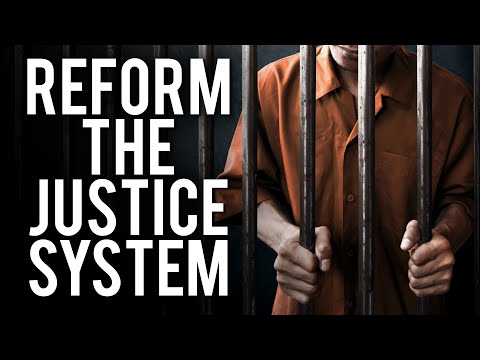
Why We Should Close All Prisons & Legalise Drugs | Chris Daw QC | Modern Wisdom Podcast 211
Chris Daw (guest), Chris Williamson (host)
In this episode of Modern Wisdom, featuring Chris Daw and Chris Williamson, Why We Should Close All Prisons & Legalise Drugs | Chris Daw QC | Modern Wisdom Podcast 211 explores top QC Demands Prison Closures, Drug Legalisation, Justice Rethink Now Criminal barrister Chris Daw QC argues that the UK’s criminal justice system – especially prisons and drug laws – is failing, expensive, and actively increases crime. He claims current prisons function as “universities of crime,” producing more damaged, skilled offenders while doing almost nothing to rehabilitate them.
Top QC Demands Prison Closures, Drug Legalisation, Justice Rethink Now
Criminal barrister Chris Daw QC argues that the UK’s criminal justice system – especially prisons and drug laws – is failing, expensive, and actively increases crime. He claims current prisons function as “universities of crime,” producing more damaged, skilled offenders while doing almost nothing to rehabilitate them.
Daw advocates radically shrinking the prison population, replacing most incarceration with technology-enabled community sentences, and redesigning remaining secure facilities along Norwegian lines to be as normal and humane as possible.
He also calls for fully regulated, state-controlled drug markets (rather than prohibition), treating addiction as a health issue, citing evidence from Switzerland and Portugal that regulated supply and medical treatment cut deaths, crime and use.
A major theme is evidence over emotion: Daw contrasts punitive public instincts and political rhetoric with data showing that harsher punishment, criminalising children, and the war on drugs all increase reoffending, violence, and social harm.
Key Takeaways
Traditional prisons increase crime rather than reduce it.
Daw argues that prisons act as “crime camps” where people learn criminal skills, lose family and work ties, and leave more damaged and dangerous; UK reoffending after prison is around 75%, versus about 20% in more humane systems like Norway.
Get the full analysis with uListen AI
Most prisoners are non-violent and don’t need cages.
Roughly 69% of UK prisoners are there for non-violent offenses (drugs, theft, fraud). ...
Get the full analysis with uListen AI
Prison should be rare, brief, and as normal as possible.
For the genuinely dangerous 10–15% who need secure confinement, Daw advocates Norwegian-style small units with kitchens, normal rooms and free movement inside a secure perimeter, because people treated normally are more likely to behave normally on release.
Get the full analysis with uListen AI
Addiction is a health issue that criminalisation makes deadlier.
Because illegal drugs are unregulated, users don’t know strength or contents, leading to overdoses like the 15-year-old who took 91% pure MDMA. ...
Get the full analysis with uListen AI
Regulated drug markets would cripple organised crime.
Most profit in drugs comes from smuggling and illegality, not production (e. ...
Get the full analysis with uListen AI
Children should be kept entirely out of the criminal system.
The UK criminalises children from age 10—lower than many countries, including Luxembourg (18) and even Saudi Arabia. ...
Get the full analysis with uListen AI
Public and political attachment to punishment ignores the evidence.
Daw notes that voters respond to “tough on crime” rhetoric and retributive instincts (an eye-for-an-eye), even though research shows sentence severity has little deterrent effect because offenders don’t expect to be caught; harsher policies often raise, not lower, long-term crime.
Get the full analysis with uListen AI
Notable Quotes
“Prisons are just universities of crime. If you send someone to crime camp, don’t be surprised when they come out better at crime.”
— Chris Daw QC
“We cage people in prisons as if they were wild animals, and unsurprisingly, when they come out, they behave like animals.”
— Chris Daw QC
“The evidence is that prison doesn’t work. When you move to a system like Norway’s, where you very rarely use prison and make it as normal as possible, reoffending plummets.”
— Chris Daw QC
“You can buy a kilo of heroin for about $1,000 in Afghanistan. By the time it hits British streets, it’s $100,000. The profit is in illegality, not the drug.”
— Chris Daw QC
“Nothing would bring me greater happiness than to make myself redundant as a criminal lawyer because there weren’t enough people being put through the criminal justice system.”
— Chris Daw QC
Questions Answered in This Episode
If the evidence overwhelmingly shows that harsh prison sentences increase reoffending, what mechanisms could realistically force politicians to prioritise effectiveness over punitive public opinion?
Criminal barrister Chris Daw QC argues that the UK’s criminal justice system – especially prisons and drug laws – is failing, expensive, and actively increases crime. ...
Get the full analysis with uListen AI
How might communities react in practice to having more offenders serving sentences at home or in local hostels instead of behind prison walls?
Daw advocates radically shrinking the prison population, replacing most incarceration with technology-enabled community sentences, and redesigning remaining secure facilities along Norwegian lines to be as normal and humane as possible.
Get the full analysis with uListen AI
What specific safeguards and regulatory structures would be needed to prevent state-run drug supply from creating new forms of abuse, corruption, or corporate capture?
He also calls for fully regulated, state-controlled drug markets (rather than prohibition), treating addiction as a health issue, citing evidence from Switzerland and Portugal that regulated supply and medical treatment cut deaths, crime and use.
Get the full analysis with uListen AI
Where should the line be drawn between treating young people’s harmful behaviour as a welfare issue versus acknowledging genuine, persistent dangerousness in a small minority?
A major theme is evidence over emotion: Daw contrasts punitive public instincts and political rhetoric with data showing that harsher punishment, criminalising children, and the war on drugs all increase reoffending, violence, and social harm.
Get the full analysis with uListen AI
In a world of dark-web markets and globalised organised crime, is it even possible for any single country to reform its drug and prison policies without significant international coordination?
Get the full analysis with uListen AI
Transcript Preview
... that I think all of the prisons we have now in Britain are failing us, because they are just universities of crime. They come out with no skills, they live in this alien environment behind these massive walls with barbed wire, and you treat them like animals. We cage people in prisons as if they were wild animals. And unsurprisingly, when they come out, they behave in many cases like animals. If you treat someone like an animal, they'll behave like one. If you call someone a criminal and you constantly say that they're a bad person, don't be surprised when they come out and do more bad things, 'cause that's what happens when you treat people like that.
I am joined by Chris Dawe. Chris, welcome to the show.
Thanks, Chris. Good to meet you.
Pleasure to have you here. What's, what's QC stand for?
QC stands for Queen's Counsel, so one of Her Majesty's counsel, which is a special kind of barrister, lawyer, uh, and we're appointed to kind of basically be the elite of the elite when it comes to, uh, being a, being a lawyer basically, and, uh, even though I say so myself, which I do.
Are you the SAS of the...
We are. They, they bring us in when it gets messy.
You're the, the wet work black squad sent in under the cover of darkness.
You've got it. You've got it. We're the Navy SEALs. You gotta go underwater, you gotta, like, get through mud. It's, yeah, it's, uh, it's, uh, basically anyone who's in the proper, proper shit, we're the ones who are supposed to dig them out.
(laughs)
The deepest kind and the smelliest kind.
I love it. I absolutely love it. Okay, so justice is on trial today. I want you to give the opening speech. Approach the microphone please, Chris Dawe QC, and give us the opening speech. Why is justice on trial?
Well, I'm, I'm putting justice on trial 'cause I've spent 26 years as a criminal lawyer, and in all of that time, I think most of what I've done has been a complete waste of l- a waste of time, a waste of my life. Because the criminal justice system, that's the, the police, the prosecution of people, locking people up in prison, chasing after people 'cause they take drugs, all it does is make society worse. Lock people up, they just go back in again, they commit more crime when they come out, and then w- it costs us a load of money when they, when th- when th- they're in there, 50,000 a year to keep someone in prison. We're locking up young kids, and some kids as long, as young as 10 are going into the criminal courts, which is completely insane. And of course, we continue to prosecute people for drug crime when, as I say in my book, drugs have been taken for tens of millions of years by human beings, and no one's gonna, we're not gonna stop people. You can't, you can't, you can't change people's basic desire to get wasted. And that's gonna happen, it happens today, it happened 1,000 years ago, it happened 50,000 years ago. So the, the, as, as long as we keep trying to stop people doing things that, like that they wanna do that largely don't harm anyone else, we're gonna just keep on making the same old mistakes and we kill people with overdoses and gang wars and knife crime and stabbings, and I'm just sick of it. And I, and, and, and the time has come for someone in my position, uh, you know, fairly kind of senior position in the profession to say, "Do you know what? Why are we doing it? What's the point?" And, and, and that's what the book's all about. What's the point of it? And, and I don't think there is, to most of it. I think we need to change it all, start again.
Install uListen to search the full transcript and get AI-powered insights
Get Full TranscriptGet more from every podcast
AI summaries, searchable transcripts, and fact-checking. Free forever.
Add to Chrome