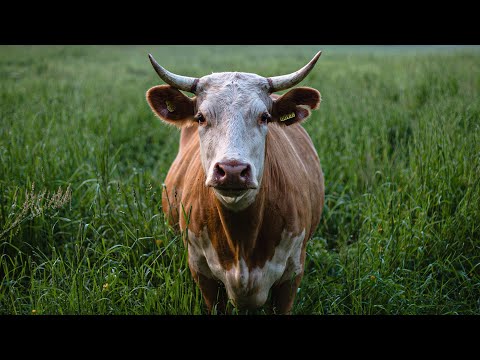
The Case For Eating Better Meat - Diana Rodgers | Modern Wisdom Podcast 244
Diana Rodgers (guest), Chris Williamson (host), Narrator, Narrator
In this episode of Modern Wisdom, featuring Diana Rodgers and Chris Williamson, The Case For Eating Better Meat - Diana Rodgers | Modern Wisdom Podcast 244 explores rethinking Meat: Nutrition, Environment, Ethics, and Processed Food Myths Chris Williamson talks with dietitian and filmmaker Diana Rodgers about her film and book *Sacred Cow*, arguing that properly raised meat is unfairly blamed for health and environmental crises. Rodgers contends that meat is highly nutrient-dense, especially critical for children and vulnerable populations, and that most people are actually under-consuming protein. She challenges popular claims that livestock are a major driver of climate change, distinguishing biogenic methane cycles from fossil fuel emissions and highlighting the role of ultra-processed foods instead. The conversation also explores ethical questions, veganism, denial of death, and practical guidance on sourcing and eating “better” meat.
Rethinking Meat: Nutrition, Environment, Ethics, and Processed Food Myths
Chris Williamson talks with dietitian and filmmaker Diana Rodgers about her film and book *Sacred Cow*, arguing that properly raised meat is unfairly blamed for health and environmental crises. Rodgers contends that meat is highly nutrient-dense, especially critical for children and vulnerable populations, and that most people are actually under-consuming protein. She challenges popular claims that livestock are a major driver of climate change, distinguishing biogenic methane cycles from fossil fuel emissions and highlighting the role of ultra-processed foods instead. The conversation also explores ethical questions, veganism, denial of death, and practical guidance on sourcing and eating “better” meat.
Key Takeaways
Most people eat too little protein, not too much meat.
Rodgers argues the protein RDA is a bare minimum set for small, sedentary people, while children, older adults, and active individuals likely need around 1. ...
Get the full analysis with uListen AI
Observational studies do not prove meat causes disease.
She notes that research often just compares meat eaters and non–meat eaters who differ on many lifestyle factors; when analyses control for these, longevity differences largely disappear and meat itself does not emerge as the culprit.
Get the full analysis with uListen AI
Biogenic methane from cattle operates in a closed cycle, unlike fossil fuels.
Methane from cow burps breaks down in about 10 years into CO₂ and water, is reabsorbed by plants, and recirculates, whereas fossil-fuel emissions add “new” carbon from deep underground directly into the atmosphere without a balancing sink.
Get the full analysis with uListen AI
There is no such thing as a death-free food system.
Crop production for plant proteins kills rodents, insects, and other wildlife; Rodgers argues that once we accept some death is inevitable, the ethical focus should shift to minimizing harm and supporting systems that improve ecosystem health.
Get the full analysis with uListen AI
Ultra-processed foods, not fresh red meat, are central to modern health problems.
She emphasizes that rising obesity and diabetes track increased intake of refined, engineered foods and lower meat consumption since the 1970s, suggesting processed foods—not steak—drive most metabolic disease.
Get the full analysis with uListen AI
Children and infants are at particular risk on poorly planned vegan diets.
Rodgers cites cases of vegan, breastfed infants dying from B12 deficiency despite maternal supplementation, and evidence that meat improves children’s growth, behavior, and cognition compared with low-meat or no-meat diets.
Get the full analysis with uListen AI
Eating more whole, animal-based protein at “meal one” improves satiety and weight control.
She recommends reframing breakfast as “meal one” and prioritizing at least ~30 g of animal protein (e. ...
Get the full analysis with uListen AI
Notable Quotes
“Humans have been eating meat for three and a half million years, and it’s much more likely that modern foods are responsible for modern illnesses.”
— Diana Rodgers
“There is no food system where no animals die. That’s impossible.”
— Diana Rodgers
“Meat is the most beautiful package of concentrated nutrition for humans, and the most bioavailable, easily digested food we have.”
— Diana Rodgers
“We’re arguing about the wrong thing. It’s not meat versus no meat.”
— Diana Rodgers
“All animals are wired to seek out food, and we’ve engineered ourselves into a really disturbing relationship with food.”
— Diana Rodgers
Questions Answered in This Episode
If observational nutrition studies are so limited, what kinds of research would meaningfully clarify meat’s true health effects?
Chris Williamson talks with dietitian and filmmaker Diana Rodgers about her film and book *Sacred Cow*, arguing that properly raised meat is unfairly blamed for health and environmental crises. ...
Get the full analysis with uListen AI
How can consumers practically distinguish between genuinely regenerative, animal-inclusive agriculture and greenwashed marketing claims?
Get the full analysis with uListen AI
Where should we draw ethical lines between individual animal suffering and broader ecosystem health when choosing what to eat?
Get the full analysis with uListen AI
Given the risks Rodgers highlights, what safeguards should be in place for parents raising children on vegan or vegetarian diets?
Get the full analysis with uListen AI
What policy changes would most effectively shift the food system away from ultra-processed products toward nutrient-dense whole foods, including better meat?
Get the full analysis with uListen AI
Transcript Preview
People are very confused. They're very confused about our health, very concerned about our planet. Everyone's looking for that one magic goji berry that they can take so that they can avoid actually doing the hard work of eating well every single day and sleeping well every single night. They don't wanna work out, they just wanna eat a goji berry and be done with it. And so, it's much easier to pin all of our uncomfortable feelings on an object than it is to actually deal with the actual problems. (wind blows)
Diana, welcome to the show.
Hi. Nice to have, uh, nice, nice to have me. Nice to be here. Thank you so much, Chris.
It is nice to have you.
(laughs)
Um, your work is at the intersection of nutrition, environmental sustainability, animal welfare, and social justice. That is, that's just, all of those are minefields, and everyone's emotionally charged. Like, that's an incredibly harsh war zone to exist in.
Mm-hmm. That's right. (laughs)
(laughs) That's the- the look- the look- the look of a P- PTSD, battle-scarred, uh, soldier there.
(laughs) Yeah, I mean, I think that, you know, a lot of people will say, uh, you know, "Eating meat is wrong. Killing animals is wrong," right? But you can't have an ethical discussion until you understand the nutritional benefits that animal products have to humans, especially people that don't have the privilege to be pushing that away, which gets into social justice. We can't be telling the entire world that everyone needs to, uh, be vegetarian when there are so many people that are nutrient deficient and malnourished. Um, and then when we, you know, look at the environmental consequences of a food system without animal inputs, that looks a whole lot like chemical agriculture, which is a huge problem, right? And so, when we, when we look at, you know, chemical agriculture, plant-based-only foods, those two things are the recipe for fake meat, uh, you know, absolute destruction, um, of our soil health, ecosystem health, and human health. So, uh, I try to tackle all of those things because they're all so intricately twined, and so I want people to understand all of those things before we have a discussion about whether or not it's okay for an animal to die for us to live.
There's s- some entry prices that you need to pay before we can get to just the ethical question-
Mm-hmm.
... because it's layered within other, uh, other topics. Yeah, that makes a lot of sense. What does a, a, a real food licensed registered dietician nutritionist mean? What- what's that?
It's my own, um, uh, term, but basically, most dieticians are, um, giving out information that they've learned in school where, you know, everything in moderation is okay. Let's not eliminate any foods from the plate. It's all about just portions, and, um, and if you wanna go vegetarian or vegan, then, you know, that's totally okay. But then when we start to talk about eliminating processed foods, "Oh, no. We can't do that." So, um, you know, so something like a Whole30, paleo, keto type diet is absolute blasphemy, right? But then vegan or vegetarian are- are totally okay. Um, and so I call myself a real food dietician because I focus on real foods, and work largely with people to fix their gut health and their metabolic health, their weight by getting rid of ultra-processed foods.
Install uListen to search the full transcript and get AI-powered insights
Get Full TranscriptGet more from every podcast
AI summaries, searchable transcripts, and fact-checking. Free forever.
Add to Chrome