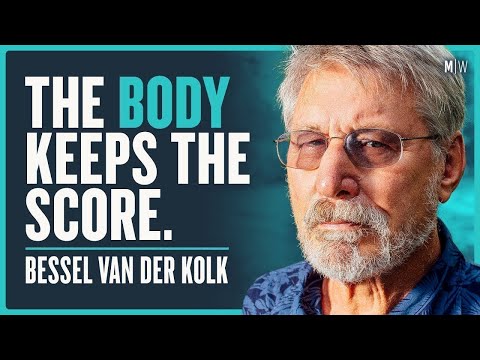
The Hidden Price Of Unprocessed Trauma - Bessel van der Kolk
Chris Williamson (host), Bessel van der Kolk (guest)
In this episode of Modern Wisdom, featuring Chris Williamson and Bessel van der Kolk, The Hidden Price Of Unprocessed Trauma - Bessel van der Kolk explores trauma’s Hidden Body Cost: Safety, Self-Compassion, and True Healing Bessel van der Kolk explains how trauma is not just intense stress but a lasting assault on one’s sense of safety, identity, and bodily experience, leaving people stuck in automatic reactions long after events end.
Trauma’s Hidden Body Cost: Safety, Self-Compassion, and True Healing
Bessel van der Kolk explains how trauma is not just intense stress but a lasting assault on one’s sense of safety, identity, and bodily experience, leaving people stuck in automatic reactions long after events end.
He distinguishes trauma from everyday stress, emphasizing that humans are social and embodied beings whose nervous systems, relationships, and early environments shape vulnerability and resilience.
The conversation explores how trauma lives in the body and subcortical brain circuits, why talk alone is insufficient, and why modalities like bodywork, yoga, mindfulness, psychodrama, and MDMA-assisted therapy can be powerful.
Van der Kolk also advocates for early education in self-regulation and embodied awareness, warns about digital overuse as emotional anesthetic, and describes therapy at its best as a courageous, experiential exploration of the self.
Key Takeaways
Trauma is not just stress; it’s a lasting change in how you experience yourself and the world.
Stress is natural and temporary, often even energizing, whereas trauma freezes people in states of fear, rage, or terror so that their bodies and brains keep reacting as if the danger is still present.
Get the full analysis with uListen AI
The body ‘keeps the score’ through automatic reactions, not just conscious memories.
After trauma, people may intellectually dismiss an event yet find their bodies freezing, crying, or raging in safe situations; these are subcortical, nonverbal responses from brain regions shared with other animals.
Get the full analysis with uListen AI
Safety and social connection are central buffers against traumatic imprinting.
Evidence from war, disasters, and domestic violence shows that feeling safe at home and being believed and supported by close others dramatically reduces the likelihood and severity of PTSD.
Get the full analysis with uListen AI
Avoidance, shame, and minimization initially protect but later block healing.
People often downplay past harms and feel ashamed of being triggered by ‘small’ things; this protects their self-image short-term but prevents them from recognizing patterns and seeking help.
Get the full analysis with uListen AI
Embodied practices are often necessary before deep psychological work can succeed.
For chronically hypervigilant or shut-down people, therapies that restore bodily safety—like bodywork, yoga, tai chi, qigong, hot baths, or safe touch—help calm the alarm systems so introspection and processing become possible.
Get the full analysis with uListen AI
Education in self-regulation and sensing oneself should start in childhood.
Van der Kolk argues that schools should teach a ‘fourth R’—self-regulation—through movement, music, interoception, and relational exercises so children learn what calms them, how emotions work, and how they affect others.
Get the full analysis with uListen AI
Psychedelic-assisted therapy, especially MDMA, can uniquely foster self-compassion.
In his research, MDMA enabled severely traumatized people to revisit painful memories with deep empathy for their younger selves—something he has not seen at the same depth with other treatments—though he warns about commercialization and misuse.
Get the full analysis with uListen AI
Notable Quotes
“Trauma is an assault on one's being that really changes the way you feel, experience yourself, how you experience the world about you.”
— Bessel van der Kolk
“You don't remember the trauma so much as you continue to react as if you're being traumatized.”
— Bessel van der Kolk
“If you cannot live in silence with yourself, you're not okay.”
— Bessel van der Kolk
“Knowing why you're screwed up does not necessarily make you less screwed up, but it does give you choices.”
— Bessel van der Kolk
“Therapy is a very courageous act of confronting your internal demons and the pain and hurt of your life.”
— Bessel van der Kolk
Questions Answered in This Episode
How can someone practically begin to explore which embodied practices (yoga, bodywork, movement, music) help them feel safer in their own body?
Bessel van der Kolk explains how trauma is not just intense stress but a lasting assault on one’s sense of safety, identity, and bodily experience, leaving people stuck in automatic reactions long after events end.
Get the full analysis with uListen AI
In what ways might my current relationships either buffer me from, or reinforce, the impact of past trauma?
He distinguishes trauma from everyday stress, emphasizing that humans are social and embodied beings whose nervous systems, relationships, and early environments shape vulnerability and resilience.
Get the full analysis with uListen AI
How can I tell the difference between healthy distraction from pain and digital ‘anesthetic’ that keeps me disconnected from my life and emotions?
The conversation explores how trauma lives in the body and subcortical brain circuits, why talk alone is insufficient, and why modalities like bodywork, yoga, mindfulness, psychodrama, and MDMA-assisted therapy can be powerful.
Get the full analysis with uListen AI
If shame and minimization are blocking my healing, what would it look like to tell a more honest story about my past and my reactions—at least to myself?
Van der Kolk also advocates for early education in self-regulation and embodied awareness, warns about digital overuse as emotional anesthetic, and describes therapy at its best as a courageous, experiential exploration of the self.
Get the full analysis with uListen AI
How should psychedelic-assisted therapy be structured (set, setting, integration) to maximize healing and minimize the risks Van der Kolk worries about?
Get the full analysis with uListen AI
Transcript Preview
Let's say that someone has never been exposed to your ideas in The Body Keeps the Score. How do you introduce your thesis?
How do I introduce my things? I usually show movies, uh, ho- actually, Hollywood movies, uh, that, because, you know, when you make a movie, you have to show it correctly. Um, when you see somebody getting stuck and somebody being traumatized, like, scenes from The Hurt Locker or other movies about veterans coming home, or about, uh, kids who have been molested. Uh, usually movies capture it pretty well. You can really see how the way that people move and people hold their bodies and how people's bodies react to the world around them is very visible, actually. Yeah.
Right. So you're trying to demonstrate an outward, uh, exposure in terms of how the body looks of an internal, uh, emotional state?
Yeah. It's a bit how we can read each other, how they, how you, we look at each other and hopefully, you look pretty calm, and I might see you getting upset or something, I'll go, "Oh, I'm seeing something is upsetting him." That's how we give signals to each other. Uh, and of course, as a body-oriented therapist, uh, you get pretty good in reading bodily signals. Yeah.
So that, uh, eh- everybody understands. They see someone that stands in a particular way, has a facial expression in a particular way, is holding themself. That doesn't sound, uh, that surprising. If that's the case, why is the traditional way that we try to think about trauma wrong? What does the traditional paradigm get wrong?
It is, it is interesting indeed that it's so obvious, and I actually have gotten, you know, my books have sold five million copies. I've hardly had any blowback of people who say that I'm getting it wrong. I mean, it's really obvious. But, you know, we come from a world of medicine where we try to define things very carefully. Uh, medicine, of course, is a very disembodied profession. Uh, we deal with the body, but w- we really don't know about the body. And psychology is about minds and how people think and about their behavior. Uh, but psychology is a very, has also traditionally been a very disembodied profession. Uh, the people who, to my mind, really get it are, uh, theater directors, teachers, uh, yoga instructors, martial arts people, musicians, uh, because in the real world, you really get to see how bodies really move together through the world. Yeah.
What is the difference between trauma and stress then?
Stress is what it's like to be human. Um, we're, we're wired for stress. We're wired to rise to the occasion. We are wired to have hard days and broken relationships, and you know, life is rough for actually all of us in one form or another. But when that stress is over, you can look, "Wow, I'm feeling better now." Huh? And the issue with trauma is that trauma is an assault on one's being that really changes the way you feel, experience yourself, how you s- experience the world about you. And so trauma really changes the way you move through the world and who you are. And so stress is a temporary thing. Uh, we have great biology of stress, and there's basically nothing wrong with stress. Uh, this is how, how we have come as far as we have as human beings. But trauma gets you stuck and frozen in that particular spot of being enraged or fearful or terrified or something like that. Yeah.
Install uListen to search the full transcript and get AI-powered insights
Get Full TranscriptGet more from every podcast
AI summaries, searchable transcripts, and fact-checking. Free forever.
Add to Chrome