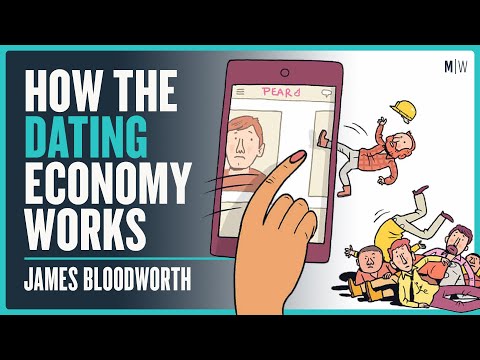
Understanding The Modern Dating Economy - James Bloodworth | Modern Wisdom Podcast 370
James Bloodworth (guest), Chris Williamson (host)
In this episode of Modern Wisdom, featuring James Bloodworth and Chris Williamson, Understanding The Modern Dating Economy - James Bloodworth | Modern Wisdom Podcast 370 explores modern Dating’s Harsh New Marketplace: Apps, Inequality, and Masculinity Chris Williamson and James Bloodworth unpack how dating has shifted into a quasi-economy, driven by apps, metrics, and algorithmic visibility, creating stark inequalities—especially for average and low-status men.
Modern Dating’s Harsh New Marketplace: Apps, Inequality, and Masculinity
Chris Williamson and James Bloodworth unpack how dating has shifted into a quasi-economy, driven by apps, metrics, and algorithmic visibility, creating stark inequalities—especially for average and low-status men.
They explore the cognitive dissonance between cultural narratives that label masculinity as toxic and a dating reality where stereotypically masculine traits and high status remain strongly rewarded.
The conversation covers incels, lookism, porn, OnlyFans, consent, and feminist responses, arguing that both men and women are harmed by hyper-commodified, screen-mediated sexual markets.
They conclude that while sexual liberation and technology have expanded choice, they’ve also intensified competition, insecurity, and transactional attitudes, making stable relationships and family formation harder for many.
Key Takeaways
Dating apps concentrate attention on a small minority of men, amplifying inequality.
Data from apps show 10–20% of men receive most matches, while average men struggle; women gain access to more high-status partners but also risk being used for casual sex without commitment.
Get the full analysis with uListen AI
Treating dating purely as an ‘economy’ creates toxic determinism and fatalism.
Language like ‘sexual market value’, ‘Chad’, and ‘it’s over’ encourages some men—especially in incel spaces—to see themselves as permanently excluded rather than as people with agency and nuance.
Get the full analysis with uListen AI
Simple ‘just lift bro’ advice ignores structural and personal obstacles many men face.
Bloodworth notes that lookism, physical deformities, and high rates of autism in incel communities mean gym and cold-approach prescriptions can be condescending and unrealistic for a significant subset of men.
Get the full analysis with uListen AI
Online culture distorts consent and approach norms compared to real life.
While a vocal online minority frames most approaches as harassment, offline most women still want men to initiate; overconsuming Twitter-like discourse can paralyze men who would otherwise engage normally.
Get the full analysis with uListen AI
Porn and OnlyFans both erode healthy expectations and deepen loneliness.
Porn makes staying home easier than risking rejection and normalizes unrealistic sexual scripts, while OnlyFans encourages women to monetize looks and men to buy pseudo-intimacy, reinforcing shallow, transactional dynamics.
Get the full analysis with uListen AI
Masculinity is pathologized culturally but rewarded romantically, creating confusion.
Men hear that masculinity and even going to the gym are ‘toxic’, yet in bars and apps they see socially dominant, stereotypically masculine men succeed, undermining progressive ‘nice guy’ messaging.
Get the full analysis with uListen AI
Social media undermines relationship satisfaction by inflating perceived options.
Exposure to endless, hyper-attractive alternatives online makes people feel their partner is less special, reduces commitment in self-report studies, and increases opportunities and temptations to cheat.
Get the full analysis with uListen AI
Notable Quotes
“Men are often fed this narrative that masculinity is inherently toxic, but then they go out into the sexual marketplace and it’s the guys who are stereotypically masculine who tend to be doing better.”
— James Bloodworth
“The market always seems to kind of find where people’s real truths lay, and the same thing seems to happen in dating too.”
— Chris Williamson
“Treating [dating] in this very deterministic, quantitative fashion… where you ascribe these certain characteristics of someone, say like a Chad… I think that kind of determinism can tend to creep in when it’s seen as an economy.”
— James Bloodworth
“If you’re a woman who has made it to 30 and your primary source of value is still your looks, then you need to be quite careful about how you spend the next five years.”
— Chris Williamson
“We’re bombarded with this idea of what’s attractive… and if you’re not living up to that… you should feel bad about yourself. Women have had this for years, but I think men are subjected to that similar pressure now as well.”
— James Bloodworth
Questions Answered in This Episode
How can we acknowledge real biological sex differences in attraction and status without sliding back into restrictive, traditional gender roles?
Chris Williamson and James Bloodworth unpack how dating has shifted into a quasi-economy, driven by apps, metrics, and algorithmic visibility, creating stark inequalities—especially for average and low-status men.
Get the full analysis with uListen AI
What practical cultural or policy interventions could mitigate the extreme inequality created by dating apps, beyond individual ‘self-improvement’ advice?
They explore the cognitive dissonance between cultural narratives that label masculinity as toxic and a dating reality where stereotypically masculine traits and high status remain strongly rewarded.
Get the full analysis with uListen AI
Where is the line between empowering sex work (e.g., OnlyFans) and reinforcing a culture that reduces women’s value primarily to physical appearance?
The conversation covers incels, lookism, porn, OnlyFans, consent, and feminist responses, arguing that both men and women are harmed by hyper-commodified, screen-mediated sexual markets.
Get the full analysis with uListen AI
How can men develop better social calibration and empathy around consent and creepiness without sterilizing all romantic spontaneity?
They conclude that while sexual liberation and technology have expanded choice, they’ve also intensified competition, insecurity, and transactional attitudes, making stable relationships and family formation harder for many.
Get the full analysis with uListen AI
Given the destabilizing impact of social media and endless choice, what new norms or institutions might help people form and maintain long-term relationships and families?
Get the full analysis with uListen AI
Transcript Preview
So men, I think, are often fed this narrative that masculinity is inherently toxic, which I think is- can be very damaging. But then they go out into the sexual marketplace, they go out to a bar, they go onto an app, and it's the guys who are stereotypically masculine which tend to be doing better when it comes to dating. So i- it throws up this kind of cognitive dissonance. Like, what is going on here?
Why is calling the dating market the dating economy a good term?
Um, I- I'm not sure it's a good term. I mean, it's- it's- it seems very, um... It seems slightly brutal to- to look at the dating, romance and our ideas of romance to turn it into some kind of economic exchange. Um, I th- but I think it can be useful. I think it can be a useful way to... It can be a useful metaphor for- for some of the things that are going on in- in the world of dating. And I think it- it can be a useful metaphor for people who aren't in that dating market at the moment. Say, older, typically older people who are married or who grew up in a very different era when very different social norms prevailed. I think the idea of- of a dating economy, uh, can be a useful way to convey to them some of the inequalities that exist now. And I sp- and- and the final point, really, is with dating apps you have actual data, um, on what men's and women's preferences are. So it- it- it, that can, that can be put in spreadsheets so it's kind of a, it is kind of an economy.
Yeah. Well, you're hearing more, sort of economic language around this stuff now. People are scored out of 10. You have algorithms that are manipulating people's, uh, ranks on dating accounts. There are like sexual market value is a term that's often used in men's right spaces around the relative age to attractiveness graph that goes on. So it kind of, it kind of does make sense. And yeah, I suppose communicating it to people who found their, found their partner a very long time ago, they need something to be able to bridge the gap between their dating world and ours, which is essentially a different universe.
Yeah. A- and I mean, there is a dark side to it as well, though. I think there's- there's a dark side to, um, treating it as an economy. And- and- and treating it in this very like deterministic fashion, um, quantitative fashion, where you- you ascribe these certain characteristics of someone, say like a Chad. So like th- the good-looking Chad guy. And that, you know, that's the person who- who- who gets with women and then this other person who doesn't look the right way, uh, doesn't. You know, they have no chance. It's over, a- as some of the incels say. I think that kind of determinism can tend to creep into it, um, when it's seen as like an economy. Whereas in, like w- in reality, like dating is, it's not, you know, a market where there's certain laws which exist. It's- it's- there's- there's nuances, aren't there? Like someone doesn't, um... Yeah, it's too- too simplistic, too- too deterministic.
Install uListen to search the full transcript and get AI-powered insights
Get Full TranscriptGet more from every podcast
AI summaries, searchable transcripts, and fact-checking. Free forever.
Add to Chrome