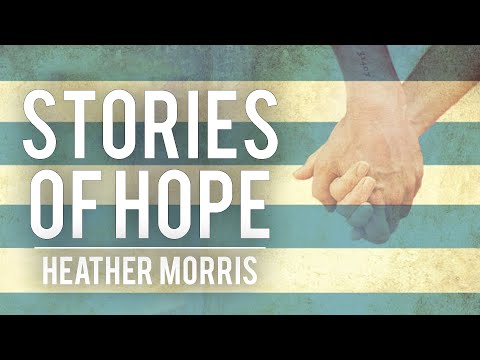
Lessons In Listening From The Tattooist Of Auschwitz | Heather Morris | Modern Wisdom Podcast 227
Heather Morris (guest), Chris Williamson (host), Narrator, Narrator
In this episode of Modern Wisdom, featuring Heather Morris and Chris Williamson, Lessons In Listening From The Tattooist Of Auschwitz | Heather Morris | Modern Wisdom Podcast 227 explores holocaust Testimony, Deep Listening, And Stories That Create Hope Heather Morris recounts how a casual yes to meeting a stranger led to The Tattooist of Auschwitz and a life-changing friendship with survivor Lale Sokolov. She explains the listening skills honed in hospital social work that enabled her to patiently unlock his traumatic memories without notes or recordings. The conversation widens into survivor guilt, the power of individual stories to make vast atrocities emotionally graspable, and how readers’ letters inspired her follow‑up book, Stories of Hope. Morris and Williamson close by distilling practical lessons on listening to elders, children, traumatized people, and to ourselves in an increasingly noisy, disconnected world.
Holocaust Testimony, Deep Listening, And Stories That Create Hope
Heather Morris recounts how a casual yes to meeting a stranger led to The Tattooist of Auschwitz and a life-changing friendship with survivor Lale Sokolov. She explains the listening skills honed in hospital social work that enabled her to patiently unlock his traumatic memories without notes or recordings. The conversation widens into survivor guilt, the power of individual stories to make vast atrocities emotionally graspable, and how readers’ letters inspired her follow‑up book, Stories of Hope. Morris and Williamson close by distilling practical lessons on listening to elders, children, traumatized people, and to ourselves in an increasingly noisy, disconnected world.
Key Takeaways
Say yes to unexpected opportunities; they can redirect your life.
Morris only met Lale because she said yes to a vague invitation from a friend to meet an elderly man who “needed someone to tell his story to,” a decision that ultimately led to a bestselling book and a profound friendship.
Get the full analysis with uListen AI
Serious listening means removing distractions and suspending your need to respond.
With Lale, she used no notebook or recorder, relying on trained memory and total presence so he wasn’t distracted or performing for a device, which allowed deeper, more painful memories to surface.
Get the full analysis with uListen AI
Trust and mutual vulnerability unlock fuller, more human stories.
Lale only moved beyond a clinical, factual account once he knew Heather’s family, flirted with her daughter, learned her own secrets, and felt he could safely weep and expose his shame and pain.
Get the full analysis with uListen AI
Allow silence when someone is in pain; don’t rush to fill it.
Morris emphasizes that with traumatized or grieving people, the urge to kill silence can shut them down; leaving space lets them choose when and how to continue, often revealing more than direct questions.
Get the full analysis with uListen AI
Individual stories make mass suffering emotionally real and actionable.
They discuss how readers can’t relate to “six million dead” but can deeply connect to one person’s story, citing research on donations dropping as more victims are added and metaphors like six million paper clips versus a single one that “matters.”
Get the full analysis with uListen AI
Listening to elders and children prevents future regret and builds trust.
Morris notes many readers’ sorrow at never having asked their grandparents about their lives and offers simple tactics—like asking about an old object on a mantle—to invite stories and show kids they’re truly heard.
Get the full analysis with uListen AI
Listening to yourself is as crucial as listening to others.
She urges brief daily moments—often in the shower or with a pet—to notice your body, inner dialogue, and emotional state, and to seek help if your self‑talk is vicious, rather than drowning it out with constant noise or activity.
Get the full analysis with uListen AI
Notable Quotes
“If you're talking, you're actually not learning anything; you're just repeating something you already know.”
— Heather Morris (paraphrasing the Dalai Lama)
“The only way they could honor all of those people who did not survive was to have the best life they could.”
— Heather Morris (on Lale and Gita’s marriage vow after Auschwitz)
“Listen to your elders' advice, not because they are right, but because they have more experience of being wrong.”
— Heather Morris (quoting from Stories of Hope)
“That’s the only one that matters.”
— Heather Morris (recounting a man holding a single paper clip out of six million to symbolize one Holocaust victim)
“It’s never too late to start listening.”
— Heather Morris
Questions Answered in This Episode
How might you change the way you listen if you consciously stopped preparing your response while the other person is speaking?
Heather Morris recounts how a casual yes to meeting a stranger led to The Tattooist of Auschwitz and a life-changing friendship with survivor Lale Sokolov. ...
Get the full analysis with uListen AI
Which older person in your life have you never really asked about their story, and what’s one specific question you could start with?
Get the full analysis with uListen AI
In what areas of your life does your inner monologue sound more like an enemy than a friend, and what might help soften that voice?
Get the full analysis with uListen AI
How does focusing on one individual story of suffering or resilience affect you differently than hearing large statistics or abstract history?
Get the full analysis with uListen AI
What silences in your conversations do you currently rush to fill, and what might happen if you allowed them to remain for a few extra seconds?
Get the full analysis with uListen AI
Transcript Preview
... here's the thing about him. He was a bit of a bugger about things, and, uh, his favorite phrase to me was, "Did I tell you about," and every time he did that, I would just roll my eyes and go, "Go?" And he'd start telling me something, and I'd look at him and go, "No, you bugger, you haven't. And you know I've written the screenplay. You know we've got a producer and director working on it." Now he was saying that right up to two or three days before he died. He would continuously say, "Did I tell you about," 'cause he'd suddenly remember something else, or he'd want to, uh, embellish or enhance something that he'd read in the script. Who knows how much more he, he went to his grave with.
Many listeners will be familiar with your story, but can you tell us how you came to write The Tattooist of Auschwitz?
Oh, absolutely, because it's one of those crazy things that, uh, a- anyone in life can, um, look for. And I guess the lesson here is when somebody asks you to do something, unless you've got a damn good reason for not doing it, then say yes. And, and I've learnt that particularly from what happened with me and Lale. Because I was ha- just having a, well, a coffee with a friend who I hadn't seen for many months. I'd been putting it off. And while we were casually having that cup- cup of coffee one Sunday afternoon, she just casually said to me, "I have a friend whose mother has just died, and his father has asked him to find somebody he, he can tell a story to. That person can't be Jewish. You're not Jewish. Do you want to meet him?" I said, "What's the story?" And she said, "I don't know." And I said, "Oh, okay then, I'd love to." So from having a cup of coffee and saying yes to that and then saying yes to meeting a stranger, The Tattooist of Auschwitz, you know, came about.
So what happened next?
Well, a week later, 'cause that was a Sunday and, and I worked full-time.
Uh, this was like 2004, was it?
Um ... '03, no. The end of 2003. And, um, yeah, well, a, a week later, the following Sunday, I knocked on the apartment door of Lale Sokolov, and he opened it and he had a dog either side of him. One of them was, well, she was bigger than, about the size of an average small pony, and the, the other one was smaller than my cat. And he didn't even look at me. He just opened the door and muttered the word, "Come," and he and the doggies turned around and disappeared. So I followed them in, and he just walked into a room, uh, a lounge dining room, and he just pointed to the table and went, "Sit," and pointed to a chair. So I sat, and he and the doggies disappeared again. Now I'm getting a little bit unnerved here, as you can imagine. But a few minutes later, all three of them reappeared, with Lale bringing me the first of many, many bad cups of coffee.
Install uListen to search the full transcript and get AI-powered insights
Get Full TranscriptGet more from every podcast
AI summaries, searchable transcripts, and fact-checking. Free forever.
Add to Chrome