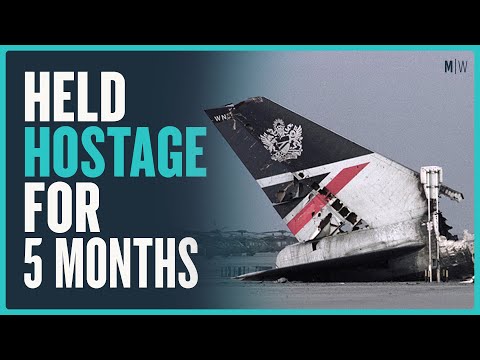
The Secrets Of British Airways Flight 149 - Stephen Davis | Modern Wisdom Podcast 359
Stephen Davis (guest), Chris Williamson (host), Narrator
In this episode of Modern Wisdom, featuring Stephen Davis and Chris Williamson, The Secrets Of British Airways Flight 149 - Stephen Davis | Modern Wisdom Podcast 359 explores british Airways Flight 149: Covert Mission, Human Shields, Global Consequences Exposed Investigative journalist Stephen Davis details his 30‑year investigation into British Airways Flight 149, which landed in Kuwait just as Iraq invaded in 1990. He argues the flight was deliberately used to insert a covert British special forces surveillance team, while officials knowingly exposed hundreds of civilian passengers to capture and use as Saddam Hussein’s human shields. The UK government and British Airways then allegedly lied, suppressed key reports, and denied victims recognition, support, and compensation. Davis also traces how intelligence from the mission, and political decisions around it, fed into a chain of events leading to US troops in Saudi Arabia, Osama bin Laden’s radicalization, and decades of Middle East turmoil.
British Airways Flight 149: Covert Mission, Human Shields, Global Consequences Exposed
Investigative journalist Stephen Davis details his 30‑year investigation into British Airways Flight 149, which landed in Kuwait just as Iraq invaded in 1990. He argues the flight was deliberately used to insert a covert British special forces surveillance team, while officials knowingly exposed hundreds of civilian passengers to capture and use as Saddam Hussein’s human shields. The UK government and British Airways then allegedly lied, suppressed key reports, and denied victims recognition, support, and compensation. Davis also traces how intelligence from the mission, and political decisions around it, fed into a chain of events leading to US troops in Saudi Arabia, Osama bin Laden’s radicalization, and decades of Middle East turmoil.
Key Takeaways
Flight 149 was likely used as covert cover for a special forces insertion.
Davis presents testimony from special forces members, planners, and a US Navy captain showing that nine British operatives boarded late with military ticket codes, disembarked into waiting handlers in Kuwait, and then dispersed to conduct surveillance on Iraqi troop movements.
Get the full analysis with uListen AI
Officials allowed a civilian aircraft to land in an active war zone despite clear warnings.
The Iraqi invasion began while the plane was hours away; other flights were diverted, and an MI6 briefer explicitly warned BA that a post‑midnight arrival risked interception—yet Flight 149 was neither turned back nor warned, suggesting deliberate risk‑taking with passenger lives.
Get the full analysis with uListen AI
Passengers endured severe abuse as human shields, then decades of denial and neglect.
Hostages from 15 countries were dispersed to about 70 strategic sites, suffering rapes, mock executions, starvation, and psychological torture, but the UK suppressed the Royal Military Police’s ‘Operation Sandcastle’ report and offered almost no mental‑health or financial support.
Get the full analysis with uListen AI
The UK government and British Airways have maintained a long‑running cover‑up.
Thatcher gave a factually false account to Parliament about timing of the landing, officials still deny the mission, and BA fought compensation claims while quietly collecting insurance for a plane later destroyed by US forces at Britain’s likely request.
Get the full analysis with uListen AI
Intelligence from the mission contradicted the case for large US deployment in Saudi Arabia.
Special forces on the ground reported Iraqi forces in defensive, not offensive, positions near Saudi Arabia—yet US officials used a more alarmist narrative to secure basing rights, a decision some experts link to 30 years of regional instability, including ISIS and the 2003 Iraq War.
Get the full analysis with uListen AI
The presence of US troops in Saudi Arabia helped radicalize Osama bin Laden.
Davis notes that bin Laden had offered to raise an army to expel Saddam from Kuwait; after the Saudis chose US forces instead, he swore revenge, making American troops on Saudi soil a core grievance that fed directly into the logic of 9/11.
Get the full analysis with uListen AI
Persistent investigative work and insider whistleblowers can eventually pierce state secrecy.
Despite legal threats and disinformation, Davis secured on‑record confirmations from special forces veterans, an ex‑US warship captain, and retired MI6 officer Tony Pace, showing how long‑form investigation and protected sources can challenge official narratives decades later.
Get the full analysis with uListen AI
Notable Quotes
“These people suffered a double injustice. First off, they were landed in a war zone as a result of a secret mission ordered by Mrs. Thatcher. But secondly, they were denied even the recognition of the terrible things that happened to them when they were in captivity.”
— Stephen Davis
“The British government will tell you now, if you phone them up tomorrow, they would say, 'Oh, no, this never happened, Chris. This mission never existed.' But unfortunately for them, I tracked down the captain of the US warship… and he confirmed every single part of the story.”
— Stephen Davis
“There would have been no 9/11 without American troops on Saudi soil.”
— Stephen Davis (paraphrasing Richard Clarke’s assessment)
“Sometimes it becomes absurd. You know, 30 years later, they're still denying it when I have an on‑camera confirmation from the US captain.”
— Stephen Davis
“At least I have the satisfaction after 30 years’ work of many more people knowing what happened to the human shields of the Gulf War than did before.”
— Stephen Davis
Questions Answered in This Episode
If the intelligence from British operatives showed Iraqi forces in defensive positions, what specific factors drove US and UK leaders to pursue such an aggressive military posture anyway?
Investigative journalist Stephen Davis details his 30‑year investigation into British Airways Flight 149, which landed in Kuwait just as Iraq invaded in 1990. ...
Get the full analysis with uListen AI
How should democratic societies balance the real need for covert operations with the duty of care owed to uninformed civilians placed in harm’s way?
Get the full analysis with uListen AI
What legal or political mechanisms could realistically compel the release of Operation Sandcastle and related documents after three decades of secrecy?
Get the full analysis with uListen AI
To what extent has the Flight 149 cover‑up shaped public trust in official narratives about later conflicts, such as the 2003 Iraq War?
Get the full analysis with uListen AI
How might the history of terrorism and Middle East geopolitics have differed if Saudi Arabia had rejected US troops and instead relied on regional or internal forces to counter Saddam Hussein?
Get the full analysis with uListen AI
Transcript Preview
The Saudis had had a previous offer from a man who went to the Saudi Defense Minister, a rich Saudi, and said, "I will raise an army of holy warriors, a 100,000 strong army, and I will kick Saddam out of Kuwait City for you." And this man, when he found out that they had allowed American troop in instead of his offer, this man, Osama bin Laden, swore revenge. (airplane whooshing)
Steven Davis, welcome to the show.
Thank you very much. Pleased to be here.
How long have you been researching British Airways Flight 149?
Half my life. Uh, I first, um, got a tip-off about this when I was on the news desk of The Independent on Sunday in August 1990, three days after the plane landed. Um, and I'm 64 years old now, so 31 years. So, pretty much half my life. It's been a long, long journey. (laughs)
What's compelling about this story? Why have you bothered spending three decades on it?
I'm an investigative reporter. Uh, first off, I don't like being lied to. Um, and ... But several things drove me on. These people suffered a double injustice. First off, they were landed in a war zone, um, as a result of a secret mission ordered by Mrs. Thatcher. But secondly, they were denied even the recognition of the terrible things that happened to them when they were in captivity. So, a few months after this, the Royal Military Police were commissioned by the government to do an- a load of interviews with the human shields, as they had become known. And, uh, they produced a report called Operation Sandcastle. And, um, it was a horror story of rapes, other assaults, mock executions, near-starvation conditions. It was supposed to be presented to Parliament and they promptly suppressed it, and it has been kept secret for 30 years. So, the people on the plane were lied to about why they were there in the first place, but also denied (laughs) recognition of the terrible things that happened to them while they were there. So, those two things drove me on. The more I met weird official denials and contradictory denials from British Airways and the British government, the more I kept going. And then the other thing was meeting the victims of this, many of whom have suffered PTSD and lifelong trauma as a result of this ordeal. And again, just denied the public recognition. So, every time I would talk to one and at one stage during every interview, you could see them start to tremble or tear up as they remembered something terrible that had happened to them, it made me angrier and more determined to carry on.
Okay. So, someone that's not familiar with this particular case, what's the story?
Okay. So, on the morning of the 1st of August, uh, in 1990, uh, Saddam had been threatening to invade Kuwait for some time. Uh, a huge amount of Iraqi troops were gathered on the border, it was reported by the BBC that morning. A British Airways Flight 149 was due to take off and fly to Kuwait, which was a crew transfer and refueling stop, and then on to Madras in India, and then on to Kuala Lumpur. As it sat on the ground, there was a two-hour delay. During this time, a group of young, very fit men got on board at the last minute. Uh, most of the passengers thought instantly, "These guys are soldiers." Went to the back of the plane, sat down. The plane took off. When it was, um, between three and four hours' flying time from Kuwait, the invasion started. Iraqi troops crossed the border. All other flights that were going to Kuwait City were turned away. But BA149 was not, and it flew on. It landed in, um, Kuwait at four o'clock on the morning of the 2nd. And at that stage, Iraqi tanks were already in the city and surrounding the airport. When the door opened and Clive Urthie, the Chief Purser, uh, there was a uniformed British military officer waiting. And Clive thought he must be here for the Kuwaiti royal who was traveling in first class. But no, this man was there to collect the young men at the back. He said, "Can you please get them? And we're in a hurry." So, these men get off, they have, uh, people waiting for them with cases and gear, and then they vanish from the airport, never to be seen again. Not captured by the Iraqis. Everybody else on the plane is captured by the Iraqis and used as human shields-
Install uListen to search the full transcript and get AI-powered insights
Get Full TranscriptGet more from every podcast
AI summaries, searchable transcripts, and fact-checking. Free forever.
Add to Chrome