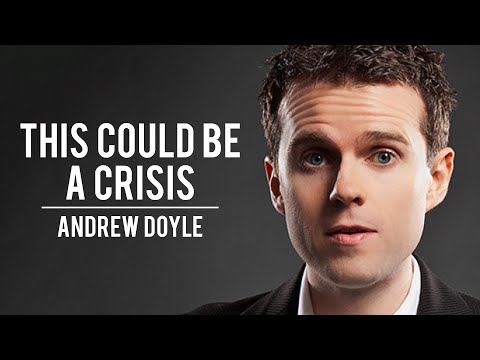
Andrew Doyle | I'm Not Exaggerating The Problem | Modern Wisdom Podcast 232
Andrew Doyle (guest), Chris Williamson (host)
In this episode of Modern Wisdom, featuring Andrew Doyle and Chris Williamson, Andrew Doyle | I'm Not Exaggerating The Problem | Modern Wisdom Podcast 232 explores andrew Doyle warns: identity politics threatens liberalism and free speech Andrew Doyle argues that what’s often called “woke” or social justice ideology has moved from fringe campus activism into mainstream institutions, creating a soft form of authoritarianism that undermines liberal values and free speech.
Andrew Doyle warns: identity politics threatens liberalism and free speech
Andrew Doyle argues that what’s often called “woke” or social justice ideology has moved from fringe campus activism into mainstream institutions, creating a soft form of authoritarianism that undermines liberal values and free speech.
He criticizes contemporary anti-racism and critical race theory for reframing society as an irredeemable oppressor–oppressed power structure, promoting concepts like “whiteness” and mandatory anti-racism that he sees as racially essentialist and illiberal.
Doyle also explores tensions within LGBT activism—especially between gay/lesbian rights and militant trans activism—and how intersectionality has created a grievance hierarchy that now marginalizes traditional gay concerns.
Looking ahead, he sees two possible outcomes: either institutionalized identitarianism leads to an authoritarian, decolonized-but-hollow culture, or liberal principles are reasserted and today’s excesses are later regarded as a temporary moral panic.
Key Takeaways
Anti-racism as practiced today can entrench racial thinking.
Doyle argues that frameworks like Robin DiAngelo’s ‘White Fragility’ and Ibram X. ...
Get the full analysis with uListen AI
The new dichotomy is ‘racist vs. anti-racist,’ not ‘racist vs. not racist.’
Within contemporary critical race discourse, merely not being racist is framed as another form of racism; one must actively confess complicity and participate in ‘decolonizing’ systems, which makes dissent or neutrality morally suspect by definition.
Get the full analysis with uListen AI
‘Whiteness’ is used as a flexible, unfalsifiable power concept.
He notes that ‘whiteness’ can mean either a racial identity or a system of oppression, allowing activists to label non‑white perpetrators as ‘enacting whiteness’ while also justifying statements like ‘abolish whiteness’ as attacks on a system rather than people—depending on what’s rhetorically convenient.
Get the full analysis with uListen AI
LGBT activism is fracturing over trans issues and sexual boundaries.
Doyle criticizes organizations like Stonewall for redefining homosexuality as ‘same gender attraction’ rather than same-sex attraction, arguing this erases the legitimacy of lesbians and gay men who are exclusively attracted to biological sex, and puts them in direct conflict with certain trans activist demands.
Get the full analysis with uListen AI
Institutional capitulation amplifies fringe activism into real power.
He stresses that the core problem isn’t a handful of radical students or activists, but universities, charities, corporations, and public bodies that immediately concede to maximalist demands (such as radical ‘decolonization’ plans), effectively rewarding and entrenching the most extreme positions.
Get the full analysis with uListen AI
Language policing and jargon create a priesthood of ‘experts.’
By wrapping simple ideas in dense theory-speak and insisting only trained academics can ‘properly’ understand concepts like whiteness or systemic oppression, Doyle argues that social justice theorists mimic a religious clergy, discouraging laypeople from questioning or interpreting these ideas for themselves.
Get the full analysis with uListen AI
The true culture war is liberalism versus soft authoritarianism.
He distinguishes between a shallow ‘tabloid’ culture war of name‑calling and a substantive conflict over whether societies prioritize individual liberty, open debate, and equal treatment under the law—or embrace identity-based authority that restricts speech and reshapes institutions around ideological conformity.
Get the full analysis with uListen AI
Notable Quotes
“If you really care about combating racism, you will oppose anti-racism.”
— Andrew Doyle
“The dichotomy is actually racist or anti-racist, which means you are proactively conceding your own complicity in these systems.”
— Andrew Doyle
“This social justice ideology is, at heart, so infantile that it’s very difficult not to start sounding like you’re throwing out ad hominems.”
— Andrew Doyle
“It isn’t a battle between left and right; it’s a battle between liberalism and authoritarianism.”
— Andrew Doyle
“Either way, we are in trouble, because either victor will make the culture war worse, not better.”
— Andrew Doyle on the 2020 U.S. election
Questions Answered in This Episode
To what extent is Doyle correct that contemporary anti-racism efforts are counterproductive, and what empirical evidence supports or challenges his claim?
Andrew Doyle argues that what’s often called “woke” or social justice ideology has moved from fringe campus activism into mainstream institutions, creating a soft form of authoritarianism that undermines liberal values and free speech.
Get the full analysis with uListen AI
How can liberal societies meaningfully address real discrimination without adopting the rigid oppressor–oppressed frameworks of critical race theory?
He criticizes contemporary anti-racism and critical race theory for reframing society as an irredeemable oppressor–oppressed power structure, promoting concepts like “whiteness” and mandatory anti-racism that he sees as racially essentialist and illiberal.
Get the full analysis with uListen AI
Is the tension between LGB rights and trans activism inevitable, or can a rights-based framework reconcile conflicts over sex, gender, and boundaries?
Doyle also explores tensions within LGBT activism—especially between gay/lesbian rights and militant trans activism—and how intersectionality has created a grievance hierarchy that now marginalizes traditional gay concerns.
Get the full analysis with uListen AI
What practical steps could universities, corporations, and public institutions take to resist ideological capture while still demonstrating genuine commitment to equality?
Looking ahead, he sees two possible outcomes: either institutionalized identitarianism leads to an authoritarian, decolonized-but-hollow culture, or liberal principles are reasserted and today’s excesses are later regarded as a temporary moral panic.
Get the full analysis with uListen AI
If the ultimate culture war is liberalism versus authoritarianism, what would a constructive, non‑authoritarian response to ‘woke’ excesses look like in law, education, and public discourse?
Get the full analysis with uListen AI
Transcript Preview
They can say that all white people are complicit in whiteness by virtue of the color of their skin, and they can also say that people who are non-white are also complicit in the system if they are not actively anti-racist. Remember, for these people, it isn't the dichotomy of racist or not racist. Because if you're not racist, that's another form of racism. The dichotomy is actually racist or anti-racist, which means you are proactively conceding your own complicity in these systems and, and attempting to decolonize these systems, right? So it's not good enough just not to be a racist person, to be a good person who doesn't ever say or do or support anything racist. That's not enough. You've got to be an anti-racist. (wind blowing)
Andrew, welcome to the show.
Lovely to be back. It's been a while. How long has it been? More than a year, I think.
Just over a year. You were-
Just over a year.
... en route from London to the Fringe, dropped in for a quick coffee, and then-
That's right. That's right, yeah. And it was fun. It was good.
It was.
But none of that, none of that anymore. That's not how the world works now.
No.
It's all remote.
It is. You're, you're on, uh, on holiday at the moment, somewhere nice.
Well, I'm, I'm not really. I'm working. I'm on the Amalfi Coast. Uh, I'm staying in a small town, uh, halfway between Positano and Amalfi, and I'm... I spent the day in Capri the other day. So it's... And, and I've been to Pompeii, so it sounds like I'm having a good time. But I am here to work, and so for the rest of the week, I'm, I'm not gonna leave the flat. I'm just gonna sit here and write, 'cause I can't work at home. Too many distractions.
You're reading some-
But I norm-
... future classics, I'm sure.
I normally go away to, um... No, I'm not. I'm, I'm working on a new book, and because the last two books I wrote, I wrote in Sark, the Isle of Sark, but I can't get there because of the quarantine rules, so I had to come to Italy. So, uh, you know, it's fine. Uh, yeah, it's a real tour.
It's a tough life, isn't it? Yeah. (laughs)
Yeah. No, but it's good. It's good. I mean, I've got the space I need just to focus on stuff.
I like it. So what have been the major developments in the woke world this year?
I mean, where do you begin? Uh, it, it, it has exploded. When, when I last spoke to you, uh, I was often accused of, uh, exaggerating the problem and people would say, "Well, you know, you're just complaining about the behavior of a few rogue students here and there on university campuses, or a few nutcases on the internet." Um, and, well, I've, I've been proven right, haven't I? Because now it's not that. It's demonstrably not that. The evidence of everything I've been writing about and talking about for the past five years is absolutely everywhere. It's incontrovertible. And if that sounds arrogant, so be it, but there you go. I told you so.
Install uListen to search the full transcript and get AI-powered insights
Get Full TranscriptGet more from every podcast
AI summaries, searchable transcripts, and fact-checking. Free forever.
Add to Chrome