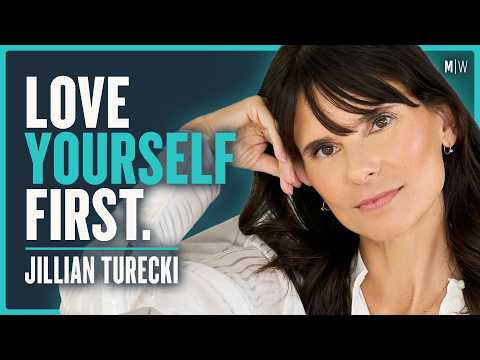
9 Ways People Destroy Their Own Relationships - Jillian Turecki
Chris Williamson (host), Jillian Turecki (guest)
In this episode of Modern Wisdom, featuring Chris Williamson and Jillian Turecki, 9 Ways People Destroy Their Own Relationships - Jillian Turecki explores how Fear, Stories, And Self-Sabotage Quietly Ruin Our Relationships Jillian Turecki explains that most relationship problems stem from deep fears of not being enough, unexamined conditioning, and the stories our minds create under stress. She argues that romantic and business relationships are powerful mirrors for our unresolved childhood patterns, beliefs, and self-worth. The conversation walks through core principles from her book—self-responsibility, taming the mind, distinguishing lust from love, self-acceptance, honest communication, managing stress, and parental healing. Overall, she reframes relationships as a spiritual growth path that requires accountability, emotional awareness, and conscious effort long after the honeymoon phase ends.
How Fear, Stories, And Self-Sabotage Quietly Ruin Our Relationships
Jillian Turecki explains that most relationship problems stem from deep fears of not being enough, unexamined conditioning, and the stories our minds create under stress. She argues that romantic and business relationships are powerful mirrors for our unresolved childhood patterns, beliefs, and self-worth. The conversation walks through core principles from her book—self-responsibility, taming the mind, distinguishing lust from love, self-acceptance, honest communication, managing stress, and parental healing. Overall, she reframes relationships as a spiritual growth path that requires accountability, emotional awareness, and conscious effort long after the honeymoon phase ends.
Key Takeaways
Take radical responsibility: you are the common denominator in your relationships.
Instead of only blaming partners or circumstances, examine how your fears, conditioning, and choices (including who you pick) repeatedly shape your relationship outcomes—this is empowering because it’s what you can change.
Get the full analysis with uListen AI
Catch the ‘battlefield mind’ by questioning your stories.
When you spiral into assumptions about your partner—what they meant, why they did something—pause, regulate your body (breath, movement, food, walk), and ask, “Is this actually true, or just a story I’m telling myself?”
Get the full analysis with uListen AI
Don’t mistake lust and euphoria for love.
The early high of chemistry is more about novelty and escape than real intimacy; real love is a verb—built through shared values, safety, respect, and how you handle the transition from infatuation to the ‘more boring’ but deeper phase.
Get the full analysis with uListen AI
Build self-acceptance so you stop tolerating poor treatment.
You don’t need perfect self-love to be in a relationship, but if your self-esteem is too low, you’ll hide your needs, over-perform, or endure borderline abusive behavior because you don’t believe you deserve better.
Get the full analysis with uListen AI
Speak up honestly; silence breeds resentment and self-betrayal.
Avoiding difficult truths to “keep the peace” only trains your partner not to know you, blocks them from meeting your needs, and turns unspoken expectations into premeditated resentments.
Get the full analysis with uListen AI
Protect your relationship from unmanaged stress and over-familiarity.
If you chronically bring your worst, most reactive self home—using your partner as an emotional dumping ground—stress and the law of familiarity will steadily erode attraction, goodwill, and intimacy.
Get the full analysis with uListen AI
Accept that you cannot convince anyone to love or choose you.
Trying to contort yourself, over-give, or use children or drama to make someone stay is futile and degrading; the healthier move is to accept their choice and stop outsourcing your worth to their feelings.
Get the full analysis with uListen AI
Make peace with your parents to change your romantic patterns.
Examining and reframing your story about your parents—grieving what you didn’t get, seeing them as flawed humans, and releasing them as the ‘leaders’ of your belief system—loosens the hold of childhood wounds on your adult relationships.
Get the full analysis with uListen AI
Notable Quotes
“No one is going to stand in your way more than you. No one is going to lie to you more than you do to yourself.”
— Jillian Turecki
“Unspoken expectations are premeditated resentments.”
— Neil Strauss (quoted by Chris Williamson and Jillian Turecki
“Immature love says, ‘I am in love with my projected idealization of you, and the moment you show me that you’re real, I’m going to pull away.’ Mature love says, ‘I see all of you… and I choose you.’”
— Jillian Turecki
“Our minds are designed to keep us safe. They’re not designed to make us happy.”
— Jillian Turecki
“A relationship is meant to make us happier, not happy. No one is coming to save you.”
— Jillian Turecki
Questions Answered in This Episode
In my last few relationships, what recurring patterns point back to my own fears or conditioning rather than just ‘picking the wrong person’?
Jillian Turecki explains that most relationship problems stem from deep fears of not being enough, unexamined conditioning, and the stories our minds create under stress. ...
Get the full analysis with uListen AI
What are the most common negative stories my mind tells me about my partner or myself, and how often have I actually tested whether they’re true?
Get the full analysis with uListen AI
Have I been confusing lust and emotional intensity with love, and how might that be affecting when and why I leave relationships?
Get the full analysis with uListen AI
Where am I currently betraying myself—hiding needs, tolerating behavior, or staying silent—to avoid conflict or abandonment?
Get the full analysis with uListen AI
If I looked at my parents through my adult eyes instead of my child’s lens, what might I newly understand about them and how they shaped my approach to love?
Get the full analysis with uListen AI
Transcript Preview
It begins with you. They do not have the power, we do. All the disappointment, confusion and drama of your former relationships can be traced to the universal fear that you are not enough.
Yes. Um, everything that you do inside of a relationship that you are really confused about, that's been maddening to you and to your former partners or anything that, um, (sighs) anything that you, that you are questioning, it can be boiled down to the fact that you are afraid that you're not enough for this person, and if you're not enough, that somehow love is gonna be taken away from you. Because if we, when we are confronted with that insecurity, that we are not good enough in some way, that's when we start to act out all our weirdness inside of a relationship, honestly. And yes, of course, there's childhood, there's conditioning, there's, there's your parents. All these things are influences, but when people are angry, they're afraid. When people are lashing out, they're afraid. When people are clinging, they're afraid. When people are shutting down, they are afraid. And, um, I started the book and named it It Begins With You because no one is going to stand in your way more than you. No one is going to lie to you more than you do to yourself. Same (laughs) for, same for me. This is just everyone. And, um, it's not about you're the only bla- uh, person to blame. It's not about blame at all, but if we want to change our relationship lives, if we wanna change our lives at all, we have to be able to look within and see the ways in which our insecurity gets in the way of a relationship. And we have to see where, our, also, not just our insecurity, but our belief system and our conditioning and the things that happened in childhood. We are the common denominator in all our relationships. That's actually really good news because it means that you can actually change something. Uh, this ide- this concept of is the problem is you, not necessarily. You know, the problem could very be, well be the people who you're choosing, but you're choosing them. So y- you're choosing them. Why? And so, the first principle, the first truth is you have to, you have to be willing to look within, and a lot of people are not willing to do that until they are desperate, but it's the only way.
It's interesting the not enough thing, that it, it makes love and attachment and care feel contingent. It feels like if, if I could be more, if I was able to be... And, you know, if you listen to a lot of the discussions on the internet around romance, but also around friendships and stuff like that, a lot of the time, you know, it's a hopeful and motivating message to say, "Pick yourself up by your bootstraps. Outgrow the person that hurt you. Make yourself better. Uh, take this, uh, curse and turn it into a lesson instead of a blessing that it could've been but it wasn't, so now you're gonna, you know, alchemize yourself into some better version of you." Like, all of that's fine, but the subtext of a lot of that conversation is still you're not sort of worthy as you are, and there's this place that you need to get yourself to or could get yourself to, and if only you were there, maybe you wouldn't have been rejected by this person.
Install uListen to search the full transcript and get AI-powered insights
Get Full TranscriptGet more from every podcast
AI summaries, searchable transcripts, and fact-checking. Free forever.
Add to Chrome