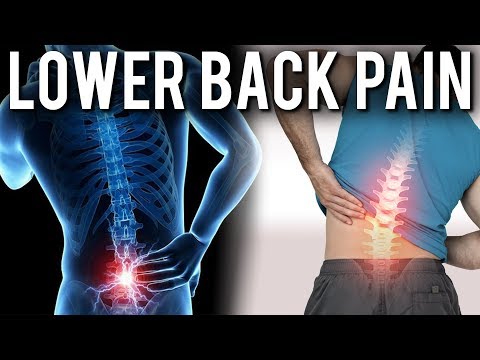
Why Do Our Backs Hurt? | Dr Stuart McGill
Dr Stuart McGill (guest), Narrator, Chris Williamson (host), Narrator
In this episode of Modern Wisdom, featuring Dr Stuart McGill and Narrator, Why Do Our Backs Hurt? | Dr Stuart McGill explores back Pain, CrossFit, And The Science Of A Resilient Spine Dr. Stuart McGill explains why back pain is so prevalent, especially among active people, emphasizing poor movement patterns, sedentary lifestyles, and untargeted training or rehab.
Back Pain, CrossFit, And The Science Of A Resilient Spine
Dr. Stuart McGill explains why back pain is so prevalent, especially among active people, emphasizing poor movement patterns, sedentary lifestyles, and untargeted training or rehab.
He details how specific mechanical causes (like endplate fractures, Schmorl’s nodes, and disc bulges) arise from chronic loading patterns, particularly in sports such as CrossFit and powerlifting, and why recovery requires precise assessment and tailored programming.
McGill introduces his ‘Big Three’ core exercises as low‑risk, high‑reward tools to restore spinal stability, enhance performance via proximal stiffness, and reduce pain—while warning against indiscriminate stretching and overtraining.
The episode is anchored by the story behind the book ‘Gift of Injury,’ where world‑class powerlifter Brian Carroll rebuilt an apparently “obliterated” spine to world‑record performance, illustrating how disciplined mechanics, loading, and mindset can reverse even severe back injury.
Key Takeaways
Start with a precise mechanical assessment, not the MRI image.
McGill always evaluates the person, their history, and pain triggers before looking at imaging, because MRIs show anatomy (wounds and old scars) but only a good clinical assessment reveals which structures are actually causing current pain.
Get the full analysis with uListen AI
Chronic loading patterns, not single events, usually create back injuries.
Endplate fractures, Schmorl’s nodes, and disc bulges commonly arise from repeated heavy loading and loaded spinal flexion (e. ...
Get the full analysis with uListen AI
Sedentary work plus “blowout” training is a potent recipe for back pain.
Long hours sitting stiffen hips and alter spinal mechanics; trying to undo this with one intense daily gym session often overloads deconditioned tissues and encourages treating the spine like a ball‑and‑socket joint when it is not.
Get the full analysis with uListen AI
Spinal health depends on moving well and moving often—not one perfect posture.
There is no single ideal posture; the best posture is one that changes frequently to move stress around the body, combined with skillful movement strategies that avoid high stress concentrations in vulnerable structures.
Get the full analysis with uListen AI
The Big Three build proximal stability that both reduces pain and boosts performance.
The curl‑up, side plank, and bird dog were chosen because they maximize spinal stability with minimal load; they dampen painful micro‑movements and create residual neural stiffness, which can immediately relieve pain and increase striking, running, and lifting performance.
Get the full analysis with uListen AI
Elite performance requires tuned stiffness, not maximal flexibility.
World‑class powerlifters, sprinters, and throwers are typically elastic and relatively tight (e. ...
Get the full analysis with uListen AI
Recovery demands both patience and intelligent loading, not constant “active recovery.”
Powerlifters who adapt well to heavy loads often train very heavy only once and then take several days off to allow bone and tissue remodeling, whereas high‑frequency, high‑intensity patterns (common in CrossFit) can repeatedly break off adaptations before they consolidate.
Get the full analysis with uListen AI
Notable Quotes
“Very few people these days get a competent and thorough assessment of the mechanism of their back pain.”
— Dr. Stuart McGill
“The ideal posture is one that frequently changes, because you migrate stress concentrations in your body through posture change.”
— Dr. Stuart McGill
“CrossFit combines adaptations to stimulate mobility, and then the next exercise is asking you to have a tougher collagen. That’s very, very difficult to do in terms of biological adaptations.”
— Dr. Stuart McGill
“Have you built a world champion powerlifter? Do you know one with loose hamstrings? They don’t exist.”
— Dr. Stuart McGill
“Just because the pain is gone one day, it doesn’t mean their back is healed.”
— Dr. Stuart McGill
Questions Answered in This Episode
How can an everyday lifter, without access to a specialist, approximate the kind of thorough back assessment McGill describes?
Dr. ...
Get the full analysis with uListen AI
What specific training changes should CrossFit athletes make to reduce disc and endplate stress while still competing in the sport they love?
He details how specific mechanical causes (like endplate fractures, Schmorl’s nodes, and disc bulges) arise from chronic loading patterns, particularly in sports such as CrossFit and powerlifting, and why recovery requires precise assessment and tailored programming.
Get the full analysis with uListen AI
How can someone practically balance the need for spinal stiffness with the desire for mobility, especially if they enjoy both yoga‑style work and heavy lifting?
McGill introduces his ‘Big Three’ core exercises as low‑risk, high‑reward tools to restore spinal stability, enhance performance via proximal stiffness, and reduce pain—while warning against indiscriminate stretching and overtraining.
Get the full analysis with uListen AI
At what point in rehab is it appropriate to start loading the spine again, and what objective signs should guide progression versus backing off?
The episode is anchored by the story behind the book ‘Gift of Injury,’ where world‑class powerlifter Brian Carroll rebuilt an apparently “obliterated” spine to world‑record performance, illustrating how disciplined mechanics, loading, and mindset can reverse even severe back injury.
Get the full analysis with uListen AI
How should aging athletes adjust their training priorities across decades to maintain spinal health, power, and function without accumulating crippling damage?
Get the full analysis with uListen AI
Transcript Preview
I, I never put a person's images up on the view box early in the consult. I really try and understand the person, uh, who they are, their personality, and, and then I, I assess them for their physical pain triggers, and only then will I look at the images. And when I looked at the images, I, I was quite horrified. He'd split his sacrum front to back, L5 was heavily fractured, and the discs were, uh, if I use the word obliterated-
(laughs)
... uh, that would be, um, quite accurate. So we started to talk, and he was starting to move a little bit better, and, uh, uh, but he had to humble himself right back to getting the movement patterns right and some very, very basic, uh, patterns, athletic patterns. Um, and then, uh, he said, w- in our conversation, he said, "Well, do, do you think I'm gonna get out of pain? Because the surgeons I've s- I've said- seen, th- they, they said I'm done. I, I, I'm not even gonna get out of pain, I've done so much damage to my back." And I said, "Well, I don't know, but let's, let's ... th- here's my best effort and my best suggestion on what to do." Well, believe it or not, he was outta pain in about three weeks, just learning how to avoid the, the triggers. But he said something very curious to me. He said, "Well, I'm gonna get out of pain, and when I get out of pain, I want my, my world record back." And I said to him, I said, "Well ..." and obviously I'm a lot older than he was, and I said, "Well, if you were my son, Brian, I'd give you this advice." I said, "Let's work on getting you out of pain, but I, I, I would seriously consider doing something else with your life. I mean, th- this is a pretty compromised spine. To build you back t- to set a world record again is ... " But he said, "No, I wanna do that." And I said, "All right. Well, if we do it, we'll write a book together." So that was the story behind, uh, uh, the book called Gift of Injury.
(wind blowing) Ladies and gentlemen, welcome back. This episode is brought to you by The Protein Works. I'm very happy to be supported by them again for this episode. They're giving away over 100 pounds of supplements this week, and all that you need to do to enter is share this episode. I'm absolutely certain it's going to be a massive help to a lot of people, so find a friend that you think would be interested, fire it in a group chat, or feel free to post it on your socials. All that you need to do is then send me a screenshot @chriswillex on whatever social media you want. Find me a screenshot or tag me in your share, and I will pick someone over the next week, and I'll announce that, uh, before next Monday. But onto today's guest, Dr. Stuart McGill. We are getting fully spinal today, aren't we? How are you? Welcome to the show.
Install uListen to search the full transcript and get AI-powered insights
Get Full TranscriptGet more from every podcast
AI summaries, searchable transcripts, and fact-checking. Free forever.
Add to Chrome