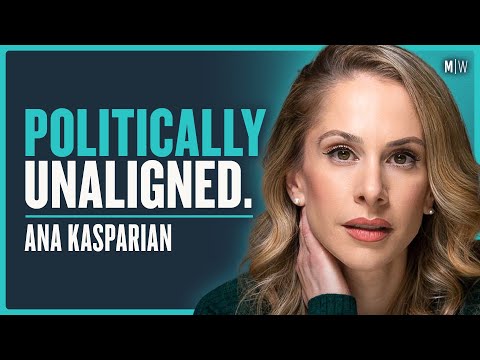
Why Does Everyone Feel So Politically Homeless? - Ana Kasparian
Chris Williamson (host), Ana Kasparian (guest)
In this episode of Modern Wisdom, featuring Chris Williamson and Ana Kasparian, Why Does Everyone Feel So Politically Homeless? - Ana Kasparian explores ana Kasparian Explains Leaving the Left’s Purity Politics Behind Ana Kasparian describes why she now identifies as politically "unaligned," distancing herself from rigid left-wing orthodoxy while retaining many of her core policy views. She critiques media distortion, tribalism, and the way politics has become a substitute religion that punishes nuance, discourages cross‑aisle understanding, and incentivizes fear. Kasparian details her shift back toward journalism over activism, her reassessment of Republican voters and Trump coverage, and her disillusionment with identity‑driven, defeatist messaging on the left. Throughout, she advocates for intellectual humility, grace toward opponents, diversified information sources, and a more empowering, opportunity‑focused vision for ordinary people.
Ana Kasparian Explains Leaving the Left’s Purity Politics Behind
Ana Kasparian describes why she now identifies as politically "unaligned," distancing herself from rigid left-wing orthodoxy while retaining many of her core policy views. She critiques media distortion, tribalism, and the way politics has become a substitute religion that punishes nuance, discourages cross‑aisle understanding, and incentivizes fear. Kasparian details her shift back toward journalism over activism, her reassessment of Republican voters and Trump coverage, and her disillusionment with identity‑driven, defeatist messaging on the left. Throughout, she advocates for intellectual humility, grace toward opponents, diversified information sources, and a more empowering, opportunity‑focused vision for ordinary people.
Key Takeaways
Dropping rigid political labels can restore intellectual freedom and honesty.
Kasparian argues that stepping away from formal left/right identities removed "ideological shackles," letting her reassess issues, admit past errors, and engage more openly with opposing viewpoints.
Get the full analysis with uListen AI
Legacy media’s exaggerations about Trump have damaged its own credibility.
She maintains that while Trump has serious flaws, sustained misrepresentation and context‑stripping by mainstream outlets create a "boy who cried wolf" effect that pushes his supporters to distrust accurate reporting too.
Get the full analysis with uListen AI
Understanding opponents requires firsthand sources and real-world contact.
Instead of relying on partisan narratives, Kasparian now watches full speeches, seeks original materials, diversifies her media diet, and talks directly to people with different politics, which softened her caricatured view of GOP voters.
Get the full analysis with uListen AI
Purity culture on the left punishes nuance and drives people to independence or rightward.
She describes an environment where any internal critique is treated as betrayal or covert Trumpism, noting that many disaffected Democrats are re-registering as independents while the right proves more welcoming to defectors.
Get the full analysis with uListen AI
Defeatist, identity‑centric rhetoric can disempower the very groups it claims to protect.
Kasparian criticizes factions of the left that insist systems are so rigged that minorities can’t succeed without "burning it all down," arguing this becomes a self‑fulfilling prophecy and undermines messages of agency and opportunity.
Get the full analysis with uListen AI
Policy implementation and willingness to recalibrate matter more than ideological purity.
Using examples like cashless bail and border policy, she says both sides resist adjusting when evidence shows implementation flaws, blocking pragmatic improvements that could better address crime, immigration, and justice.
Get the full analysis with uListen AI
Personal work on humility and compassion changes how you do politics.
Kasparian credits meditation and coaching with helping her see the humanity in everyone, shift from combative activism back to fair-minded journalism, and approach debates with "grace" instead of performative aggression.
Get the full analysis with uListen AI
Notable Quotes
“It has prevented me from allowing myself to dig a little deeper and maybe even consider whether the other side has a point.”
— Ana Kasparian
“I don’t want to be an activist. That’s not who I am. I want to explore, I wanna learn, and I wanna get people accurate information.”
— Ana Kasparian
“Politics has substituted religion to some extent. People have this religious zealotry toward their political beliefs.”
— Ana Kasparian
“If you’re grounded in your values, you’re not going to be seduced by people who are just nice to you.”
— Ana Kasparian
“I don’t want to do harm with the work I’m doing. And I realized to some extent, I was doing harm.”
— Ana Kasparian
Questions Answered in This Episode
How can journalists and commentators rebuild trust after admitting past bias or errors without being dismissed as political "grifters"?
Ana Kasparian describes why she now identifies as politically "unaligned," distancing herself from rigid left-wing orthodoxy while retaining many of her core policy views. ...
Get the full analysis with uListen AI
What concrete steps can politically engaged people take to avoid purity spirals and remain open to dissent within their own side?
Get the full analysis with uListen AI
Where is the line between legitimate concern about leaders like Trump and the kind of exaggerated coverage that erodes media credibility?
Get the full analysis with uListen AI
How can we craft policies on crime, immigration, and gender that respect vulnerable groups while acknowledging tradeoffs and unintended consequences?
Get the full analysis with uListen AI
What practical habits—like media consumption changes or local engagement—most effectively help someone feel less "politically homeless" and more connected to real people?
Get the full analysis with uListen AI
Transcript Preview
What does independent and unaligned mean?
For me, at this moment in my jor- I guess journey, if you wanna call it that, is freedom. Not h- having this weird obligation to any political group, so I can actually explore the issues and not feel pressured to think in one way or another. You know, I thought maybe coming out as someone who's unaligned would maybe get the cultish individuals off my back, but that has not happened. It's kind of amazing, (laughs) because, you know, they've been very critical of me, and they've been pretty obsessed with claiming that I'm not pure enough to be considered on the left. And finally, I was just like, "Okay, fine. Then I guess I'm not on the left. I'm unaligned." 'Cause I'm certainly not someone that really fits in with the right either. It's just I have far more nuanced views of some of these issues. It doesn't mean that my policy proposals are completely different. It doesn't mean that who I am as a person is completely different. It just means that I have noticed some characteristics on the left that have essentially felt like ideological shackles. It has prevented me from, you know, allowing myself to dig a little deeper and maybe even consider whether the other side has a point. And so I just want to be in a position to do my job better than I had been doing my job. And in that journey so far, I've realized that, you know, I've had incorrect opinions and perceptions of Republican voters overall. I think that there are gradations. There are differences. It's not a monolith. I just feel a lot more in touch with reality and the world around me, and I love it. There's something very liberating about that, and so focusing on how good that feels has kind of helped me get past all of the bad-faith attacks I'm dealing with. Because ultimately, if you're an intellectually curious person, you're, you're gonna have a hunger for learning more, for exploring more, for talking with people who don't agree with you. And if you find yourself in this cultish mentality where your, you know, your social group is pressuring you to avoid doing that, you're gonna lose your mind, and I really was finding myself in that situation.
Why do you think everyone's so obsessed with labels? Why does it matter that you're from the left, on the left, now an independent, now a s- th- this person's a libertarian, et cetera, et cetera?
I can't speak for the international community, but certainly in the United States, I think that politics has substituted religion to some extent. People have almost, like, this religious zealotry (laughs) toward their political beliefs, and when that happens, it's really difficult to have a conversation with someone without it immediately devolving into allegations of bad faith, of, you know, lying, deception, all sorts of things. And so maybe that's part of it, but honestly, I didn't really notice this as an issue in America until Donald Trump was running for president and then after he got elected as president. And I am one million percent guilty of honestly allowing him to kind of break my brain for a little bit, um, because I saw him as such a significant threat. And to be clear, there are things about Donald Trump that I still consider to be very terrible, the inability to accept defeat, the inability to accept that he lost the election. You know, the Capitol riots get a lot of attention, but the Capitol riots were not as big of a deal compared to the fake elector scheme. That was the real plot to overturn the election. So those are things that I still believe. I s- I'm still critical of Trump. However, I do think that there is an orchestrated effort in legacy media to paint him as even more demonic, and it's unfair to him. And what it does is it makes his supporters distrust media overall. So when the media debunks something and they do it accurately, well, Trump supporters aren't gonna trust them because they have lost credibility for painting him.
Install uListen to search the full transcript and get AI-powered insights
Get Full TranscriptGet more from every podcast
AI summaries, searchable transcripts, and fact-checking. Free forever.
Add to Chrome