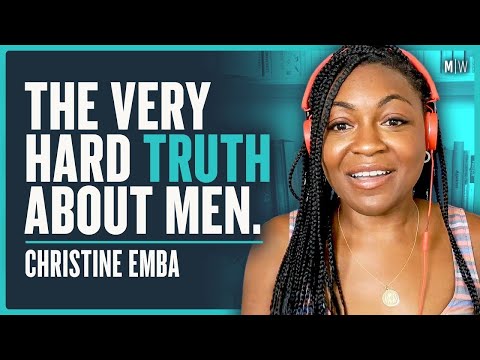
What A Feminist Has To Say About Masculinity - Christine Emba
Chris Williamson (host), Christine Emba (guest)
In this episode of Modern Wisdom, featuring Chris Williamson and Christine Emba, What A Feminist Has To Say About Masculinity - Christine Emba explores feminist Writer Explains Why Men Are Lost And What’s Missing Christine Emba discusses her viral Washington Post article, arguing that there is a real crisis in masculinity driven by economic shifts, cultural confusion about gender, and a lack of positive male role models.
Feminist Writer Explains Why Men Are Lost And What’s Missing
Christine Emba discusses her viral Washington Post article, arguing that there is a real crisis in masculinity driven by economic shifts, cultural confusion about gender, and a lack of positive male role models.
She and Chris Williamson outline how structural disadvantages in education and work, plus a cultural narrative that frames masculinity as toxic, have left many young men feeling dispossessed and unheard.
They criticize both modern feminism’s excesses and the progressive reluctance to advocate for men, noting that this vacuum has been filled by controversial figures like Andrew Tate and parts of the manosphere.
The conversation ends by stressing the need for clear, aspirational, non‑toxic models of manhood, more male mentorship, and the courage to talk about male problems without shaming men for having them.
Key Takeaways
Male malaise is rooted in real structural changes, not just feelings.
A shift from a brawn-based to a credential-heavy, soft-skill economy, combined with male underperformance in education and stagnating wages, has left many especially working‑class men struggling to find a clear role.
Get the full analysis with uListen AI
Constantly branding masculinity as “toxic” makes men exit the conversation.
Starting discussions with terms like “toxic masculinity” signals to many men that a core part of who they are is inherently bad, leading them to disengage instead of listening or changing.
Get the full analysis with uListen AI
There is a vacuum of positive, culturally sanctioned male role models.
Boys are heavily exposed to either mocking male archetypes (e. ...
Get the full analysis with uListen AI
Fathers and older men are crucial to raising well-adjusted boys.
Data on fatherless households and neighborhood “father presence” show boys’ outcomes improve markedly when they have engaged male role models, suggesting older men must actively mentor the next generation.
Get the full analysis with uListen AI
Progressives hurt their own goals by refusing to ‘sell’ men a better ideal.
By critiquing figures like Andrew Tate without offering compelling, aspirational models of manhood, the left leaves the field to the very influencers it dislikes, ensuring they keep their cultural power.
Get the full analysis with uListen AI
Norms for masculinity must be specific enough to guide, but not rigid.
Telling boys to just “be a good person” is too vague; they need clear expectations and archetypes, yet those norms must allow multiple legitimate ways of being a man so nontraditional men aren’t excluded.
Get the full analysis with uListen AI
Talking about male problems shouldn’t mean rolling back women’s gains.
Emba argues that supporting boys and men is not zero‑sum with feminism; in fact, if one sex is struggling, the other ultimately suffers too, so healthy masculinity is in women’s interests as well.
Get the full analysis with uListen AI
Notable Quotes
“In the fight between something and nothing, something is always going to win.”
— Christine Emba
“Many young men feel their difficulties are often dismissed out of hand as whining from a patriarchy that they don’t feel a part of.”
— Christine Emba
“Modern feminism told women that true freedom was achieved by working like your father and having sex like your brother.”
— Chris Williamson
“If you do not like the current role models that are being put up for men, you need to offer them something else.”
— Chris Williamson
“A good man is a good thing, and you can do that. Go do that.”
— Christine Emba
Questions Answered in This Episode
What would a concrete, positive vision of masculinity look like that is both aspirational and inclusive of different male personalities?
Christine Emba discusses her viral Washington Post article, arguing that there is a real crisis in masculinity driven by economic shifts, cultural confusion about gender, and a lack of positive male role models.
Get the full analysis with uListen AI
How can schools, communities, and policymakers practically increase healthy male role models for boys, especially in fatherless or disadvantaged environments?
She and Chris Williamson outline how structural disadvantages in education and work, plus a cultural narrative that frames masculinity as toxic, have left many young men feeling dispossessed and unheard.
Get the full analysis with uListen AI
In what ways can modern feminism recalibrate to support women’s interests without being perceived by men as retributive or anti‑male?
They criticize both modern feminism’s excesses and the progressive reluctance to advocate for men, noting that this vacuum has been filled by controversial figures like Andrew Tate and parts of the manosphere.
Get the full analysis with uListen AI
What specific media or cultural changes could help normalize talking about male problems without triggering defensiveness or accusations of misogyny?
The conversation ends by stressing the need for clear, aspirational, non‑toxic models of manhood, more male mentorship, and the courage to talk about male problems without shaming men for having them.
Get the full analysis with uListen AI
How should we balance acknowledging biological sex differences with preventing those differences from becoming rigid boxes that marginalize nontraditional men and women?
Get the full analysis with uListen AI
Transcript Preview
You wrote an article a week ago that I'm guessing you didn't intend, or didn't expect to get quite as much attention as it did.
I really, really did not. I had been working on the article, Men Are Lost, for a couple of months beforehand, and I knew that there was sort of growing discussion about the crisis of men in general. You know, I'd read Richard Reeves' book, I'd been following Scott Galloway and others on their podcasts. But it seems like the piece was almost the permission that some people needed to finally talk about the issue out in the open, um, and they were like really surprised to see it in a mainstream publication too. And also, at length. I will admit that it is quite long. (laughs) Um, but I've been really excited by the response.
I think the reason that it needed to be so long is because having this discussion is so far away from the typical cultural zeitgeist that you have to take people there one step at a time. You know, Richard Reeves talks about this. He has to prostrate himself on the, "We're not saying that women shouldn't have the focus on them, and we- we are not trying to take away any... And we must remember that the problems of the LGBT trans community are also..." And finally, after we've gone through this big rigmarole, we can actually get to the conversation of talking about men. So there is no such thing as having a short article about the crisis of modern men, because it leaves so many holes that people who want to interpret it in, uh, an ungenerous light are just immediately going, "Oh, so you think that such and such..." It's like, no, obviously not.
Yeah. Yeah, you have to leave space for all of the caveats and the like, not necessarily shout-outs to different groups, but like, "And we're acknowledging that this kind of man and, like, that kind of woman..." Et cetera, et cetera. But I mean, it was all so long, for me at least, and honestly, it was longer, my editors (laughs) did cut it down, because there are just so many different threads, um, that are coming together in this question. Uh, another columnist at The Post wrote to me and she was like, "You know, it almost feels like you could draw a dotted line from just, like, this question of what's happening with men, to kind of everything that's happening in our moment, whether it's like politics or religion or like all these different trends." So, there are just so many kind of angles to this question and sources of discontent and maybe solutions, that it's hard to fit it into one piece. I guess that's why Richard wrote a book. (laughs)
What is happening with men nowadays?
Well, we... (laughs) I mean, we throw around the phrase "the crisis of masculinity," um, but I- I actually do think that there is a crisis. I mean, explaining it out is also a long process too because, again, so many factors. But basically, we can start by saying that society has changed a lot over the past 30 to 40 years, and many of those challenges have been great for some groups, for women especially. Um, but they have not necessarily been so great for men, especially working class men. Um, but men of all kinds seem to be feeling a sort of malaise. I mean, we can tick off a couple of statistics, right? When it comes to education, first women were finally allowed to go to college, which is great. Um, very supportive of that. But right now, in most colleges, we're seeing that women, you know, outnumber men hugely. For every 100 undergraduate degrees, bachelor deg- bachelor's degrees that women get, men only get 74. And you know, we saw a huge wave of kind of college dropouts, basically during the COVID-19 pandemic. When you look at the data, 70% of those who just sort of like gave up and left school were men. Um, you can look at health statistics. So, you know, we've talked about deaths of despair, deaths from suicide, alcohol-induced illness or drug overdose. Three out of four deaths of despair are men. Um, you can talk about, you know, wages and workplace achievement. Um, so wages have stagnated for men since basically the 1970s. Either stagnated or fallen for all men but the men at, you know, the top of the economic ladder. Um, and I think that this has just huge ramifications for how men feel about their place in the world, or rather, don't feel about their place in the world. Women are thriving. The economy is moving away from sort of labor-intensive jobs towards jobs that reward soft skills and social skills and credentials, and many men are feeling a little bit lost, like they are not sure what role they play, especially when, you know, there are these kind of traditional archetypes that men used to play in our society of, you know, protector, provider especially. And now 50% of women say they make as much as or more than their partner. Um, women can have children (laughs) by themselves through artificial reproductive technology. Um, and then, of course, the LGBTQ movement has achieved more acceptance in society, but it also seems to have kind of made the question of gender even more unclear. If you can change your gender, if sex doesn't really mean anything, what- what does it mean to be a man, actually? And so a lot of young men especially are feeling, as I said, lost. Um, like they don't know where to fit, and they're kind of looking for role models of what a man should be or could be in this moment, and coming up short except for...... some pretty bad examples, (laughs) which I also talk about in the piece.
Install uListen to search the full transcript and get AI-powered insights
Get Full TranscriptGet more from every podcast
AI summaries, searchable transcripts, and fact-checking. Free forever.
Add to Chrome