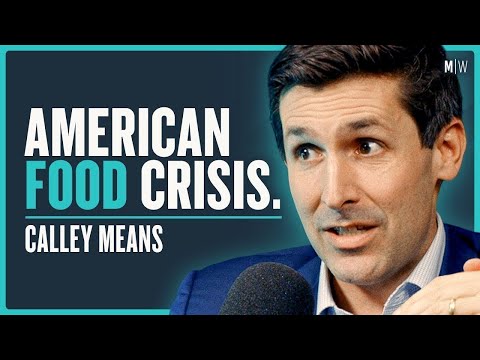
How America’s Healthcare System Keeps You Dependent - Calley Means
Chris Williamson (host), Calley Means (guest), Narrator
In this episode of Modern Wisdom, featuring Chris Williamson and Calley Means, How America’s Healthcare System Keeps You Dependent - Calley Means explores incentivized Illness: How U.S. Healthcare Profits From Keeping You Sick Calley Means argues that America’s healthcare, food, and regulatory systems are structurally incentivized to profit from chronic disease rather than prevent it, especially in children. He explains how insurance, pharma, hospitals, and nutrition policy all make more money as people become sicker, more medicated, and more dependent on lifelong treatments. The conversation connects obesity, metabolic dysfunction, mental health, infertility, environmental toxins, and ultra‑processed foods as branches of a single root problem: widespread metabolic dysfunction driven by corrupted incentives. Means advocates redirecting money and medical authority away from late‑stage pharmaceutical interventions toward food quality, movement, sleep, clean water/air, and regenerative agriculture, supported by policy reform and bottom‑up consumer action.
Incentivized Illness: How U.S. Healthcare Profits From Keeping You Sick
Calley Means argues that America’s healthcare, food, and regulatory systems are structurally incentivized to profit from chronic disease rather than prevent it, especially in children. He explains how insurance, pharma, hospitals, and nutrition policy all make more money as people become sicker, more medicated, and more dependent on lifelong treatments. The conversation connects obesity, metabolic dysfunction, mental health, infertility, environmental toxins, and ultra‑processed foods as branches of a single root problem: widespread metabolic dysfunction driven by corrupted incentives. Means advocates redirecting money and medical authority away from late‑stage pharmaceutical interventions toward food quality, movement, sleep, clean water/air, and regenerative agriculture, supported by policy reform and bottom‑up consumer action.
Key Takeaways
Follow incentives, not stated intentions, to understand U.S. healthcare behavior.
Insurance profits are tied to higher total spend, pharma profits come from lifelong management of chronic disease, and hospitals grow by maximizing interventions and filled beds—none of these structures are financially rewarded for creating genuinely healthy, low‑utilization patients.
Get the full analysis with uListen AI
Most major chronic diseases are interconnected expressions of metabolic dysfunction.
Conditions like heart disease, diabetes, many cancers, Alzheimer’s (“type 3 diabetes”), depression, kidney disease, and even COVID mortality cluster around blood sugar dysregulation and poor metabolic markers, yet medicine treats them as separate silos with separate specialists and drugs.
Get the full analysis with uListen AI
Ultra‑processed food is engineered addiction, not just ‘tasty convenience.’
Cigarette companies bought major food brands in the 1980s and redeployed addiction scientists to design cheap, hyper‑palatable products (refined sugar, processed grains, seed oils) that override satiety and drive overconsumption—then funded research and guidelines to normalize these foods, especially for kids and low‑income families.
Get the full analysis with uListen AI
Children’s exploding rates of obesity, diabetes, mental illness, and cancer reveal systemic, not ‘personal responsibility,’ failures.
With nearly 50% of teens overweight or obese and childhood cancer, heart disease, and statin prescriptions all surging, Means argues you can’t credibly blame individual willpower; the environment—food, advertising, medical guidelines, and policy—is effectively “mass-poisoning” kids while institutions disclaim responsibility.
Get the full analysis with uListen AI
Regulatory and academic bodies are heavily funded by the industries they regulate.
The FDA is mostly funded by pharma, former FDA heads sit on pharma boards, nutrition committees are majority industry-funded, and major journals/media depend on pharma advertising—so ‘evidence-based’ positions often align with industry profit (e. ...
Get the full analysis with uListen AI
Ozempic exemplifies the system’s bias toward expensive, lifelong drug solutions.
Means contends that pushing $1,600‑per‑month GLP‑1 injections—potentially onto the majority of adults and even children—treats obesity as a drug deficiency rather than a metabolic/lifestyle problem, diverts trillions away from root-cause interventions, and may worsen gut health and long‑term outcomes while enriching a single company.
Get the full analysis with uListen AI
Consumers can partially route around the system by funding and medicalizing root‑cause interventions.
Means promotes using HSAs/FSAs plus ‘letters of medical necessity’ to spend pre‑tax healthcare dollars on clinically relevant lifestyle tools (quality food, gyms, sleep tech, supplements, water filters) through platforms like TruMed, while seeking information from independent media and foundational books rather than captured institutions.
Get the full analysis with uListen AI
Notable Quotes
“The fundamental incentive of every single lever of healthcare is that it makes more money when a child is sicker for longer.”
— Calley Means
“A good long-term patient is a healthy patient—meaning healthy enough not to die, but sick enough to be managed for life.”
— Calley Means
“There’s not an epidemic of unhealthy people who are eating mostly whole foods and exercising 180 minutes a week.”
— Calley Means
“Nobody has responsibility for the health of Americans. Everyone in the system has plausible deniability.”
— Calley Means
“You’re not working hard on health. You’re working hard on fixing disease. Working hard on health is that there are smaller hospitals, not bigger ones.”
— Chris Williamson
Questions Answered in This Episode
If most chronic diseases share a common root in metabolic dysfunction, what would a healthcare system built around metabolic health actually look like in practice?
Calley Means argues that America’s healthcare, food, and regulatory systems are structurally incentivized to profit from chronic disease rather than prevent it, especially in children. ...
Get the full analysis with uListen AI
How can individuals realistically protect their families from ultra‑processed food and environmental toxins when these are structurally baked into school meals, subsidies, and low‑income food programs?
Get the full analysis with uListen AI
What reforms to FDA, NIH, and nutrition guideline committees would most effectively de‑risk regulatory capture without crippling genuine innovation?
Get the full analysis with uListen AI
Under what specific conditions—if any—does Means think GLP‑1 drugs like Ozempic are ethically and clinically appropriate, and how should their use be constrained?
Get the full analysis with uListen AI
Given the scale of institutional incentives he describes, where is the most leveraged point of action for a normal citizen: personal behavior change, political advocacy, supporting certain companies, or information sharing?
Get the full analysis with uListen AI
Transcript Preview
Why is modern health so broken?
The fundamental incentive that every single lever of healthcare makes more money when a child is sicker for longer periods of time. I mean, let's get out of conspiracy theories, let's get out of any conjecture. It just is a fundamental (laughs) statement of economic fact. I want everyone to assess this for themselves and everyone to think about this, but you look at insurance companies. People don't realize this, but the Affordable Care Act, Obamacare, they set a 15% medical loss ratio, so insurance companies can only make a 15% profit margin, okay? But by law, they can raise premiums to get that 15%. So it was a big populist thing with Obamacare, it's like, "Why are, why are insurance companies making such high profit?" But when you put it that it's only 15% and they can raise prices to get that 15%, what does that incentivize? It incentivizes higher costs. What does that mean? It means more people getting sick. The insurance industry is directly, unimpeachably incentivized for more Americans to get sick. And what has happened since Obamacare? Uh, premiums have doubled in the past 10 years. So healthcare costs have been the highest driver of inflation, and I talked to... You know, on this journey, talking to many insurance executives, reach out, behind closed doors, they say it's absolutely obvious. Nobody's trying to be evil at those insurance companies, but when it comes between, you know, incentivizing exercise, incentivizing healthy eating, just kind of ignoring that and having more and more people get sick and paying out more and more costs, that's what they're incentivized to do. Obviously, pharmaceutical companies, 95% of medical spending, 95% of pharma sales are on chronic disease treatments, okay? So it's when you get heart disease, get kidney disease, get cancer, get these conditions that are lifetime management, they're lifetime management drugs. That's a beautiful invention because chronic disease that has to be managed, not cured, is recurring revenue. (laughs) So there hasn't been new antibiotic strains invented in the past 30 years because that's a pill that you take and get off. It's all about chronic disease management, so just fundamentally, uh, when insurance co- when, when a, a pharmaceutical company can get you on this chronic disease pharmaceutical treadmill, that's a profitable patient, and when it happens earlier and earlier and that kid gets sick but doesn't die, just suffers, that economically is a good thing. And, and this is y- why there's this devil's bargain where fundamentally, you know, nine out of 10 killers of Americans, the, the conditions that are torturing our lives are lifestyle related, and you have heart disease rates exploding among kids, you have cancer rates now exploding among kids, you have-
What do you mean when you say kids, under 18?
Yeah, under 18. The New York Times recently... Pediatric cancer rates are at an all-time high this year in 2024. The New York Times recently did an article about this on the front page. It said, "Cancer rates are exploding among kids. Nobody knows why." (laughs) So the pharmaceutical industry isn't interested in why that's happening, and we know why it's happening. It's happening because of environmental factors, food, sedentary lifestyle. They are profiting from that, and, you know, j- just a good long-term patient is a healthy patient. So cancer rates have gone up among kids. Prescriptions of statins have doubled among high schoolers in just the past five years. We all know about antidepressants, they're prescribed like candy. So just, if you just think about it, what a pharmaceutical company wants, a healthy, thriving child that's exercising, that's eating healthy, that's in the sunlight, that's not a profitable patient. So that's the pharmaceutical interest.
Install uListen to search the full transcript and get AI-powered insights
Get Full TranscriptGet more from every podcast
AI summaries, searchable transcripts, and fact-checking. Free forever.
Add to Chrome