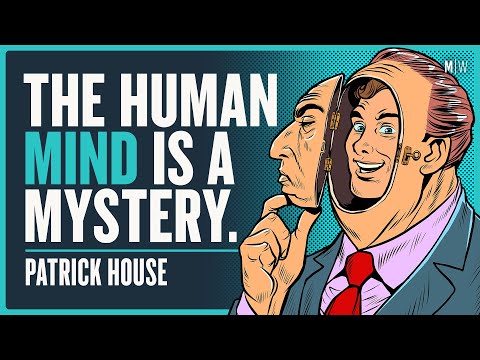
How Much Do We Actually Know About Consciousness? - Patrick House
Patrick House (guest), Chris Williamson (host), Chris Williamson (host)
In this episode of Modern Wisdom, featuring Patrick House and Chris Williamson, How Much Do We Actually Know About Consciousness? - Patrick House explores exploring Consciousness: From Anxious Cells To Quantum Mind Theories Neuroscientist and author Patrick House discusses how little we truly understand about consciousness, arguing that current neuroscience is in a “Babylonian era” of star-charting without underlying explanation. He frames modern brains as messy, layered relics of a single anxious cell three billion years ago, built by evolution through additive hacks rather than clean design.
Exploring Consciousness: From Anxious Cells To Quantum Mind Theories
Neuroscientist and author Patrick House discusses how little we truly understand about consciousness, arguing that current neuroscience is in a “Babylonian era” of star-charting without underlying explanation. He frames modern brains as messy, layered relics of a single anxious cell three billion years ago, built by evolution through additive hacks rather than clean design.
House and Chris Williamson explore how simulation, preference formation, and narrative confabulation shape identity and subjective experience, from staircase wit and anxiety to split-brain patients and tumor resections that remove billions of neurons with little reported change in self.
They contrast biological complexity with tidy physical systems, highlight the severe limitations of language as a data channel for studying consciousness, and survey competing theories—from brains as preference-accumulation engines to panpsychist “antenna” models and Penrose’s quantum microtubule hypothesis.
Throughout, House emphasizes that any eventual theory of consciousness must explain every kind of experience—dreams, seizures, hunger, psychedelics, fatigue—and that our rapidly expanding stock of phenomenological data makes that unifying explanation ever harder, yet scientifically unavoidable.
Key Takeaways
Consciousness research is still pre-Galileo—good at maps, bad at mechanisms.
House likens current neuroscience to 1000 AD astronomy: we can predict where brain activity will appear (e. ...
Get the full analysis with uListen AI
Language is an extremely compressed and unreliable window into subjective experience.
Self-report is our primary data source on consciousness, but it’s akin to a heavily compressed JPEG: biased, low-resolution, and limited by vocabulary, social context, and self-ignorance, making rigorous theory-building very difficult.
Get the full analysis with uListen AI
Identity can be understood as an accumulation of preferences shaped by biology and context.
From bacteria following glucose gradients to mice losing fear of cats via parasites, House argues that both simple organisms and humans are defined by shifting preference profiles—what we move toward, avoid, and value over time.
Get the full analysis with uListen AI
The brain is astonishingly robust and redundant, making “where consciousness lives” elusive.
Cases like split-brain patients and a neurosurgeon who lost ~20 billion neurons yet felt “the me part of me is still there” show that large structural changes can leave reported subjectivity intact, challenging simple localization models.
Get the full analysis with uListen AI
We constantly simulate alternative pasts and futures, and this may underlie anxiety and creativity.
Phenomena like “staircase wit” illustrate that some people heavily rehearse past interactions and future scenarios in their heads, likely contributing both to neuroticism and to refined skills (e. ...
Get the full analysis with uListen AI
Every subjective state—from hunger to psychedelics—is a valuable data point for a final theory.
House stresses that a complete theory of consciousness must accommodate ordinary fluctuations (fatigue, crankiness, hunger) and extremes (seizures, coma, psychedelics), because all are legitimate outputs of conscious systems.
Get the full analysis with uListen AI
Speculative theories like quantum microtubules and “antenna brains” reflect our gaps more than our certainty.
Ideas that brains tap quantum indeterminacy or receive a pervasive “consciousness field” are intriguing but largely unify unknowns with unknowns, illustrating both scientific creativity and the present lack of decisive evidence.
Get the full analysis with uListen AI
Notable Quotes
“We’re downstream of a single cell from three billion years ago who was too timid to die.”
— Patrick House
“We know where in the brain activity is; we don’t know why it’s there and not somewhere else.”
— Patrick House
“Language is like an extremely low‑resolution JPEG of what’s happening inside your head.”
— Patrick House
“The real tragedy to me is that we don’t get a little dossier of someone’s priorities and preferences when we meet them.”
— Patrick House
“Any final theory of consciousness has to explain every experience that any brain has ever produced.”
— Patrick House
Questions Answered in This Episode
If language is such a poor proxy for inner experience, what new tools or methods could realistically improve data collection in consciousness research?
Neuroscientist and author Patrick House discusses how little we truly understand about consciousness, arguing that current neuroscience is in a “Babylonian era” of star-charting without underlying explanation. ...
Get the full analysis with uListen AI
How might understanding identity as “an accumulation of preferences” change approaches to therapy, psychiatry, or even criminal responsibility?
House and Chris Williamson explore how simulation, preference formation, and narrative confabulation shape identity and subjective experience, from staircase wit and anxiety to split-brain patients and tumor resections that remove billions of neurons with little reported change in self.
Get the full analysis with uListen AI
Do cases where huge portions of the brain are removed without reported loss of self imply that consciousness is more global and distributed than we assume?
They contrast biological complexity with tidy physical systems, highlight the severe limitations of language as a data channel for studying consciousness, and survey competing theories—from brains as preference-accumulation engines to panpsychist “antenna” models and Penrose’s quantum microtubule hypothesis.
Get the full analysis with uListen AI
Given that evolution optimizes for survival rather than truth, to what extent should we trust our felt experiences as guides to an accurate theory of mind?
Throughout, House emphasizes that any eventual theory of consciousness must explain every kind of experience—dreams, seizures, hunger, psychedelics, fatigue—and that our rapidly expanding stock of phenomenological data makes that unifying explanation ever harder, yet scientifically unavoidable.
Get the full analysis with uListen AI
Is it scientifically fruitful or distracting to pursue highly speculative models like quantum microtubule theories and antenna-style panpsychism at this stage?
Get the full analysis with uListen AI
Transcript Preview
... basically, we're downstream of a single cell from three billion years ago, who was too timid to die. And we've inherited all of its kind of self-consciousnesses and all of its quirks and foibles. But it's fundamentally just downstream of this one cell that couldn't give up. I think there's a lot of that that is perhaps humorous, uh, but there, most of it's a tragedy.
There's a quote that says, "Life is a comedy to those who think and a tragedy to those who feel." What do you think that means?
Oh, I think it's exactly inverted. (laughs) Um, there's a, there's, I think there's way more tragedy when you zoom in at the, uh, uh, kind of chaos and nightmare of what's happening inside an individual single cell, um, which is kinda how I got interested in the brain. So yeah, I think that gets it exactly wrong. Who said that? Should I-
Um, I, it was-
... send an errata?
(laughs) Yeah. Yeah, well, the way that I see it as well is, I, I would agree that the people that have greater depth of insight are the ones that also have a greater capacity for suffering.
Yeah, I mean, like, I, the, the way that I see kind of the modern, uh, the modern brain and the modern, uh, uh, all of, all the kind of legacy issues we have to deal with is basically we're downstream of a single cell from three billion years ago who was too timid to die. And we've inherited all of its kind of self-consciousnesses and all of its quirks and foibles. And, you know, we're dealing with these things now, like, for example, what medicine, all of medicine and all of science, all of biological science have to deal with. But it's fundamentally just downstream of this one cell that couldn't give up. Um, and, and (laughs) I think, I think there's a lot of that that is perhaps humorous, uh, but there, most of it's a tragedy.
How-
Evolution, evolution is a long, unbroken line of most things dying off, so.
That's a good point, and for the most part as well, the ever, the more anxious, ever, the more concerned neurotic overthinking version of that usually being the adaptive one.
Yeah, well, so I've been thinking about this a little bit, uh, recently with respect to the, the, the way you just described that, the ever-anxious, overthinking, et cetera. Um, I actually believe that there's a variation in the ways that people simulate what happens in their head. So basically, if a single event happens, something happens in your world, you're at a party and, uh, conversation goes around. And you, you, let's say you miss the opportunity for a well-timed precision joke that you know when you simulate it in your head would have, would have killed, right? And then some people will not let that go, will think about that. There's a whole phrase in French, uh, staircase wit, right, which is, which is the idea that if you, if you kind of don't say something at a party, you'll figure out the exact right answer. The wittiest response will come to you on the staircase as you're leaving the party. Which fundamentally, I mean, that's, so, so you could take that as just a kind of side anecdote or maybe again one of these cute little aphorisms that, that artists and people throw around. But, but what it fundamentally means is something profound about the brain, which is that we are constantly simulating. We are constantly rehearsing in our mind, um, that which just happened, that which is about to happen in the future. And I would guess that there are some, some people, those that are perhaps neurotically inclined or anxiety inclined, those are people that rehearse and simulate more, more and more and more. So, whether or not those people end up being better at being comedians or, you know, (laughs) more likely to, to, um, kind of throw tragedy onto the world, I don't know. But I, the, I think it comes from simulation.
Install uListen to search the full transcript and get AI-powered insights
Get Full TranscriptGet more from every podcast
AI summaries, searchable transcripts, and fact-checking. Free forever.
Add to Chrome