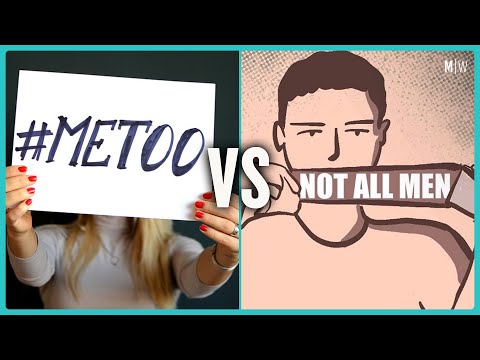
The Hidden Psychology Of Sexual Conflict - David Buss | Modern Wisdom Podcast 319
David Buss (guest), Chris Williamson (host)
In this episode of Modern Wisdom, featuring David Buss and Chris Williamson, The Hidden Psychology Of Sexual Conflict - David Buss | Modern Wisdom Podcast 319 explores evolutionary Psychology Exposes Hidden Roots Of Modern Sexual Conflict Chris Williamson interviews evolutionary psychologist David Buss about his book on sexual conflict and why men disproportionately perpetrate severe forms of sexual violence. Buss explains how evolved sex differences in desire for variety, mate preferences, and perceptual biases create predictable friction between men and women. They discuss concepts like sexual over‑perception and under‑perception biases, the dark triad of personality, mate guarding, stalking, rape, and workplace harassment. Buss argues that understanding our evolved psychology is essential to reducing sexual violence and rejects both “all men are bad” narratives and sex‑difference denialism.
Evolutionary Psychology Exposes Hidden Roots Of Modern Sexual Conflict
Chris Williamson interviews evolutionary psychologist David Buss about his book on sexual conflict and why men disproportionately perpetrate severe forms of sexual violence. Buss explains how evolved sex differences in desire for variety, mate preferences, and perceptual biases create predictable friction between men and women. They discuss concepts like sexual over‑perception and under‑perception biases, the dark triad of personality, mate guarding, stalking, rape, and workplace harassment. Buss argues that understanding our evolved psychology is essential to reducing sexual violence and rejects both “all men are bad” narratives and sex‑difference denialism.
Key Takeaways
Use evolutionary psychology to ask 'what function does this behavior serve?'
Viewing psychological traits—like jealousy, status seeking, or sexual jealousy—through an evolutionary lens reveals how they may have historically helped ancestors survive and reproduce, instead of treating them as arbitrary pathologies.
Get the full analysis with uListen AI
Recognize robust sex differences in sexual desire and variety seeking.
Across cultures, men report wanting many more lifetime partners, think about sex more, and respond faster to sexual opportunities than women; understanding this gap clarifies why male behavior can feel aggressive or confusing in modern dating and work contexts.
Get the full analysis with uListen AI
Correct for cross‑sex misreading: men over‑perceive interest, women under‑perceive it.
Men routinely interpret friendliness (smiles, casual touch) as sexual interest, while women often fail to see men’s true romantic/sexual interest; being aware of these biases can help both sexes communicate more explicitly and avoid unwanted advances or missed connections.
Get the full analysis with uListen AI
Understand that a small subset of high‑risk men commit most serious harms.
Serial harassers, coercers, and rapists tend to be men high in dark triad traits (narcissism, psychopathy, Machiavellianism) combined with short‑term mating strategies and power; targeting this group is more effective than blaming “all men.”
Get the full analysis with uListen AI
Prioritize social ‘bodyguards’ as a key defense against male violence.
Abusive men often try to isolate partners from friends and family because strong social networks deter and disrupt intimate partner violence; maintaining close ties and heeding other women’s warnings about specific men are crucial protective strategies.
Get the full analysis with uListen AI
See intimate partner violence as (abhorrent) mate‑retention rather than random cruelty.
Buss argues that many men’s violence against partners functions to control female sexuality and prevent defection when they feel outmatched in mate value, especially after status or resource loss; recognizing this function helps design better prevention and intervention.
Get the full analysis with uListen AI
Reject sex‑difference denialism to better protect women and guide men.
Pretending men and women have identical sexual psychologies obscures the real drivers of harassment, coercion, and rape; transparent discussion of differences equips women to manage risk and equips men to manage their own evolved tendencies more responsibly.
Get the full analysis with uListen AI
Notable Quotes
“Sexual violence against women is perhaps the most widespread human rights violation in the world.”
— David Buss (paraphrasing and endorsing Steven Pinker)
“Men are saddled with desires that can never be met.”
— David Buss
“These sex differences are among the most robust and replicable findings in the entire field of psychology.”
— David Buss
“A subset of men tend to be serial sexual harassers. It’s not all men who do this.”
— David Buss
“Sex difference denialism actually harms women, because it makes us ignorant of the causal processes that are resulting in sexual violence.”
— David Buss
Questions Answered in This Episode
How can organizations practically integrate knowledge about sexual over‑perception and under‑perception biases into harassment training without demonizing one sex?
Chris Williamson interviews evolutionary psychologist David Buss about his book on sexual conflict and why men disproportionately perpetrate severe forms of sexual violence. ...
Get the full analysis with uListen AI
What early warning signs can women and men use to reliably detect high dark‑triad individuals in dating and workplace contexts?
Get the full analysis with uListen AI
How do we teach younger men to manage strong, evolutionarily shaped sexual drives ethically, especially in online and alcohol‑heavy environments?
Get the full analysis with uListen AI
In what ways might modern technologies (dating apps, social media, pornography) amplify evolutionary mismatches and sexual conflict?
Get the full analysis with uListen AI
How can we talk about sex differences and toxic elements of masculinity in a way that empowers prosocial male behavior instead of promoting guilt or defensiveness?
Get the full analysis with uListen AI
Transcript Preview
In the workplace, a subset of men tend to be serial sexual harassers. So, it's not all men who do this, it's not all bosses who do this, it's not all men in positions of power who do this. It's a subset that engage in multiple harassment. (wind blows)
David Buss, welcome to the show.
Thank you. Hey, delighted to be here talking to you.
It's happy book release day.
Yes, it is. Uh, it's, it's, uh, hugely exciting. Uh, I've been getting a ton of email and people are tweeting about it and, you know, uh, Facebooking about it, so there's a... it's kind of an explosion on social media. So, it- it's, it's very exciting and, um, you know, this is one of these things where this book took me three years to write and it represents more than 30 years of research, on and off, not, not continuous research. So, uh, it is a true labor of love and so it's nice to see this thing finally hatched.
Well deserved. Really, really well deserved. I said to you before we started, I absolutely love this. Um, how would you char- characterize what evolutionary psychology is and why it's interesting and useful?
Oh boy, (laughs) that's a big question. Um, so but I will try to be succinct on that. But evolutionary psychology is simply psychology, uh, looked at through the lens of evolutionary theory and it basically is a, um, uh, adds important ingredients such as functionality. So, whereas most psychologists, they don't look at what is the... they don't ask the question, "What is the function of whatever psychological mechanisms we have?" Uh, they just say, you know, here's a phenomenon. The cognitive dissonance or obedience to authority or attribution, uh, bias, or, uh, uh, evolutionary psychologists ask, "Well, what is the evolved function, if any, uh, of the psychological mechanisms we have? Be they food preferences, be they mate preferences, habitat preferences, uh, coalition formation, friendship formation, navigating kinships, navigating social hierarchies." And that functional lens, uh, just posing that question adds a layer of depth to our understanding of psychology that has been missing prior to an evolutionary perspective. And so I think it, it, it brings quite a lot, uh, to the table and, um, I remember early on in, in the field of evolutionary psychology, Leda Cosmides, a, a friend and one of the founders of the field told me, um, that, uh, e- e- that there's no such thing as a non-evolutionary psychology and, um, at that time, I was a little skeptical but I've kind of come around to her view in, in the sense that there's no other causal process that we know about that could have fashioned whatever you... whatever, uh, psychological mechanisms we have housed in our brain which, of course, is an evolved organ.
That's perfect. What an answer. Um, this book, in the US is Why Men Behave Badly, and in the UK it's Bad Men?
Install uListen to search the full transcript and get AI-powered insights
Get Full TranscriptGet more from every podcast
AI summaries, searchable transcripts, and fact-checking. Free forever.
Add to Chrome