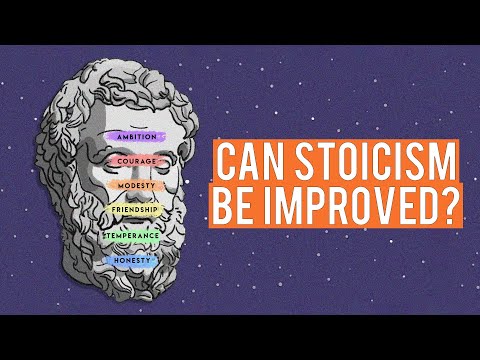
The Stoic Guide To A Happy Life | Massimo Pigliucci | Modern Wisdom Podcast 239
Massimo Pigliucci (guest), Chris Williamson (host), Narrator
In this episode of Modern Wisdom, featuring Massimo Pigliucci and Chris Williamson, The Stoic Guide To A Happy Life | Massimo Pigliucci | Modern Wisdom Podcast 239 explores updating Stoicism: Massimo Pigliucci’s Modern Guide To Lasting Happiness Chris Williamson interviews philosopher Massimo Pigliucci about his book *A Field Guide to a Happy Life*, a modern reworking of Epictetus’ *Enchiridion* for the 21st century.
Updating Stoicism: Massimo Pigliucci’s Modern Guide To Lasting Happiness
Chris Williamson interviews philosopher Massimo Pigliucci about his book *A Field Guide to a Happy Life*, a modern reworking of Epictetus’ *Enchiridion* for the 21st century.
Pigliucci explains core Stoic ideas like the dichotomy of control, role ethics, and eudaimonia, and how they can be practiced and automated in daily life to reduce distress and increase meaningful happiness.
He also details where he consciously diverges from ancient Stoicism—rejecting providence and amor fati, and expanding Stoic ethics to include feminism, environmental concern, and social justice.
The conversation contrasts Stoicism with ideas like The Secret and modern hedonistic culture, arguing for a rational, evidence‑aligned philosophy of life that treats ancient thinkers as guides, not untouchable masters.
Key Takeaways
Focus only on what is truly under your control.
Epictetus’ dichotomy of control limits what is ‘up to us’ to our judgments, values, and decisions to act or not; outcomes (health, jobs, pandemics) can be influenced but never fully controlled, so energy should be directed toward effort and character, not results.
Get the full analysis with uListen AI
Practice Stoic ideas until they become automatic habits.
Understanding the dichotomy of control is not enough; through repetition—like learning to drive or play an instrument—you can automate Stoic responses so that equanimity and wise action become second nature, not constant uphill effort.
Get the full analysis with uListen AI
Hold everything in life as ‘on loan’ from the universe.
Seeing possessions, roles, and relationships like a temporary hotel room reduces clinging and entitlement; you use and appreciate what you have without assuming ownership, and you’re less devastated when circumstances inevitably change or end.
Get the full analysis with uListen AI
Redefine happiness as living a virtuous, meaningful life (eudaimonia).
For Stoics, a happy life is not comfort or constant pleasure but acting ethically and pro‑socially, even under hardship; unlike Aristotle or Epicureans, Stoics hold that a life can be worth living and exemplary (e. ...
Get the full analysis with uListen AI
Respect tradition but update it when reality disproves its assumptions.
Pigliucci argues that Stoics themselves continually revised their doctrines; with modern science showing no providential, rational universe, we should drop amor fati and rework Stoic ethics to fit a deterministic but indifferent cosmos while preserving its core insights.
Get the full analysis with uListen AI
Use your social roles to clarify your duties and behavior.
Epictetus’ role ethics asks you to examine your roles—human being, child, parent, partner, citizen, professional—and derive concrete obligations from each, focusing on what *you* owe others rather than whether they reciprocate.
Get the full analysis with uListen AI
Extend Stoic concern beyond the self to humanity and the environment.
Building on Stoic cosmopolitanism and expanding circles of concern, Pigliucci claims modern Stoicism logically entails basic feminism, environmental responsibility, and attention to social justice, since human flourishing depends on just societies and a livable planet.
Get the full analysis with uListen AI
Notable Quotes
“The people that came before us are not our masters, they're our teachers, they're our guides.”
— Massimo Pigliucci (quoting and endorsing Seneca)
“If you actually get anything out of the *Enchiridion*… it would be: some things are up to us, other things are not up to us.”
— Massimo Pigliucci
“Why the hell should I worry about the fact that things are going to be gone? When they're gone, they're gone. But right now they're here.”
— Massimo Pigliucci
“The metaphysics is bullshit, the reasoning is bad, and the ethics is horrible.”
— Massimo Pigliucci (on *The Secret*)
“A Stoic should be a feminist; it’s inconsistent to be a Stoic and not be a feminist in that basic sense.”
— Massimo Pigliucci
Questions Answered in This Episode
If the universe is indifferent and not providential, what replaces amor fati as a practical attitude toward suffering and misfortune?
Chris Williamson interviews philosopher Massimo Pigliucci about his book *A Field Guide to a Happy Life*, a modern reworking of Epictetus’ *Enchiridion* for the 21st century.
Get the full analysis with uListen AI
How can someone systematically practice and ‘automate’ the dichotomy of control in daily life, especially under chronic stress or grief?
Pigliucci explains core Stoic ideas like the dichotomy of control, role ethics, and eudaimonia, and how they can be practiced and automated in daily life to reduce distress and increase meaningful happiness.
Get the full analysis with uListen AI
Where is the line between legitimately updating Stoicism for modern science and values versus changing it so much that it becomes a different philosophy?
He also details where he consciously diverges from ancient Stoicism—rejecting providence and amor fati, and expanding Stoic ethics to include feminism, environmental concern, and social justice.
Get the full analysis with uListen AI
How should Stoic role ethics handle genuinely toxic or abusive relationships when traditional duties (e.g., to parents or partners) conflict with self‑preservation?
The conversation contrasts Stoicism with ideas like The Secret and modern hedonistic culture, arguing for a rational, evidence‑aligned philosophy of life that treats ancient thinkers as guides, not untouchable masters.
Get the full analysis with uListen AI
In what concrete ways can a modern Stoic integrate concern for feminism, the environment, and social justice into everyday decisions and habits?
Get the full analysis with uListen AI
Transcript Preview
... the people that came before us are not our masters, they're our teachers, they're our guides. But if I find a new way to proceed that is better, I'll do it, because, you know, the truth, it- it says it's open to all and, and it will be uncovered by future generations. (wind blowing)
Twice in a year, what a treat.
I know. (laughs) Well, you know, it's the pandemic, it's easier to get people stuck at home. (laughs)
That's true. Well, we've got nothing else to do, we might as well just keep on talking about Stoicism. The Stoic-
That's right.
... The Stoic Guide to a Happy Life: 53 Brief, Brief Lessons for Living. Why'd you write this?
For two reasons. Uh, on the one hand, there's kind of a personal reason. Uh, the, the book is really an ambitious, uh, to some extent, rewriting of the Encheiridion, which is one of the classic texts in Stoicism, in ancient Stoicism, and, and, and it's, um ... it wasn't written by Epictetus, uh, but it, uh, uh, it is about Epictetus' teaching. Epictetus didn't write anything, um, and, uh, one of his best students, or most famous students, Arrian of Nicomedia, uh, write- wrote down both of his courses and the Encheiridion. To some extent, this is my person homage to Epictetus because he has been my steady guide throughout my Stoic path. Um, you know, I love all of the Stoics. I read Marcus Aurelius, I lea- I read Seneca, I read some of the so-called minor Stoics that are not really minor, they're just minor because we don't have a hell of a lot, uh, that survived of his- of, of their writings. But Epictetus has been the one that really got me into it and it has been sort of a constant companion. So to one ex- to ... in some- in one sense, it is just a- my personal homage to Epictetus. But more importantly, it is an attempt to update Stoicism, and in particular Epictetus' version of Stoicism, to the 21st century. And the reason for that is that Stoicism, in a sense, got interrupted. Uh, you know, it, it started out in, um, uh, the late 4th century BCE. It flourished for five or six centuries, until the early 3rd century of the modern era, and then it kind of got interrupted by Christianity, just like every other, uh, you know, Hellenistic philosophy. It just like, it, it disappeared from, from view. And in that sense, the Greek, Greek-Roman philosophies are very different from, let's say, a number of Eastern traditions, such as Buddhism or Confucianism or Taoism, which evolved and developed gradually over time in essentially uninterrupted fashion. So for instance, if you compare Stoicism with Buddhism, today it's not even correct, really, to talk about Buddhism in the singular. There i- there are many Buddhisms, right? Because there's a number of traditions that evolved over, continuously over two and a half millennia, and clearly nobody today is a Buddhist in the same sense in which somebody was a Buddhist 2000 and, you know, and a half, uh, you know, years ago. But that's not true for Stoicism, because it's like after the third ... the, the, the 2nd or 3rd centuries, like, we, we have a lot of influence of Stoicism on other thinkers, like, uh, Christian writers throughout the Middle Ages and the Renaissance and, you know, early modern philosophers. But then we kind of have a jump (laughs) to the 20th century, essentially. And so, um, uh, I'm not the first one to do this kind of thing. Thing ... My friend and, um, colleague, uh, Larry Baker, who wrote A New Stoicism, uh, did a similar thing, uh, with the entire Stoic system. Uh, however, Larry, Larry's attempt is, on the one hand, more comprehensive than mine, because he didn't focus just on Epictetus, he focused, like, the whole thing. Ɣρεμάι. But it's also much more difficult, uh, in terms of, you know, it's not ac- as accessible to the general public, because he wrote for philosophers for, for, you know, in a technical fashion. If you don't have at least a couple of courses on- of logic under your belly, you're not gonna get much out of that book. (laughs) Um, so, so my attempt has been to update Stoicism to the 21st century, but also to make Epictetus accessible again, uh, to a wider public. 'Cause, you know, most people, I bet, today, don't ... haven't heard the term ... the, the word Epi- ... you know, the name of Epictetus. It's like, "Uh, who the hell was this guy?" People have heard Plato, people have heard Socrates, they've heard Marcus Aurelius. They might not have read them, but they've heard of them. Epictetus, like, "Epi- epi- who?" Uh, and, uh, this is unfortunate, and it's also rather anomalous. It is a, like a 20th century, early 21st century feature, because before that, Epictetus was actually a household name. His school in Nicopolis in Northwestern Greece was very famous through- throughout antiquity. You know, the Emperor Adrian, uh, went to visit. You know, a lot of, uh, of, um, sort of high-level Roman aristocrats sent their kids to, uh, study with him, that sort of stuff. Then, throughou- throughout the Middle Ages and Renaissance, the Encheiridion was actually rewritten and updated several times, because it was used as a trainual ... (laughs) as a, a training manual for ... Trainual is a new word that I just invented.
Install uListen to search the full transcript and get AI-powered insights
Get Full TranscriptGet more from every podcast
AI summaries, searchable transcripts, and fact-checking. Free forever.
Add to Chrome