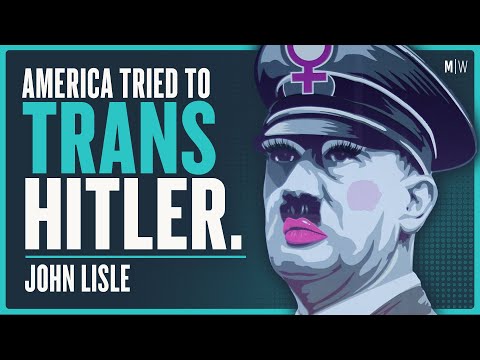
The Insane Tactics The CIA Used To Defeat Hitler In WWII - John Lisle
John Lisle (guest), Chris Williamson (host)
In this episode of Modern Wisdom, featuring John Lisle and Chris Williamson, The Insane Tactics The CIA Used To Defeat Hitler In WWII - John Lisle explores inside WWII’s Wildest Spy Lab: Fox Bombs, Truth Drugs, Trans Hitler Historian John Lisle discusses his book *The Dirty Tricks Department*, which chronicles the OSS Research & Development branch—the eccentric, experimental precursor to the CIA that built weapons, gadgets, disguises, and psychological operations during WWII.
Inside WWII’s Wildest Spy Lab: Fox Bombs, Truth Drugs, Trans Hitler
Historian John Lisle discusses his book *The Dirty Tricks Department*, which chronicles the OSS Research & Development branch—the eccentric, experimental precursor to the CIA that built weapons, gadgets, disguises, and psychological operations during WWII.
He details bizarre and serious projects alike: silenced pistols, cyanide L-pills, forged documents, elaborate disguises, bat bombs, stink weapons, truth drugs, and even a scheme to feminize Hitler with hormone-laced vegetables.
Lisle contrasts whimsical, almost cartoonish ideas like glowing fox spirits over Japan with highly effective tools such as limpet mines, train-derailing explosives, and elite forgery and camouflage operations that materially aided the war effort.
The conversation also traces the ethical evolution of R&D chief Stanley Lovell and shows how OSS experiments directly influenced later CIA programs, especially Sidney Gottlieb’s MK-Ultra mind-control and drug-testing efforts.
Key Takeaways
The OSS R&D branch fused science and espionage to arm unconventional warfare.
Under chemist Stanley Lovell, the R&D branch built everything from silenced pistols and limpet mines to cyanide L-pills, bat bombs, and time-delayed explosives, giving saboteurs and agents tools that regular military channels could not provide quickly or covertly.
Get the full analysis with uListen AI
Document forgery and camouflage were among the most practically valuable innovations.
Beyond the flashy gadgets, the ability to produce near-perfect ration cards, passports, and occupation papers—often using imprisoned master forgers—and to craft convincing disguises and hidden compartments allowed agents to operate behind enemy lines and organize resistance movements.
Get the full analysis with uListen AI
Psychological warfare embraced cultural myths and humiliation in extreme ways.
Operations like Who Me (a foul-smelling spray to embarrass Japanese officials) and Operation Fantasia (plans for glowing fox ‘spirits’ and even a fox with a talking skull) show how planners tried to weaponize local beliefs and shame, even when the military payoff was speculative.
Get the full analysis with uListen AI
Early truth-drug research with THC and other substances prefigured CIA mind-control programs.
Lovell’s OSS experiments on marijuana concentrates and sedatives to lower inhibitions and extract information, conducted by narcotics agent George White on criminal contacts, directly inspired Sidney Gottlieb’s MK-Ultra work and even led Gottlieb to hire White decades later.
Get the full analysis with uListen AI
The same organization that dreamed up ‘turning Hitler trans’ also targeted real strategic threats.
Alongside the hormone-in-the-vegetables idea, the OSS seriously considered kidnapping or assassinating German physicist Werner Heisenberg—sending ex–baseball player Moe Berg with orders to shoot him mid-lecture if he revealed meaningful atomic progress.
Get the full analysis with uListen AI
Stanley Lovell’s ethics shifted from reluctant weapons-maker to advocate of WMD use to end the war.
Initially uneasy about weaponizing science, Lovell later argued that chemical and biological warfare could be more ‘humane’ than conventional combat if they shortened the conflict and saved lives—including, not incidentally, that of his own son en route to the Pacific.
Get the full analysis with uListen AI
OSS improvisation set enduring patterns for U.S. intelligence operations.
The ‘do something, ask forgiveness later’ ethos fostered radical experimentation that fed directly into postwar CIA methods, illustrating how institutional culture, not just technology, shapes the trajectory and ethical boundaries of covert action.
Get the full analysis with uListen AI
Notable Quotes
““I want you to be my Professor Moriarty… I want you to create all the dirty tricks for this organization.””
— William Donovan, as recounted by John Lisle
“The guiding principle was: don’t ask what to do. Just do something and then ask for forgiveness if necessary.”
— John Lisle
“America tried to conduct spiritual warfare on Japan to try and make them think that Japanese gods were mad at them with a glowing fox that had a human skull on the top of it.”
— Chris Williamson
“By the end of the war, he comes to think that any way that you can end the war as soon as possible is the ethical thing to do.”
— John Lisle, on Stanley Lovell
“There is this pretty direct connection between Stanley Lovell… and Sidney Gottlieb in the creation of this MKUltra program.”
— John Lisle
Questions Answered in This Episode
Where should we draw ethical lines for scientific work in wartime when ‘ending the war faster’ is used to justify almost any method?
Historian John Lisle discusses his book *The Dirty Tricks Department*, which chronicles the OSS Research & Development branch—the eccentric, experimental precursor to the CIA that built weapons, gadgets, disguises, and psychological operations during WWII.
Get the full analysis with uListen AI
How much did whimsical or culturally misinformed psychological operations actually affect enemy morale compared to conventional bombing and battlefield victories?
He details bizarre and serious projects alike: silenced pistols, cyanide L-pills, forged documents, elaborate disguises, bat bombs, stink weapons, truth drugs, and even a scheme to feminize Hitler with hormone-laced vegetables.
Get the full analysis with uListen AI
In what ways did the OSS’s improvisational, rule-breaking culture help the Allies, and in what ways did it sow the seeds for later abuses like MK-Ultra?
Lisle contrasts whimsical, almost cartoonish ideas like glowing fox spirits over Japan with highly effective tools such as limpet mines, train-derailing explosives, and elite forgery and camouflage operations that materially aided the war effort.
Get the full analysis with uListen AI
If some of the more outlandish plans—such as mass chemical attacks or advanced biological weapons—had been deployed, how might that have reshaped norms for postwar warfare?
The conversation also traces the ethical evolution of R&D chief Stanley Lovell and shows how OSS experiments directly influenced later CIA programs, especially Sidney Gottlieb’s MK-Ultra mind-control and drug-testing efforts.
Get the full analysis with uListen AI
What lessons should modern intelligence agencies take from the OSS R&D experience about balancing innovation, secrecy, and long-term moral responsibility?
Get the full analysis with uListen AI
Transcript Preview
... is it possible to push Hitler, kind of, over that threshold from either male to female, or really upset his fragile masculinity? So, how can we do this? What if we inject female sex hormones into the vegetables that Hitler eats? If he eats these hormones, then that's really gonna push him over the edge and his mustache is gonna fall out, his voice is gonna turn soprano, and his chest is going to g- grow breasts. This will decimate his fragile ego and he's gonna lose all of his credibility, and people aren't gonna take him seriously, and we'll somehow win the war. This is the idea.
(wind blowing) What do you do? What's your job?
I'm a historian. I'm a professor at the University of Texas, um, but I also write books. You know, this one that just came out, The Dirty Tricks Department, that's the book, uh, that I've been working on for a year, so I'm glad it is finally out there for people to enjoy, hopefully.
What is the story of The Dirty Tricks Department? What is it? How did it come about?
Yeah, this, this is the story of a group of scientists during World War II who created the secret weapons, documents, and disguises for the OSS. This is the precursor to the CIA, the Office of Strategic Services. I had come across this topic when I was working on my dissertation in grad school, which was on science in the intelligence community, and then I came across some of the figures that appear in this book. And so my... while my dissertation was on a different topic, I couldn't help myself but really want to learn more about this topic (laughs) . And so I was kind of doing a dual, uh, investigation in the archives. I had to finish my dissertation, but my heart was interested in researching this stuff. So, this is the product of that kind of research that I just couldn't help myself from doing on the OSS and its, uh, Dirty Tricks Department.
What is the genesis of The Dirty Tricks Department, then? Does it grow out of the OSS? Is it built and then tacked on? How does that work?
Yeah, it's, it kind of grows out of the OSS for the most part. Um, so the OSS is in charge of, uh, coordinating kind of intelligence during World War II for the United States. It did things like send spies abroad and gather information and analyze that information, uh, and spread disinformation, uh, abroad. One of the things that it also does is, uh, create these weapons and gadgets and disguises and forged documents that I mentioned, and that became the job of, uh, the research and development branch of the OSS, the R&D branch, or what I call the Dirty Tricks Department. Um, and so that pretty quickly grew out of the OSS as the head of the OSS, William Donovan, realized that he needed scientists to create these things so that the spies and saboteurs who were being sent abroad are equipped and can do their jobs.
Install uListen to search the full transcript and get AI-powered insights
Get Full TranscriptGet more from every podcast
AI summaries, searchable transcripts, and fact-checking. Free forever.
Add to Chrome