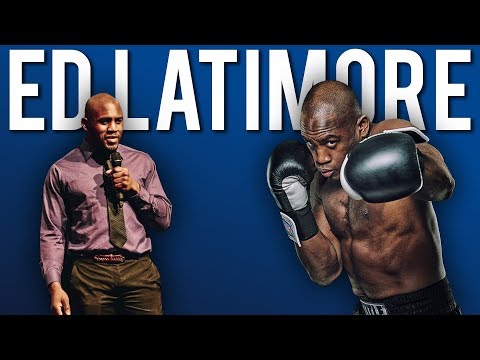
A Physicist And A Boxer Walk Into A Bar | Ed Latimore
Chris Williamson (host), Narrator, Ed Latimore (guest)
In this episode of Modern Wisdom, featuring Chris Williamson and Narrator, A Physicist And A Boxer Walk Into A Bar | Ed Latimore explores ex-Boxer Physicist Ed Latimore On Sobriety, Culture, And Twitter Mastery Chris Williamson interviews former professional boxer and physicist Ed Latimore about his late-twenties life pivot from chaotic partying to the military, physics, and professional boxing, all catalyzed by quitting alcohol.
Ex-Boxer Physicist Ed Latimore On Sobriety, Culture, And Twitter Mastery
Chris Williamson interviews former professional boxer and physicist Ed Latimore about his late-twenties life pivot from chaotic partying to the military, physics, and professional boxing, all catalyzed by quitting alcohol.
They explore how deeply alcohol is woven into youth and college culture, why elective sobriety is misunderstood, and how alcohol fuels everything from poor life choices to campus sexual assaults.
Ed shares practical advice for getting sober, building a new identity and social circle without drinking, and using purpose and demanding goals to replace alcohol’s role in life.
In the second half, he explains why he sees Twitter as a uniquely powerful “idea network,” outlining his core strategy for growth: relentlessly adding value, leveraging others’ audiences, and maintaining authenticity to build a profitable platform.
Key Takeaways
Quitting alcohol is easier when you’re running toward clear goals, not just away from rock bottom.
Ed didn’t stop drinking because of a single catastrophic event; he stopped when he saw alcohol as the main obstacle to his developing boxing career, military obligations, degree, and promising relationship. ...
Get the full analysis with uListen AI
You must build a new identity and environment that don’t revolve around drinking.
Ed stresses that most people relapse because their social life, self-image, and routines are built around alcohol. ...
Get the full analysis with uListen AI
Fill the time and emotional space alcohol occupied with demanding, meaningful work.
He recommends immersing yourself in tasks that require energy and consistency—like study, training, or career projects—so you’re too committed and exhausted to default back to “blowing off steam” with booze.
Get the full analysis with uListen AI
Heavy drinking is culturally glorified, making its harms hard to see or talk about honestly.
From student nights out to films like *The Hangover*, extreme intoxication and blackout stories are treated as badges of honor. ...
Get the full analysis with uListen AI
Alcohol is a major but under-discussed factor in campus sexual assault and risky behavior.
Ed’s rough analysis suggested that removing alcohol from typical college scenarios would drastically reduce sexual assaults among 18–24-year-olds. ...
Get the full analysis with uListen AI
For elective sobriety, purpose and self-respect can be more motivating than fear.
Chris and Ed both frame sobriety as a performance and productivity tool: once you feel you’ve learned everything alcohol can teach you and see it making you less sharp, staying sober becomes an upgrade, not a deprivation.
Get the full analysis with uListen AI
On Twitter, consistent value creation beats hacks and shortcuts for real growth.
Ed grew his account organically to tens of thousands of followers and millions of impressions by posting 1,000–1,500 tweets a month that teach, clarify, or provoke useful thought, and by quote-tweeting others with added insight so new audiences discover him.
Get the full analysis with uListen AI
Notable Quotes
“Alcohol is the only drug where if you don’t do it, people assume you have a problem.”
— Ed Latimore
“If you start doing dumb shit under the influence, then you know the alcohol is working.”
— Ed Latimore
“I have nothing left to learn from alcohol.”
— Chris Williamson
“You can’t get famous from social media. You go develop yourself, then come and deliver valuable perspectives on it.”
— Ed Latimore
“When you can reach this many people, it’s impossible to be broke—you really have to try.”
— Ed Latimore
Questions Answered in This Episode
How can universities realistically address alcohol’s role in campus sexual assault without provoking a backlash about ‘blaming the substance’?
Chris Williamson interviews former professional boxer and physicist Ed Latimore about his late-twenties life pivot from chaotic partying to the military, physics, and professional boxing, all catalyzed by quitting alcohol.
Get the full analysis with uListen AI
What are some concrete, first-week steps someone should take to change their social life when they decide to stop drinking?
They explore how deeply alcohol is woven into youth and college culture, why elective sobriety is misunderstood, and how alcohol fuels everything from poor life choices to campus sexual assaults.
Get the full analysis with uListen AI
How do you differentiate between a genuinely addictive relationship with alcohol and a culturally ‘normal’ but still net-negative one?
Ed shares practical advice for getting sober, building a new identity and social circle without drinking, and using purpose and demanding goals to replace alcohol’s role in life.
Get the full analysis with uListen AI
In what ways could media and entertainment portray alcohol differently without destroying compelling storytelling?
In the second half, he explains why he sees Twitter as a uniquely powerful “idea network,” outlining his core strategy for growth: relentlessly adding value, leveraging others’ audiences, and maintaining authenticity to build a profitable platform.
Get the full analysis with uListen AI
For someone starting from zero, how should they balance ‘living a life worth talking about’ with the time needed to consistently create valuable content on Twitter or other platforms?
Get the full analysis with uListen AI
Transcript Preview
(wind blowing) Hi, friends. This week, I'm sitting down with Ed Latimore. He's an ex-professional boxer, who's also a physicist. It's not the most typical combination of characteristics that you're going to find, but he's a very interesting guy. Ed and me spoke an awful lot about sobriety, alcohol's indoctrination into modern society, and how it negatively affects a lot of people's lives without them really even noticing it. We also move on to his strategies for being incredibly successful on Twitter, which will be very useful to those of you that are looking to grow your social media followings as we move into the new year. Other than that, I just found him an incredibly charming and very likable guy. He's obviously got a big message that he wants to get across, and it's nice to hear someone who's also singing from the same hymn sheet of sobriety as myself. As always, please share the episode with a friend if you think that they would enjoy it, and I wanted to give a special thank you to everyone that helped share the episode for Relationships 103. So we landed in the top 40 worldwide on the Apple podcast chart, which is ridiculous. (laughs) So, thank you very much. I really do appreciate it. Here is Mr. Ed Latimore.
(instrumental music)
Ed Latimore, how are you today, sir?
I'm fantastic, man. How are you?
I'm very well, thank you. So, an ex-professional boxer, who's also a physicist. That's not, uh, that's not a combination that you hear every day.
(laughs) Uh, yeah, you know, these things just kind of happen, you know. I, I didn't, I didn't plan... I wish I could look back, like, and go, "Oh man, six years ago, this was the plan." But no, it really, it really just kind of grew and developed as a result of me taking and putting just one foot in front of the other. I didn't really know exactly where I was going, but I knew where I was, what I was leaving, if that makes sense.
Yeah, I totally understand. So, I mean, you've got a, you've got a super interesting story. As you say, the, those two interests don't often mix. So would you be able to give the listeners some background to yourself and, and tell us your story, how you went from wherever you came from to where you are now?
Oh, yeah. No problem. So, so I'll give you the, the abridged version.
(laughs)
And by abridged, I mean the version that starts roughly around age 27. 26, 27. I was, I was a pretty good amateur boxer, and as, as I started inching closer, I was like, "Okay, I need to make sure I got something else to fall back on." Because I started to really see, you know, the higher up you get and the closer you go to being professional, you get to see kind of what the professional ranks are like, business and athletics-wise. Plus, you know, and... Plus, I was fortunate in the position I was in, in that I was, I was getting sponsored and pla- paid pretty well, by, by some pretty, um, powerful people. So, I got to see that and I said, "All right, I need, I need a backup." And I kind of put that on the back burner for a little bit until I, I moved... I got cut from the program, and I moved back from where I... moved back to where I lived. I lived in Los Angeles in the United States, and then I moved back to Pittsburgh. And I was working for a while, and, and going out partying every night, and just really being a fool, and kind of ignoring the fact that I didn't have any real, like, way to make money other than just showing up and pimping out my time to a customer service rep, or as a customer service rep. So I woke up, I said, "You know what? I'm gonna join the army, and they're gonna pay for school," and that's what happened. And along the way, I spent, I spent 22 weeks away from everyone because of, you know, because of basic training and AIT. I joined the National Guard version of a, of the military, or the National Guard division. And when I, when I was there, I realized also that I had developed a problem with alcohol, because I wasn't around drinking for that, that long, and I got to really sit and think a- think alone. There wasn't a lot going on in my mind, just what was around me. And so I was thinking, "This is crazy." So I think I got out, I went out and celebrated one time, got totally shit-faced, and I said, "This is not how I want to go, and this is not how I want live to be. I mean, life to be." So, uh, I got sober then. I joined school. I, I wa- wha- when I enlisted, I was three and oh as a professional, and then I got out and I just kept going and kept going. And I was originally gonna become an engineer, and I took my first physics class, and I said, "I really wanna study this, not engineering." And that's, that's how it, how it happened. (laughs) You know, and I ha- I was fighting and going to school and in the military all at the same time, and, and looking back at it now, I have no idea how I got all the energy to do that.
Install uListen to search the full transcript and get AI-powered insights
Get Full TranscriptGet more from every podcast
AI summaries, searchable transcripts, and fact-checking. Free forever.
Add to Chrome