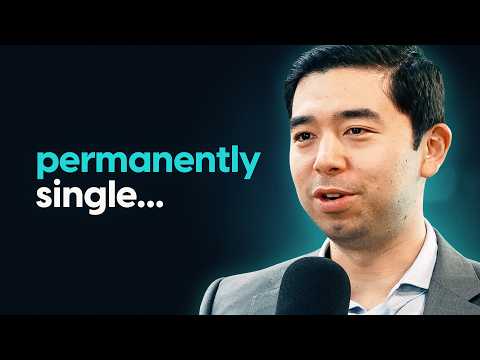
Is Having a Boyfriend Cringe Now? - Rob Henderson
Chris Williamson (host), Rob Henderson (guest), Narrator
In this episode of Modern Wisdom, featuring Chris Williamson and Rob Henderson, Is Having a Boyfriend Cringe Now? - Rob Henderson explores elite ‘girlboss’ culture quietly discourages love, marriage, and motherhood Chris Williamson and Rob Henderson unpack a viral Vogue piece asking whether having a boyfriend is now embarrassing, using it as a springboard into evolutionary psychology, luxury beliefs, and modern dating culture. They argue that some high‑status women publicly promote anti‑relationship, anti‑natal, and “men are trash” narratives while privately enjoying partners, marriage, and children, effectively suppressing the reproductive success of lower‑status women. The conversation explores female intrasexual competition, proximate vs. ultimate motives, body positivity, pro‑life vs. pro‑choice politics, and how online status metrics distort relationship priorities. They also discuss how these dynamics shape male behavior, the “swag gap” discourse, and broader cultural pressures that make family formation feel risky, uncool, or politically suspect.
Elite ‘girlboss’ culture quietly discourages love, marriage, and motherhood
Chris Williamson and Rob Henderson unpack a viral Vogue piece asking whether having a boyfriend is now embarrassing, using it as a springboard into evolutionary psychology, luxury beliefs, and modern dating culture. They argue that some high‑status women publicly promote anti‑relationship, anti‑natal, and “men are trash” narratives while privately enjoying partners, marriage, and children, effectively suppressing the reproductive success of lower‑status women. The conversation explores female intrasexual competition, proximate vs. ultimate motives, body positivity, pro‑life vs. pro‑choice politics, and how online status metrics distort relationship priorities. They also discuss how these dynamics shape male behavior, the “swag gap” discourse, and broader cultural pressures that make family formation feel risky, uncool, or politically suspect.
Key Takeaways
Elite women’s anti‑relationship messaging can function as reproductive suppression.
High‑status women who publicly push heterofatalism (“men are trash,” relationships are cringe) while privately having partners and children effectively discourage lower‑status women from pursuing the very paths that data show are most associated with happiness (marriage and kids).
Get the full analysis with uListen AI
Many ‘pro‑social’ narratives are luxury beliefs that harm the less advantaged.
Ideas like ‘careers first, kids never’ or ‘having a boyfriend is embarrassing’ raise the status of affluent women who can later afford egg freezing, IVF, or surrogacy, but they close off realistic routes to fulfillment for women with fewer resources and less time flexibility.
Get the full analysis with uListen AI
Stated motives often differ from evolved, unconscious motives.
Using proximate vs. ...
Get the full analysis with uListen AI
Female competition is subtle, reputational, and often self‑deceived.
Behaviors like encouraging friends to cut their hair, embrace weight gain, avoid men, or leave relationships are frequently couched in ‘supportive’ language, but functionally reduce rivals’ attractiveness or keep them out of the mating pool—without the speaker consciously acknowledging this.
Get the full analysis with uListen AI
Online metrics are warping how relationships are valued and presented.
Influencers optimize for followers, likes, and brand ‘cool,’ which can mean hiding happy relationships, avoiding ‘boring’ couple content, or treating partnerships as brand collaborations rather than deep bonds—prioritizing digital image over real‑life satisfaction.
Get the full analysis with uListen AI
Raising the perceived bar for ‘good parenting’ deters non‑elite fertility.
Elite women define ‘responsible’ motherhood as requiring huge houses, private activities, elite colleges, and lavish weddings; for women who can’t afford this script, the stress and shame can make them opt out of family entirely, leading to the sharpest fertility drops among poorer women.
Get the full analysis with uListen AI
Men and women are responding differently to these cultural shifts.
Men, lacking strong rites of passage and hearing constant ‘toxic masculinity’ messaging, often withdraw rather than strive; women, facing a perceived shortage of high‑quality, committed men, redirect competitive energy toward one another and into cultural norms that devalue relationships.
Get the full analysis with uListen AI
Notable Quotes
“If you can’t get what you want, you must teach yourself to want what you can get.”
— Chris Williamson (quoting Rob Henderson’s ‘inner citadel’ idea)
“Women in positions of power create environments that make reproduction difficult for the women below them. They do it through culture and expectations.”
— Rob Henderson
“It’s the primate pattern playing out in modern institutions—dominant females suppressing the reproduction of subordinates, not through conscious malice, but through the same unconscious evolved mechanisms we see in baboons and marmosets.”
— Rob Henderson
“Most relationships now are more brand collaborations than they are meaningful connections.”
— Chris Williamson (referencing Freya India)
“You don’t need to know why a behavior is effective for it to be effective. Birds don’t know why they sing mating calls; humans don’t need to know why they spread certain memes about sex and relationships either.”
— Rob Henderson
Questions Answered in This Episode
To what extent are my own views on relationships, marriage, or children shaped by elite narratives rather than my actual preferences?
Chris Williamson and Rob Henderson unpack a viral Vogue piece asking whether having a boyfriend is now embarrassing, using it as a springboard into evolutionary psychology, luxury beliefs, and modern dating culture. ...
Get the full analysis with uListen AI
When I see ‘supportive’ messages about body positivity, anti‑male rhetoric, or career‑first feminism, what hidden incentives might be operating under the surface?
Get the full analysis with uListen AI
Am I optimizing my love life for real, offline fulfillment or for how it looks to peers and followers online?
Get the full analysis with uListen AI
If happiness data consistently show married parents as the happiest group, why are cultural messages so heavily skewed toward warning women away from those paths?
Get the full analysis with uListen AI
What would a healthier, more honest set of norms around female competition, male development, and family formation look like in practice?
Get the full analysis with uListen AI
Transcript Preview
I miss the, uh, I miss the Cambridge recording studio-
(laughs)
... the dark hovel that you used to be in.
Yeah, I think we've recorded in every single place I've lived in, yeah, since my start at Cambridge. So I, I was living in this, yeah, it was a hovel, like a, like, the smallest dwelling I'd ever lived in. Smaller than the barracks in the Air Force (laughs) , believe it or not.
(laughs)
It was a shoebox. And it was such a step down. Like, I... Because when I was living in New Haven in undergrad, like, I was getting a stipend from the GI Bill. I had a pretty nice apartment. It was spacious, high ceilings. But Cambridge required all the postgrad students for their first year to live in their res- you know, o- o- in their college. And I was like, "Oh, you know, it's Cambridge. It's gonna be grand. It's gonna be Hogwarts." And I get there, and it's a shoebox with a, a, like, a single bed and a tiny little desk. And that's where you and I recorded the first, uh, one from Modern Wisdom.
Oh. Well, it's, it's, I think it's really important for you to keep your feet on the ground.
(laughs) Yeah.
I don't need to get too big, too big for your boots. Published author, tons of books sold.
It was humbling.
Very highly followed on Substack. Remember where you came from, a hovel in Cambridge.
I know. Yeah, that's what I, that's what I tell people, you know, when I was at Cambridge, struggling, you know, uh, sleeping in, in that 12 by 12, uh, prison cell.
(laughs)
Um, but yeah. Yeah, yeah, now I, I finally have the background-
The foster care system had nothing on this.
(laughs)
The foster care system was a walk in the park.
The, uh... No, no, I'd, I'd always liked this when I, when I would watch other, uh, podcast guests, and they had, you know, the beautiful background with the books and everything. And I'll go, "I'm working my way up to that. This is like stage one." Eventually I'll have, you know, the fucking, the grand library behind me.
Maybe, you know.
Yeah, one step at a time.
What do you make of this "Is Having a Boyfriend Cringe Now" article?
Yeah, that was going around. So I first came across that Vogue magazine article, uh, it was a, a Reel on Instagram, and, uh, someone was commenting on it, and then I saw that this magazine article is "Having a Boyfriend Embarrassing?" That it inspired, you know, 1,000 Instagram Reels, TikTok, you know, all these, uh, commentaries. And so I back, I, I went back and read the actual piece. It was, it was a striking headline. And, um, you know, the first thing it made me think of was intersexual competition because as I'm reading this article, uh, the author, you know, she's talking about, um, you know, influencers and podcast hosts, these women, uh, with a lot of influence and status. And they're talking a- about how, um, you know, they try to not talk about their boyfriends that much, or they try to, uh, discourage other women from entering relationships, this idea of heterofatalism. Um, but of course, like, the funny thing to me was these women themselves w- are in relationships, and, you know, she would ask, "Well, why are you promoting these ideas?" And these women would say, "Well, I don't want to seem boastful. Uh, I wanna show solidarity with single women. Uh, and I understand how difficult the dating market is right now. And so, you know, it is a little embarrassing to post about my relationship online and this kind of thing." And yeah, to me, you know, connecting it with evolutionary psychology, I think there's some interesting principles here around, um, you know, competition, um, reproductive suppression, and that kind of thing. So I wrote this Substack article, uh, which is one of my, my... Uh, I, I very rarely come up with, with titles that I'm proud of, you know. Usually they're serviceable, kind of gets the idea of the piece. But this one, uh, Girlboss Gatekeeping was the one I came up with. And, you know, it captures this idea that for, if you're a woman with power, status, influence, and so on, um, you have some non-trivial effect on the behavior of other women. And if you are telling them that maybe it's not worth it to date anymore, um, men are trash, um, it's so hard out there, having a boyfriend is embarrassing now anyway, uh, but then privately, you're in a relationship and you are, um, you know, following those conventional life script patterns, um, you know, you're, you're kind of indirectly suppressing other women's ability to find partners, to reproduce, and that kind of thing.
Install uListen to search the full transcript and get AI-powered insights
Get Full TranscriptGet more from every podcast
AI summaries, searchable transcripts, and fact-checking. Free forever.
Add to Chrome