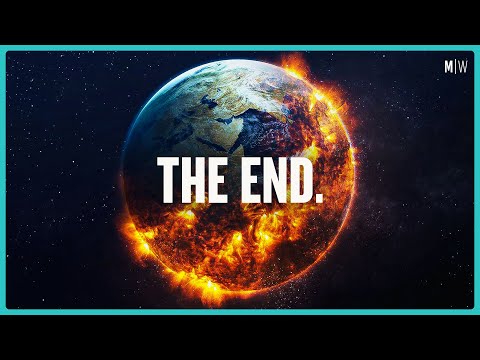
A 500-Year Plan To Reach Other Worlds - Christopher Mason | Modern Wisdom Podcast 357
Christopher Mason (guest), Chris Williamson (host)
In this episode of Modern Wisdom, featuring Christopher Mason and Chris Williamson, A 500-Year Plan To Reach Other Worlds - Christopher Mason | Modern Wisdom Podcast 357 explores humanity’s 500-Year Mission: Engineering Life To Survive The Cosmos Christopher Mason outlines a 500‑year scientific and ethical roadmap for taking humanity off Earth, ultimately toward interstellar travel and settlement on habitable exoplanets. He argues that because we uniquely understand extinction, we have a moral duty to preserve and propagate life beyond a warming, finite Earth and an inevitably dying Sun. The conversation weaves together space medicine, genetics, gene editing ethics, long‑duration missions, and philosophical frameworks like his proposed “deontogenic ethics.” They also examine psychological, social, and political challenges of generation ships and space colonization, and how near‑term missions to Mars and private space stations fit into this long‑term vision.
Humanity’s 500-Year Mission: Engineering Life To Survive The Cosmos
Christopher Mason outlines a 500‑year scientific and ethical roadmap for taking humanity off Earth, ultimately toward interstellar travel and settlement on habitable exoplanets. He argues that because we uniquely understand extinction, we have a moral duty to preserve and propagate life beyond a warming, finite Earth and an inevitably dying Sun. The conversation weaves together space medicine, genetics, gene editing ethics, long‑duration missions, and philosophical frameworks like his proposed “deontogenic ethics.” They also examine psychological, social, and political challenges of generation ships and space colonization, and how near‑term missions to Mars and private space stations fit into this long‑term vision.
Key Takeaways
We have a finite window on Earth before the planet becomes uninhabitable.
Rising solar luminosity likely makes Earth hostile to complex life within about a billion years, and that upper bound ignores nearer-term risks like asteroids, pandemics, or self-inflicted catastrophes—so treating space migration as optional is naïve.
Get the full analysis with uListen AI
Mason’s ‘deontogenic ethics’ says our first moral duty is to existence itself.
Before any other ethical system can operate, life must continue; therefore we have a genetic duty to preserve and propagate life (including its complexity), which grounds his argument for expanding into space and protecting ecosystems.
Get the full analysis with uListen AI
Space travel stresses the body, but humans are surprisingly adaptable.
Astronauts experience fluid shifts, radiation exposure, immune activation, bone loss, and altered telomeres, yet most molecular and physiological changes revert after return—suggesting that with better countermeasures, longer missions are feasible.
Get the full analysis with uListen AI
Genetic and epigenetic engineering will likely become essential ‘internal spacesuits.’
Existing tools like CRISPR and gene reactivation (e. ...
Get the full analysis with uListen AI
Generation ships raise hard consent and welfare questions but may still be ethical.
Future generations on such ships can’t consent to their constraints, yet Mason argues that, under deontogenic ethics and given the potential trillions of future lives enabled, such missions can be morally justified if designed to maximize flourishing.
Get the full analysis with uListen AI
Psychological and social stability could be as limiting as physics or biology.
Isolation, confinement, and altered social structures in small closed habitats can drive breakdown or extremism; maintaining mental health will require novel cultural practices, entertainment, community design, and possibly pharmacological aids.
Get the full analysis with uListen AI
We’re underinvesting in space relative to its long-term importance.
Space spending has dropped from its Apollo-era GDP share, despite evidence that space R&D pays off economically and technologically; Mason contends we should devote more resources to propulsion, exoplanet discovery, and space biology/genetics as part of a multi-generational plan.
Get the full analysis with uListen AI
Notable Quotes
““It’s not if we go, it’s when we go.””
— Christopher Mason
““We are not cargo aboard spaceship Earth. We’re crew.””
— Chris Williamson
““We’re the only ones that know life can become extinct. That gives us a unique responsibility.””
— Christopher Mason
““Existence precedes the essence of anything you want to do.””
— Christopher Mason
““The hubris doesn’t obviate its necessity.””
— Christopher Mason
Questions Answered in This Episode
How convincing is Mason’s ‘deontogenic ethics’ compared to utilitarianism or Kantian ethics when deciding space priorities and genetic interventions?
Christopher Mason outlines a 500‑year scientific and ethical roadmap for taking humanity off Earth, ultimately toward interstellar travel and settlement on habitable exoplanets. ...
Get the full analysis with uListen AI
What safeguards—technical, legal, and cultural—should govern human gene editing if we start engineering traits specifically for space survival?
Get the full analysis with uListen AI
How might we design generation ships or off-world habitats to minimize psychological breakdown and preserve meaningful autonomy for future generations?
Get the full analysis with uListen AI
At what point does an engineered, radiation-resistant or photosynthetic ‘space human’ cease to be recognizably human, and does that matter ethically?
Get the full analysis with uListen AI
Given limited resources and current global crises, how much should societies realistically reallocate toward long-term space expansion and interstellar preparation today?
Get the full analysis with uListen AI
Transcript Preview
... if we only have a finite time in this solar system, well, what are we doing to eventually get ready that at some point we'll have to go? It's not if we go, it's when we go. And so I wanted to think about what can we do technically, ethically, and really sociologically to do to make that happen. (wind blows)
Christopher Mason, welcome to the show.
Pleasure to be here. Thanks for having me.
Do you know how I knew that me and you were going to get on just fine?
Uh-
It's when I found out that you are also a fan of Neal Stephenson's Seveneves.
Yes. Uh, the five books review probably you read, I imagine, yeah. Yes. Which was, uh, i- i- if your audience hasn't read it, it's really a phenomenal book, but is also terrifying in a lot of ways. But I think it, it is related to some of the things that I just wrote in my book, yeah, in terms of thinking about what happens at the cusp of survival for our species and what do we do and how do we survive. So yeah, it's a great book. Uh, I'm sure it will be a movie at some point too. It has to be. It's basically written as if it is already a movie.
It's so good. The, the first line, the moon explodes.
Yeah. Yeah. Exactly.
The first line of the book, the moon explodes. So anyway, like how, how do you get started thinking about creating a roadmap for us to leave Earth?
It comes from really a, a place of hope. I actually think the... I'm a humanist. I, I like people. There's a lot of things that people do bad, but there's a lot that we do that's great in terms of poetry and music and science and the ability for humans to create things that will exist long past their own lifetime. And so, I mean, the most obvious example is people have kids all the time. But even historically, when people have built cathedrals that we knew would take generations to build, uh, and also even just having science projects that can sometimes be multi-generational, climate change is a good example. We, you know, we're not doing it that well yet, and we could do it wrong there too. But, uh, there are many places where humanity has a lot that I think that is extraordinary, and I think it's worth preserving as long as possible. So I've always thought that. And as I became a scientist, I thought, well, if we're really gonna exist as humans for a long, long time, we have to think about what is that time, and then how do we do it? And the timeframe I think about a lot is the end of the earth, because once you read about that, it's going to happen. That's something I never forgot. So I think, well, if we only have a finite time, uh, in this solar system, well, what are we doing to eventually get ready that at some point we'll have to go? It's not if we go, it's when we go. Uh, and so I wanted to think about what can we do technically, ethically, and, uh, really sociologically to do to make that happen.
Install uListen to search the full transcript and get AI-powered insights
Get Full TranscriptGet more from every podcast
AI summaries, searchable transcripts, and fact-checking. Free forever.
Add to Chrome