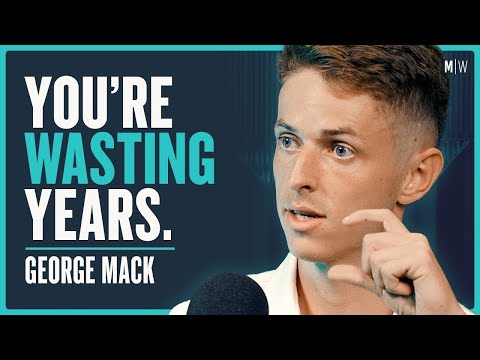
Simple Life Changes That Lead To Big Results - George Mack
Chris Williamson (host), George Mack (guest)
In this episode of Modern Wisdom, featuring Chris Williamson and George Mack, Simple Life Changes That Lead To Big Results - George Mack explores escaping The Busy Trap: Time, Energy, Leverage And Authentic Living Chris Williamson and George Mack explore the “busy trap” – how modern work, digital distractions, and school conditioning keep people stuck in low‑value activity while neglecting deep thinking and true priorities.
Escaping The Busy Trap: Time, Energy, Leverage And Authentic Living
Chris Williamson and George Mack explore the “busy trap” – how modern work, digital distractions, and school conditioning keep people stuck in low‑value activity while neglecting deep thinking and true priorities.
They dig into time and energy management, the difference between activity and output, and why being “under‑rested” masquerades as being overworked, alongside practical tactics like ‘big three’ priorities and weekly reviews.
The conversation widens into incentives, American vs British culture and self‑belief, audience building, friendship, and why adults, careers, and even ‘the way’ to succeed are far less structured than most people assume.
Throughout, they argue for strategic ignorance, authentic weirdness, and designing your life, work, and spending around high‑leverage actions and relationships instead of reactive busyness and shallow metrics.
Key Takeaways
Busyness without direction wastes years by crowding out big questions.
Being stuck on C‑grade tasks and inbox maintenance creates the illusion of productivity while preventing you from asking, “What is the most important thing I should be doing? ...
Get the full analysis with uListen AI
Optimize for output, not activity, using simple constraints like a ‘Big Three’.
Focusing on outputs (what actually got done) often reduces total activity but increases results. ...
Get the full analysis with uListen AI
Most people are under‑rested, not overworked, and sabotage their own energy.
During stressful periods, people mistakenly cut all energy inflows (sleep, walks, gym, friends) to ‘make time’ for work, which accelerates burnout. ...
Get the full analysis with uListen AI
Strategic ignorance is essential in an age of infinite information and outrage.
You must choose what to be ignorant about instead of reactively consuming every ‘current thing’. ...
Get the full analysis with uListen AI
There is no single ‘way’ to succeed; you must personalize methods.
Federer, Nadal, and Djokovic all became GOATs with radically different mindsets and styles, showing that success is about finding what works for your temperament, not copying one guru’s system. ...
Get the full analysis with uListen AI
Incentives quietly drive behavior more than intentions or morality.
From FedEx workers paid by shift, to ship captains paid per surviving prisoner, to media funded by pharma ads, outcomes change when incentives change. ...
Get the full analysis with uListen AI
Authentic weirdness and non‑fungible behavior are what people remember—and need.
At funerals and in friendships, the memorable stories are always about someone’s irrational, eccentric traits. ...
Get the full analysis with uListen AI
Money buys happiness only when spent strategically on high‑utility, personal levers.
There’s no general answer to “does money buy happiness”; it depends what you buy. ...
Get the full analysis with uListen AI
Men especially underestimate the value of deep male‑only time and friendships.
‘Sausage fests’—nerdy, male‑only hangouts—are underpriced: they protect mental health, give an outlet for interests your partner may not share, and create a social safety net that matters enormously during life shocks like divorce or job loss.
Get the full analysis with uListen AI
Creators who chase clicks risk building ‘sub‑prime audiences’ they secretly dislike.
Optimizing purely for views and likes can lead you to make content you wouldn’t consume yourself, attracting followers you don’t resonate with. ...
Get the full analysis with uListen AI
Notable Quotes
“You waste years by not being able to waste hours.”
— George Mack (quoting Amos Tversky)
“If you don’t know what the most important thing to focus on is, you’ve just found it.”
— George Mack
“There’s no such thing as being overworked, only under‑rested.”
— Chris Williamson
“Bringing a Victorian factory worker mindset to the age of infinite leverage is like bringing boxing gloves to a drone war.”
— George Mack
“Adults don’t exist. They’re just grown‑up children who learned a language and never got a new manual.”
— George Mack
Questions Answered in This Episode
Which activities in my week are ‘activity trap’ busywork that produce almost no meaningful output, and how can I ruthlessly cut or redesign them?
Chris Williamson and George Mack explore the “busy trap” – how modern work, digital distractions, and school conditioning keep people stuck in low‑value activity while neglecting deep thinking and true priorities.
Get the full analysis with uListen AI
If I honestly tracked my rest and energy inflows, would I still describe myself as overworked—or just chronically under‑rested?
They dig into time and energy management, the difference between activity and output, and why being “under‑rested” masquerades as being overworked, alongside practical tactics like ‘big three’ priorities and weekly reviews.
Get the full analysis with uListen AI
What would my life and work look like if I only pursued goals and projects I’d still choose without external validation or vanity metrics?
The conversation widens into incentives, American vs British culture and self‑belief, audience building, friendship, and why adults, careers, and even ‘the way’ to succeed are far less structured than most people assume.
Get the full analysis with uListen AI
In which areas of my information diet should I practice strategic ignorance, and what criteria will I use to decide what not to follow?
Throughout, they argue for strategic ignorance, authentic weirdness, and designing your life, work, and spending around high‑leverage actions and relationships instead of reactive busyness and shallow metrics.
Get the full analysis with uListen AI
Where am I letting incentives—at work, online, or socially—quietly push me toward choices that my future self will regret?
Get the full analysis with uListen AI
Transcript Preview
What's the busy trap?
The busy trap is the idea that we're busy today because we were busy yesterday, and we'll be busy tomorrow because we're busy today. And it's this never-ending busyness that we get busier because we're busy now. Weirdly, I was looking at Google Trends earlier, and if you look up the word busy from 2004, it's like the Apple stock price. It just... Each year, we get about 10% more busier, and we're constantly hitting the peak every single year of people searching the word busy.
Right. So busyness is getting busier?
Yes.
Right. And what do you mean when you say that you waste years not being able to waste hours?
So this is a quote from Amos Tversky, who was Daniel Kahneman's writing partner on Thinking Fast and Slow. And when you hear it, it's like, as a writer, you're like, "Why didn't I write that? That is so good." You waste years by not being able to waste hours. And it's this idea that because we're so busy, we never get round to actually asking the bigger questions. We're constantly on the C+ tasks rather than the A+ tasks. And one of the memes I posted with this essay, it's two guys working extremely hard, like being super busy. And there's one guy in the corner who's like, "You all right, lads? Um, can I give you a bit of help?" And he goes, "We're too busy," and the guy is carrying a wheel. And these guys are carrying everything, but they're too busy to realize that there's a wheel out there. And I think Tversky's point with that is by having a few extra hours in your schedule, you may change your annual direction here or there, but if you're constantly compressing everything into some kind of maximum efficiency, um, you end up wasting years as a result.
Why is the busy trap a trap? Why do we default to busy as opposed to defaulting to lots of spare time?
I think... Well, there's, to quote the philosopher Molly-Mae-
(laughs)
... there's, there's only 24 hours in the day, Chris. Which is a lie, by the way. Which is a lie. Not, not having a go at Molly, but there's actually 16 hours in the day. Like I find the fact that we talk about 24 hours when we sleep for eight hours is absurd. It's like confusing your revenue with your profit. It's putting up the Shopify screenshot. It's like, "How much did you spend on other things there?"
(laughs)
So you have, let's say, 16 hours a day, and that's pretty lindy. Like that's been consistent throughout human history, our experience of time. Meanwhile, the amount of activities we can now do, the amount of content that gets uploaded to YouTube every minute, the amount of Slack messages that are coming through, the amount of emails that are coming through. The digital... The beauty of digital systems is it's so high leverage. The, uh... Uh, as you're sat here right now, there's probably 5,000 people watching a clip of Chris as we speak in the next couple minutes. And that, uh, the digital level for yourself is a constant problem because you only have 16 hours in the day, yet there's things that are constantly coming through. Unless you're proactively trying to put systems in place, you will just get destroyed by the busy trap.
Install uListen to search the full transcript and get AI-powered insights
Get Full TranscriptGet more from every podcast
AI summaries, searchable transcripts, and fact-checking. Free forever.
Add to Chrome