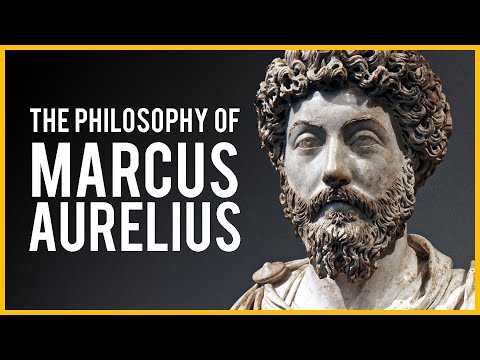
Stoicism: How To Think Like A Roman Emperor - Donald Robertson | Modern Wisdom Podcast 274
Donald Robertson (guest), Chris Williamson (host)
In this episode of Modern Wisdom, featuring Donald Robertson and Chris Williamson, Stoicism: How To Think Like A Roman Emperor - Donald Robertson | Modern Wisdom Podcast 274 explores stoicism, Anger, And Purpose: Applying Ancient Wisdom To Chaotic Times Donald Robertson, a CBT-trained psychotherapist and Stoicism scholar, explains how ancient Stoic philosophy—especially Marcus Aurelius—offers a rational, secular framework for living well amid modern chaos, social media outrage, and value confusion.
Stoicism, Anger, And Purpose: Applying Ancient Wisdom To Chaotic Times
Donald Robertson, a CBT-trained psychotherapist and Stoicism scholar, explains how ancient Stoic philosophy—especially Marcus Aurelius—offers a rational, secular framework for living well amid modern chaos, social media outrage, and value confusion.
He links Stoicism’s influence on cognitive behavioral therapy to practical tools like cognitive distancing, value clarification, anger management, and voluntary hardship, arguing these address today’s epidemics of anxiety, normlessness, and political polarization.
Robertson contrasts Stoic engagement with adversity against avoidance, consumerism, and shallow self-help, emphasizing the need to examine one’s values, confront mortality, and choose meaningful activities over mere comfort or distraction.
Throughout, he uses historical anecdotes (Socrates, Hadrian, Hercules, Marcus Aurelius) and modern examples (Capitol riots, online outrage, pandemic lockdowns) to show how Stoic principles can build resilience, courage, and a more intentional life.
Key Takeaways
Clarify your values or your life will be driven by avoidance and habit.
Robertson notes that most people spend virtually zero time each week on activities aligned with their core values; without conscious reflection, we default to avoiding discomfort (scrolling, numbing, busywork) instead of doing what we genuinely find meaningful.
Get the full analysis with uListen AI
Treat anger as a primary target for self-improvement, not a side issue.
Stoics saw anger as the most socially destructive emotion, and modern research confirms it distorts judgment, fuels prejudice, and amplifies political extremism; learning to pause, cool down, and delay action when angry is a powerful, underused growth lever.
Get the full analysis with uListen AI
Use cognitive distancing: describe events factually, not rhetorically.
Instead of saying “they destroyed me online,” describe it neutrally (“they disagreed with my point”); this Stoic-style ‘objective representation’ dampens emotional escalation and counters the algorithmic ‘digital Sophists’ of social media that profit from outrage.
Get the full analysis with uListen AI
Broaden your perspective to dilute emotional overreactions.
When upset, we fixate narrowly on a single remark or event; deliberately recalling the wider context (someone’s other qualities, your long-term goals, the larger situation) reduces the intensity of anger or anxiety and leads to more balanced responses.
Get the full analysis with uListen AI
Seek out manageable adversity to build resilience and meaning.
Stoics advised ‘voluntary hardship’—choosing challenges like discomfort, difficult conversations, or career risks—much like picking a sparring partner who stretches you but doesn’t overwhelm you; life satisfaction tends to come from such challenges, not passive comfort.
Get the full analysis with uListen AI
Regularly contemplate mortality to cut through trivial concerns.
Practices like imagining you might not wake up tomorrow (Seneca) or seeing yourself as already dead but granted extra time (Marcus) can sharpen priorities, weaken the grip of societal status games, and push you toward actions you won’t regret on your deathbed.
Get the full analysis with uListen AI
Be skeptical of self-help used as avoidance rather than change.
Many people accumulate books and hacks that encourage rumination, emotional suppression, or dependence on experts; Robertson urges shifting from endlessly consuming advice to actually acting in line with your values, especially around anger, purpose, and relationships.
Get the full analysis with uListen AI
Notable Quotes
“Nobody's perfect, nobody's wise. But to feel the kind of pain of lacking wisdom, and to crave it, and to realize it's the most important thing in life, and to dedicate your life to this kind of endless journey is really what life is actually all about.”
— Donald Robertson (paraphrasing Socratic-Stoic view)
“The unexamined life is not worth living.”
— Donald Robertson quoting Socrates
“People talk about self-help, but although we’re surrounded by self-help advice, I still feel there’s a massive lack of reflection in modern society.”
— Donald Robertson
“To learn how to die is to unlearn how to be a slave.”
— Donald Robertson quoting Seneca
“Stop arguing about what it means to be a good man and just be one.”
— Donald Robertson quoting Marcus Aurelius
Questions Answered in This Episode
How can someone practically start clarifying their values if they’ve never done any structured reflection before?
Donald Robertson, a CBT-trained psychotherapist and Stoicism scholar, explains how ancient Stoic philosophy—especially Marcus Aurelius—offers a rational, secular framework for living well amid modern chaos, social media outrage, and value confusion.
Get the full analysis with uListen AI
What are concrete daily exercises to reduce anger using Stoic principles, especially in the context of social media and news consumption?
He links Stoicism’s influence on cognitive behavioral therapy to practical tools like cognitive distancing, value clarification, anger management, and voluntary hardship, arguing these address today’s epidemics of anxiety, normlessness, and political polarization.
Get the full analysis with uListen AI
Where is the line between healthy voluntary hardship that builds resilience and self-imposed suffering that becomes counterproductive?
Robertson contrasts Stoic engagement with adversity against avoidance, consumerism, and shallow self-help, emphasizing the need to examine one’s values, confront mortality, and choose meaningful activities over mere comfort or distraction.
Get the full analysis with uListen AI
How can modern education systems or workplaces incorporate Stoic ideas (like cognitive distancing and value clarification) without becoming dogmatic?
Throughout, he uses historical anecdotes (Socrates, Hadrian, Hercules, Marcus Aurelius) and modern examples (Capitol riots, online outrage, pandemic lockdowns) to show how Stoic principles can build resilience, courage, and a more intentional life.
Get the full analysis with uListen AI
In a largely secular age, how far can Stoicism replace what religion once offered in terms of community, meaning, and moral guidance?
Get the full analysis with uListen AI
Transcript Preview
Nobody's perfect, nobody's wise. But to feel the kind of pain, in a way, of lacking wisdom, and to crave it, and to realize it's the most important thing in life, and to dedicate your life to this kind of endless journey is really what life is actually all about. (wind blowing)
You're a cognitive behavioral therapy-trained psychologist. Why are you-
Yeah.
... writing about Marcus Aurelius?
That's a really good question. Because actually, my first love was philosophy. And, uh, I, I think I came to philosophy looking for a philosophy of life, really. You know, something that would help me, uh, feel better about life, cope with adversity. And I didn't find it at university when I was doing my philosophy degree, uh, so then I started training in psychotherapy and stuff like that. Then after that, I realized I'd missed something, which is the one school, one major school of ancient philosophy that you don't normally study in an undergraduate philosophy curriculum. Uh, so it's like the stone that the builders rejected became the cornerstone, kind of thing. And so I discovered Stoicism, and I thought, "This is the thing that I was looking for the whole time I was at university and nobody ever told me about." And, uh, so I got into Stoicism and I realized it was also the philosophical inspiration for cognitive therapy. Not a lot of people know that. So the two things wedded together, and I thought, "Oh, cognitive therapists must all be really into Stoicism, then." It turned out they weren't, so I ended up writing a book about that. And I thought, "Oh, this is a nerdy, obscure subject that no one's ever gonna be interested in. I'm never gonna be talking about this on podcasts or anything like that in the future." And then it's, weirdly, it became trendy, like, a few years after I started writing about it, and I got dragged into this thing that suddenly people were getting tattooed on them and stuff like that. It kind of became a bit, uh, hip, just as I was getting a little bit old. Actually, I feel, uh, you know ...
(laughs)
... I'm get- I'm getting older now.
You've missed the boat.
It's all kind of young, young kids that are into it and stuff. Uh, as I'm reliably told by the publishing industry, there is Millennials that work in the tech industry that are the, the demographic-
Okay.
... that are into Stoicism, mainly.
Why do you think that is?
Well, see, the thing is, you know, I always think I'm in a very lucky position, 'cause I talk to so many people. So sometimes when I'm answering questions about Stoicism, I think, "Oh, that's easy, 'cause I've asked them and they keep telling me why it is." So I'll tell you what they've told me, basically. So they tell me that they feel overwhelmed by social media and the news media bombarding them with alarmist stuff about things that aren't under their direct control. Like, they think the media are trying to fearmonger and instill hatred, but ... Which is accurate, probably. And they, they don't know how to deal with that, and they feel that they need some kind of philosophy of life to cope with it. Um, but ... Like Nietzsche said, you know, "God is dead, um, but we're still kind of living in his shadow," so they want something that's kind of like what Christianity used to do for our, our, our grandparents and so on. Um, but a lot of people today, especially, I think, in the tech industry, are, are quite rationalist, and they, they want a secular philosophy that's based on reason rather than faith, revelation, or tradition. And so they find in Stoicism – and there are historical reasons for this, uh, why they would – a, a secular alternative to, to Christianity and a kind of secular th- They want something like CBT, but that is bigger, that's a wh- Like a Western yoga, they also say.
Install uListen to search the full transcript and get AI-powered insights
Get Full TranscriptGet more from every podcast
AI summaries, searchable transcripts, and fact-checking. Free forever.
Add to Chrome