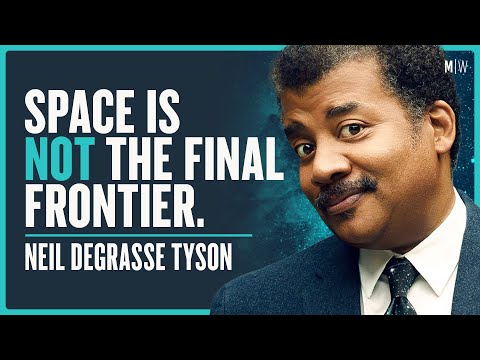
Neil deGrasse Tyson - Welcome To The Universe
Neil deGrasse Tyson (guest), Chris Williamson (host)
In this episode of Modern Wisdom, featuring Neil deGrasse Tyson and Chris Williamson, Neil deGrasse Tyson - Welcome To The Universe explores neil deGrasse Tyson Debunks Mars Backup, Aliens, And Human Hubris Neil deGrasse Tyson discusses why using Mars as a 'backup Earth' is a misguided approach compared with solving existential risks on our own planet, arguing that any technology capable of terraforming Mars could instead be used to repair Earth. He explores issues around free speech and Elon Musk’s ventures, emphasizing contest of ideas over suppression and declining to judge how billionaires spend their money. The conversation ranges through astropolitics, the Fermi paradox, SETI/METI, cosmic scale questions about time and the universe, and the limits of human perception and rationality. Tyson also introduces his books, especially *Welcome to the Universe in 3D* and *Starry Messenger*, which apply cosmic and scientific perspectives to social, political, and cultural conflicts.
Neil deGrasse Tyson Debunks Mars Backup, Aliens, And Human Hubris
Neil deGrasse Tyson discusses why using Mars as a 'backup Earth' is a misguided approach compared with solving existential risks on our own planet, arguing that any technology capable of terraforming Mars could instead be used to repair Earth. He explores issues around free speech and Elon Musk’s ventures, emphasizing contest of ideas over suppression and declining to judge how billionaires spend their money. The conversation ranges through astropolitics, the Fermi paradox, SETI/METI, cosmic scale questions about time and the universe, and the limits of human perception and rationality. Tyson also introduces his books, especially *Welcome to the Universe in 3D* and *Starry Messenger*, which apply cosmic and scientific perspectives to social, political, and cultural conflicts.
Key Takeaways
Treat Mars as a technology testbed, not an escape hatch.
Tyson argues that if we ever have the geoengineering power to terraform Mars and transport a billion people there, we will certainly have the power to repair catastrophic damage on Earth more easily—so Mars is a poor justification as a ‘backup’ for humanity.
Get the full analysis with uListen AI
Prevent existential risks at their source rather than planning to abandon Earth.
For threats like asteroids, pandemics, and some AI scenarios, Tyson contends it’s far more feasible to develop deflection technologies, antivirals, or mitigation strategies than to terraform another planet and relocate huge populations.
Get the full analysis with uListen AI
Don’t overestimate the uniqueness or danger of signaling our presence to aliens.
He notes we already have an 80‑light‑year ‘radio bubble’ of TV and radio leaking into space, so worrying now about METI messages is somewhat misplaced; any advanced civilization capable of harming us could likely already detect us.
Get the full analysis with uListen AI
Colonization drives may be self-limiting for galactic civilizations.
Tyson’s preferred Fermi paradox answer is that the same genetic or cultural urge to colonize everything eventually leads to conflict over scarce desirable worlds, causing civilizations to implode before they fill the galaxy—analogous to European colonial powers turning on each other.
Get the full analysis with uListen AI
Probability and statistics literacy would radically change societal behavior.
He claims that if probability and statistics were taught as fundamentally as reading and arithmetic, industries like lotteries and casinos would lose much of their power, because people would understand just how stacked the odds are against them.
Get the full analysis with uListen AI
Scientific thinking can dissolve many entrenched cultural and political conflicts.
In *Starry Messenger*, Tyson applies cosmic and scientific perspectives to issues like race, gender, diet, risk, and monuments, arguing that when you add science and a larger viewpoint, many supposedly irreconcilable positions give way to entirely new framings.
Get the full analysis with uListen AI
Human perception and testimony are too unreliable to be treated as gold‑standard evidence.
Using optical illusions and cognitive limits as examples, he questions legal systems that heavily rely on eyewitness testimony, contrasting it with science’s demand for repeatable, instrument-based evidence.
Get the full analysis with uListen AI
Notable Quotes
“If you have the power to turn Mars into Earth, then no matter what is about to happen on Earth, you have the power to turn Earth back into Earth.”
— Neil deGrasse Tyson
“What you want is to not suppress the speech that you don't like but amplify the speech that you do and let that be the arena of contest of ideas.”
— Neil deGrasse Tyson
“We are so bad at probability and statistics, entire industries exist to exploit how bad we are. They're called casinos. They're called lotteries.”
— Neil deGrasse Tyson
“Our brain only barely works as an organ. Okay? Barely works. And we're gonna send people to hang because you have a testimony that implicates them?”
— Neil deGrasse Tyson
“I would have been irresponsible given what I know about this world and about science and about the universe if I did not offer this book to the public.”
— Neil deGrasse Tyson
Questions Answered in This Episode
If Mars isn’t a realistic ‘backup,’ what concrete global priorities should we pursue today to meaningfully reduce existential risk?
Neil deGrasse Tyson discusses why using Mars as a 'backup Earth' is a misguided approach compared with solving existential risks on our own planet, arguing that any technology capable of terraforming Mars could instead be used to repair Earth. ...
Get the full analysis with uListen AI
How should international law and governance evolve to handle astropolitics—ownership of Mars, asteroids, and off‑world resources—before private actors get too far ahead?
Get the full analysis with uListen AI
To what extent can applying cosmic and scientific perspectives, as in *Starry Messenger*, genuinely change minds in polarized cultural debates rather than just preaching to the converted?
Get the full analysis with uListen AI
If probability and statistics education became universal and early, which current industries or political practices would be most disrupted, and how might they adapt?
Get the full analysis with uListen AI
What kinds of evidence or signals would finally convince the scientific community that we are not alone, given the limitations of both human perception and current instruments?
Get the full analysis with uListen AI
Transcript Preview
But if you're gonna say we need to put our eggs in two baskets instead of one, so that when a disaster hits one planet, everyone else can just watch it, and watch half their species die, and somehow be okay with that, rather than prevent it from happening in the first place, if you're okay with that, then fine. But I'm saying, fix the problem so that you don't even have the problem you're trying to escape. (air whooshing)
Neil deGrasse Tyson, welcome to the show.
Yeah, thank you. Thanks for having me.
Elon's bought Twitter, Neil. Should he be spending his time and money taking people to Mars? What's going on?
Yeah, I've stopped passing judgment on what billionaires do with their money. I mean, think about it, he could just be ha- having a yacht contest for who has the biggest yacht. You know, billionaires have whatever are their habits. And I don't know that any of us would behave any differently if we had billions of dollars. So, I've just stopped commenting on what a billionaire, billionaires do, do or should do with their money. What I can say is, if a billionaire is gonna do something, it's kinda interesting that he single-handedly brought electric cars back into, uh, uh, uh, uh, he created a new expectation for the automotive industry, basically single-handedly. And he reinvented commercial rocket launch. So, he was doing that with his billions and he has 44 billion left over, and he wants to own Twitter, which he likes. All right. Uh, I don't see anything wrong with that. By the way, most things out there have CEOs who you don't know, and you don't even ask. We just happen to know who the new CEO of Twitter is about to be. And so now, this becomes a point of conversation. Why isn't anybody talking about the head of any other organization or company or, or strategic p- uh, uh, platforms of communication? So, I think the level of scrutiny is, is unjustified given how much scrutiny we could be giving to so many other things. But that being said, if he does what everyone fears, especially on the left, that he reopens the floodgates, gives Trump an account again, um, I think we need to perhaps look at it a different way. Uh, free speech is a... What you want is to not suppress the speech that you don't like but amplify the speech that you do and let that be the, the arena of contest of ideas. Because if you suppress ideas, those ideas will still always be there and they'll run around saying, "I have this idea, but these folks don't want to hear it." That's very different from you losing the idea game in an open contest, and then you say, "Well, how come nobody's listening to you?" "Yeah, because they turned me off, uh, uh, because they, they, they shut off the, the channels where I was communicating 'cause they don't wanna hear anything that I have to say, or because everything I said is wrong." All right. These are two different ways emergent truths can win. But you want it to be the second way because then no one has a platform left. If it's a platform that is either regressive, um, uh, uh, uh, puts, uh, us all at an existential risk or whatever, let it lose on its own terms.
Install uListen to search the full transcript and get AI-powered insights
Get Full TranscriptGet more from every podcast
AI summaries, searchable transcripts, and fact-checking. Free forever.
Add to Chrome