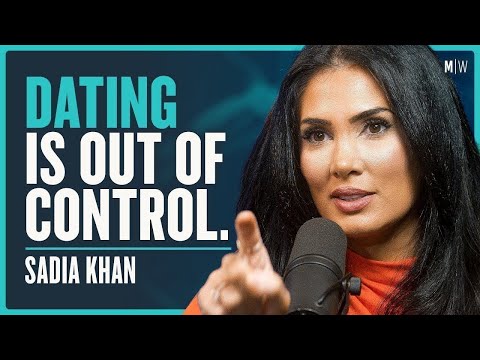
Gen Z Has A Dating Problem - Sadia Khan
Chris Williamson (host), Sadia Khan (guest)
In this episode of Modern Wisdom, featuring Chris Williamson and Sadia Khan, Gen Z Has A Dating Problem - Sadia Khan explores gen Z Love Crisis: Loneliness, Sex Tech, And Broken Relationship Scripts Chris Williamson and psychologist Sadia Khan dissect why modern culture increasingly treats love, marriage, and family as toxic or weak, and how this shift harms both men and women—especially Gen Z. They argue that anti‑love narratives in media, porn, hookup culture, and ‘sexual liberation’ fuel loneliness, depression, and superficial connections while masking deep issues like low self‑esteem and childhood trauma. The conversation covers escort culture, OnlyFans, AI girlfriends, infidelity, body count debates, and gendered competition, always tying behavior back to evolutionary psychology and early family dynamics. Overall, they contend that real fulfillment still comes from responsibility, connection, and family, not hyper‑individualism or frictionless pleasure.
Gen Z Love Crisis: Loneliness, Sex Tech, And Broken Relationship Scripts
Chris Williamson and psychologist Sadia Khan dissect why modern culture increasingly treats love, marriage, and family as toxic or weak, and how this shift harms both men and women—especially Gen Z. They argue that anti‑love narratives in media, porn, hookup culture, and ‘sexual liberation’ fuel loneliness, depression, and superficial connections while masking deep issues like low self‑esteem and childhood trauma. The conversation covers escort culture, OnlyFans, AI girlfriends, infidelity, body count debates, and gendered competition, always tying behavior back to evolutionary psychology and early family dynamics. Overall, they contend that real fulfillment still comes from responsibility, connection, and family, not hyper‑individualism or frictionless pleasure.
Key Takeaways
Stop blaming love; scrutinize your choices and behavior instead.
Khan argues ‘love isn’t toxic, people are’—most anti‑love rhetoric comes from individuals with poor partner selection, weak boundaries, or unresolved trauma who universalize their bad endings into ‘proof’ that love itself is dangerous.
Get the full analysis with uListen AI
Red pill men and hardline feminists often share the same wound: feeling undesirable.
Both camps frequently cope with rejection and low self‑esteem by claiming they don’t want love or the opposite sex, creating a protective ‘inner citadel’ that preserves ego but caps their potential for genuine connection.
Get the full analysis with uListen AI
Sex work and porn typically stem from—and reinforce—emotional disconnection.
Khan links many female sex workers to histories of sexual abuse and minimized attachment to loyalty, while many male clients are avoidant men (often ‘porn addicts with money’) who bypass emotional intimacy but then struggle in real relationships.
Get the full analysis with uListen AI
Female competition and ‘slut‑shaming’ are often strategic, not just moral.
Women tend to attack sexually attractive rivals to raise the ‘price’ of sex and divert men away from threats, while ‘simp‑shaming’ functions similarly for men trying to stop other men from giving away resources without sex.
Get the full analysis with uListen AI
Nice guys don’t finish last because they’re kind, but because they’re boundaryless.
Women generally don’t respect overly pliable men who cannot say no or walk away; what’s desired is a man with sound judgment and firm boundaries, not cruelty or passivity masquerading as niceness.
Get the full analysis with uListen AI
Infidelity is rarely a lightning bolt; it’s the bill for ignored red flags.
Both sexes usually signal unfaithfulness through values, past behavior, and small boundary violations; Khan says if you stay despite clear signs, you’ve effectively consented to the risk and shouldn’t act shocked when it materializes.
Get the full analysis with uListen AI
AI girlfriends and virtual intimacy will deepen the eligibility crisis.
Frictionless, customizable AI partners train men to seek emotional and sexual gratification without human complexity, further eroding social skills and expectations—and pushing many real women to disengage rather than ‘compete’.
Get the full analysis with uListen AI
Notable Quotes
“Love isn’t toxic; it’s our poor decision‑making in love that’s toxic.”
— Sadia Khan
“Independence breeds more customers—if you convince people they don’t need love, you can sell them everything else.”
— Sadia Khan
“When you cap your potential to love, your mind rewards you with a slow, steady depression.”
— Sadia Khan
“We’re creating a society of incel men and jaded women.”
— Sadia Khan
“There are no options, only trade‑offs. In relationships you just pick your pain.”
— Sadia Khan (paraphrasing an idea Chris raises)
Questions Answered in This Episode
If modern culture glamorizes independence and casual sex, what practical steps can Gen Z take to rebuild a healthier relationship culture without feeling naïve or regressive?
Chris Williamson and psychologist Sadia Khan dissect why modern culture increasingly treats love, marriage, and family as toxic or weak, and how this shift harms both men and women—especially Gen Z. ...
Get the full analysis with uListen AI
How can someone realistically distinguish between ‘love is toxic’ as a meme and their own unresolved attachment trauma or repeated bad choices in partners?
Get the full analysis with uListen AI
What is a constructive way for men and women to respond to AI girlfriends and advanced sex tech so that they don’t further erode real‑world dating and family formation?
Get the full analysis with uListen AI
Given Khan’s criticism of porn and sex work, what would a realistic path out look like—for both performers and consumers—without moral grandstanding?
Get the full analysis with uListen AI
How should someone address retroactive jealousy about a partner’s past in a way that is honest but doesn’t poison the relationship or become controlling?
Get the full analysis with uListen AI
Transcript Preview
Why did you get banned on Instagram?
(laughs) Actually, to, to be fair, I don't know fully, but from what I did some digging and I found out there was a, um, OnlyFans content creator who felt like I was pushing a narrative that goes against sex work, pornography, and OnlyFans, and so she pulled some strings, managed to get it banned. I also pulled some strings, managed to get back on. But I'm sure with my big mouth, I'll get myself in trouble soon, so I'm gonna make a vow, and I'm glad you're here to witness it, that I'm gonna try and stay out of trouble because I don't wanna lose my Instagram. It's actually a really great platform.
Okay.
(laughs)
Well, we'll ho- we'll see-
(laughs)
... we'll see how you get on after today.
Yeah.
So one of the things that I've noticed recently is this sort of widespread belief that love i- is... It's toxic.
Mm-hmm.
Why do you think these sort of modern representations of female stories are so devoid of love? You know, looking at the Barbie movie, there's these previews of the Snow White movie coming up-
Mm-hmm.
... Rachel Ziegler, Zeigler, doesn't really look like she's pro-love.
Mm-hmm.
What do you think is going on?
Well, I think the demise of marriage and long-term relationships, what that means is... With relationships, a bit like when you watch a movie, and the whole movie can be great, but if the ending is shit, we'll say, "Movies are shit. That movie was awful." Similarly, if the ending is fantastic, you'll say, "That whole movie was great." Usually, the people pushing this narrative have just come out of a negative relationship, so they define the entire course of love and the entire course of relationships by their particular ending. And if the ending was terrible, love is terrible, and they label it like that. And they also like to run with the narrative that, "My ex is a narcissist," is their favorite phrase on the planet at the moment. What that does is kind of devoid us of the responsibility in causing that toxicity, blame it on someone else, and then blame love as a separate entity as a cause for our pain when really, it's our behaviors. So the love isn't toxic, it's how we behave in love and how we behave when vulnerable that creates toxicity. But it's easier to just say that love is this really dangerous emotion and we should avoid it at all costs and always keep our armor up just in case love comes at us and kills us, when really, it's our poor decision-making or our behaviors that cause love to be toxic.
Yeah. I... It's strange to me that it appears to be like a top-down narrative as well. It's not just individuals rejecting love-
Mm-hmm.
... it's also in movies-
Install uListen to search the full transcript and get AI-powered insights
Get Full TranscriptGet more from every podcast
AI summaries, searchable transcripts, and fact-checking. Free forever.
Add to Chrome