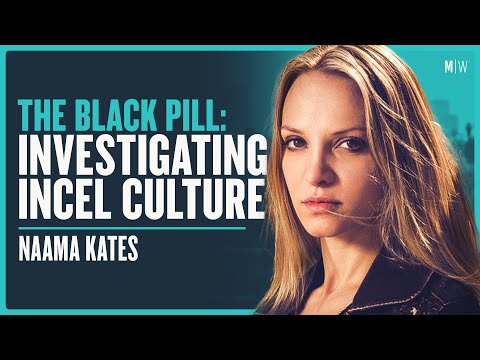
Investigating The Incel Community - Naama Kates | Modern Wisdom Podcast 363
Naama Kates (guest), Chris Williamson (host)
In this episode of Modern Wisdom, featuring Naama Kates and Chris Williamson, Investigating The Incel Community - Naama Kates | Modern Wisdom Podcast 363 explores inside Incels: Loneliness, Online Echo Chambers, and Misunderstood Extremes Chris Williamson interviews Naama Kates, host of the 'Incel' podcast, about the incel community—men who see themselves as involuntarily celibate and often gather in online spaces. They unpack the spectrum of what 'incel' means, how these communities formed alongside the broader 'manosphere,' and why they’re so attractive to lonely, socially isolated young men. Kates explains core beliefs around looks, status, and women, the blackpill worldview, and how forum dynamics can both validate suffering and deepen resentment. They also critique media narratives linking incels to terrorism and white supremacy, and discuss how stigmatization and censorship may be making the problem worse rather than solving it.
Inside Incels: Loneliness, Online Echo Chambers, and Misunderstood Extremes
Chris Williamson interviews Naama Kates, host of the 'Incel' podcast, about the incel community—men who see themselves as involuntarily celibate and often gather in online spaces. They unpack the spectrum of what 'incel' means, how these communities formed alongside the broader 'manosphere,' and why they’re so attractive to lonely, socially isolated young men. Kates explains core beliefs around looks, status, and women, the blackpill worldview, and how forum dynamics can both validate suffering and deepen resentment. They also critique media narratives linking incels to terrorism and white supremacy, and discuss how stigmatization and censorship may be making the problem worse rather than solving it.
Key Takeaways
Incel identity exists on a spectrum, not as a single category.
Kates distinguishes between anyone in a sexual drought, self-aware incels who don’t join communities, and those whose primary identity is tied to participating in incel forums; conflating these groups distorts both research and policy.
Get the full analysis with uListen AI
Loneliness, mental health issues, and neurodivergence are central risk factors.
Incels disproportionately report depression, anxiety, social isolation, bullying, and a very high rate of autism diagnoses (~20%), suggesting that social skills deficits and chronic isolation are core drivers of incel involvement.
Get the full analysis with uListen AI
Online incel spaces offer belonging but can entrench hopelessness and resentment.
Forums provide a place to share ‘Ls’ and shameful feelings, but also normalize nihilistic beliefs, celebrate failure, ban ‘bragging,’ and often punish members who show signs of improvement—making it harder to leave the mindset.
Get the full analysis with uListen AI
The blackpill worldview radically overweights looks and downplays agency.
Incels tend to rank 'looks, money, status' in that order for male attractiveness, obsess over evolutionary-psych data and Tinder stats, and use concepts like halo effect and 'looksmaxxing' to rationalize why they believe change is largely impossible.
Get the full analysis with uListen AI
Stigmatizing and censoring incel communities may increase risk, not reduce it.
Platform bans push groups to harder-to-monitor spaces, strengthen persecution narratives, remove moderating outside perspectives, and can incentivize more extreme ‘edgelord’ behavior for attention and notoriety.
Get the full analysis with uListen AI
Labeling incel-linked attacks as 'terrorism' often misdiagnoses the problem.
Kates argues most so‑called incel attacks lack clear political aims and look more like individual downward spirals than organized terror; mislabeling them directs resources to counterterrorism frameworks instead of mental health and prevention.
Get the full analysis with uListen AI
Modern sexual and economic shifts are creating structural mismatches in dating.
As women gain more education, status, and income while still preferring equal-or-higher-status partners, an underclass of lower-status men and a pool of single high-achieving women are both left dissatisfied, feeding incel grievances.
Get the full analysis with uListen AI
Notable Quotes
“Overwhelmingly, a lot of them are just lonely... and a lot of them just aren't happy.”
— Naama Kates
“Something like 20% are on the autism spectrum, which is a really, really high percentage.”
— Naama Kates
“Misery and failure are almost celebrated in these forums, and ascending and making more of yourself is sometimes talked down to.”
— Chris Williamson (paraphrasing Kates’ earlier points)
“You can’t silence and shame and shut these things out of existence.”
— Naama Kates
“This will always be a part of our society… someone who feels they have no place in it and are not desired.”
— Naama Kates
Questions Answered in This Episode
How could mental health services and social programs practically engage with incel-identified men without reinforcing stigma or validating harmful beliefs?
Chris Williamson interviews Naama Kates, host of the 'Incel' podcast, about the incel community—men who see themselves as involuntarily celibate and often gather in online spaces. ...
Get the full analysis with uListen AI
What kinds of online community designs or moderation policies might preserve support and belonging while discouraging blackpill nihilism and misogyny?
Get the full analysis with uListen AI
To what extent are dating apps and algorithmic matching exacerbating perceived inequality in the sexual marketplace, and can they be redesigned to reduce this effect?
Get the full analysis with uListen AI
How should journalists responsibly report on incel-linked violence without glamorizing perpetrators or over-generalizing an entire online subculture?
Get the full analysis with uListen AI
What broader cultural changes—around masculinity, relationships, and social skills—would be needed to reduce the number of young men drifting into incel communities?
Get the full analysis with uListen AI
Transcript Preview
... overwhelmingly, a lot of them are just lonely. A lot of them have trouble with just platonic friendships too, and don't feel they have like a, a strong social group. And a lot of them just aren't happy. The vast majority of them have some kind of, like, either depression or anxiety. Something like 20% are on the autism spectrum, which is a really, really high percentage. And that's formal diagnoses too, not just that suspect that they are.
(wind blowing) Lama Kate, welcome to the show.
Thanks for having me.
How did you get into researching incels?
I've been asked this many times, and I don't have a neat story as to how. Um, basically, I have a background in media. I'm a filmmaker, written things and acted, and, you know, music, everything kind of in that world. Um, and so I was, uh, finishing up a film when I started really getting into podcasts, just as a medium. Um, and the ones that I liked the most were true crime kind of stuff, as you know, Crawlspace, my, uh, network, um, is very true crime oriented. And, um, I was just listening to a lot of them, and I guess, kind of having just worked on a, a film that is very costly and, you know, labor-intensive, time-intensive, planning-intensive process. Um, also a visual medium, which I've since realized I'm much less visually oriented than I am in terms of words and sound and things like that. Um, and yeah, I was just kind of really appreciating the, the medium, like storytelling through that form was interesting to me. And around the same time, I think incels kind of made their way onto my radar, and, uh, and then I, I had a happenstance encounter with one, with an, with an incel, um, I think in 2017 or so. And it was just a random social media thing, and I started talking to this person, and it became very interesting, and I asked if we could record our conversations, and he said fine. And I listened to them back and found them interesting, and it just seemed like a good topic for a podcast, you know? I, I looked around for information about it, and there was hardly any at the time, and that's kind of how it started.
Well, I asked all of Twitter for their suggestions, and the two names that came up as, like, incel experts were you and James Bloodworth.
That's actually true. (laughs)
So you've managed to reach the pinnacle of what Twitter thinks an incel expert is.
Yes. I've also managed to reach the, uh, whatever you would refer to as the bottom of that.
Okay, bottom of the barrel and at the top, fine.
Yes. (laughs)
So that's, that's cool. All right, so how do you define what an incel is?
Well, um, there is the basic definition, involuntary celibate. An incel, someone who is involuntarily celibate. Um, categorically, according to the incel community, it would just be someone that, you know, doesn't have sexual or romantic relationships, despite wanting them. Um, so that's kind of the broadest definition, and, uh, there's also, like, a timeline limit for, for some groups. They say, you know, "You have to be a virgin." Some would say, "Well, it has to be six months or more that you're in this situation that you can say you're, you're incel, otherwise it's a dry spell or something." Um, so, so there's that. But beyond that, um, is are we talking about an, an incel, which is just someone who is that, whether or not they know it, um, or someone who recognizes that they are an incel? Um, that's kind of the second or middle of the road definition. And then the third, I would say is someone whose identity is, who, who's really kind of made their identity about that and partakes in the online, you know, community and the forums and the websites, as we all might be coming to know more about them now.
Install uListen to search the full transcript and get AI-powered insights
Get Full TranscriptGet more from every podcast
AI summaries, searchable transcripts, and fact-checking. Free forever.
Add to Chrome