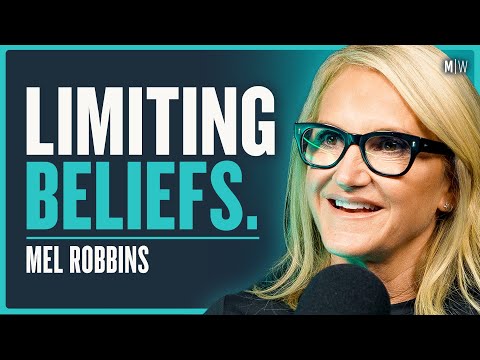
How to Defeat Your Stress, Anxiety & Inaction - Mel Robbins
Chris Williamson (host), Mel Robbins (guest), Narrator
In this episode of Modern Wisdom, featuring Chris Williamson and Mel Robbins, How to Defeat Your Stress, Anxiety & Inaction - Mel Robbins explores mel Robbins Explains How To Break Chronic Stress, Anxiety, And Stuckness Mel Robbins and Chris Williamson explore why so many people feel chronically stressed, anxious, and paralyzed in the aftermath of the pandemic and in today’s hyper-connected, uncertain world. They link chronic amygdala activation and the illusion of control to rising anxiety, conspiracy thinking, and inaction around jobs, AI, and life decisions. Robbins shares her own history with anxiety, ADHD, financial collapse, and parenting missteps, then distills what she’s learned into simple cognitive tools like “I will be okay no matter what happens” and her “Let Them / Let Me” framework. The conversation circles around one core idea: you can’t control life, but you can control your mindset, actions, and boundaries—and that’s enough to rebuild agency and move forward.
Mel Robbins Explains How To Break Chronic Stress, Anxiety, And Stuckness
Mel Robbins and Chris Williamson explore why so many people feel chronically stressed, anxious, and paralyzed in the aftermath of the pandemic and in today’s hyper-connected, uncertain world. They link chronic amygdala activation and the illusion of control to rising anxiety, conspiracy thinking, and inaction around jobs, AI, and life decisions. Robbins shares her own history with anxiety, ADHD, financial collapse, and parenting missteps, then distills what she’s learned into simple cognitive tools like “I will be okay no matter what happens” and her “Let Them / Let Me” framework. The conversation circles around one core idea: you can’t control life, but you can control your mindset, actions, and boundaries—and that’s enough to rebuild agency and move forward.
They also discuss how expectations and mindsets can literally change physiology and performance, why self-compassion accelerates growth more than self-criticism, and how to navigate relationships by accepting people as they are instead of trying to mold their “potential.”
Key Takeaways
Most people are unknowingly living in chronic stress, which impairs rational thinking.
Robbins cites research suggesting over 80% of adults are in a chronic stress state, with the amygdala “running the show. ...
Get the full analysis with uListen AI
Anxiety is largely about uncertainty and feeling separated from your own ability to cope.
They emphasize that roughly 90% of anxiety is anticipatory and rooted in perceived lack of control, not the event itself. ...
Get the full analysis with uListen AI
Simple mindset statements can physiologically reset your stress response.
Phrases like “I will be okay no matter what happens” or “I can handle this” function as cognitive tools that change mental “settings,” signaling safety and reducing physiological arousal. ...
Get the full analysis with uListen AI
Action beats rumination: anxiety often worsens when you avoid the very thing you fear.
Robbins notes that people anxious about jobs or AI tend to complain, freeze, and catastrophize instead of updating resumes, learning new skills, tightening finances, or exploring new paths. ...
Get the full analysis with uListen AI
Self-compassion and noticing what you do right create sustainable motivation.
Robbins argues that harsh self-criticism stalls momentum and makes change harder. ...
Get the full analysis with uListen AI
Accepting people as they are is more powerful than trying to change them.
Her “Let Them / Let Me” framework teaches you to stop trying to control others’ moods, beliefs, or behaviors (“let them”) and instead focus on your own thoughts, boundaries, and choices (“let me”). ...
Get the full analysis with uListen AI
Your worst moments can become either a weakness narrative or proof of capacity.
They contrast people who interpret hardships as evidence of permanent damage with those who see them as proof of what they can survive. ...
Get the full analysis with uListen AI
Notable Quotes
“When life overwhelms you, there’s nothing you can do about life, but there’s so much you can do to support yourself through it.”
— Mel Robbins
“I will be okay no matter what happens.”
— Chris Williamson
“Most people right now are in a state of chronic stress and they don’t even know it. And your body doesn’t automatically reset—you have to do that for yourself.”
— Mel Robbins
“Your expectations are even more powerful than your genes.”
— Chris Williamson (summarizing David Robson’s work)
“If you don’t like where your life is right now, that’s all you need to change. Your life changes with one decision because the decision points you in a different direction.”
— Mel Robbins
Questions Answered in This Episode
How can someone practically tell whether they’re in chronic stress versus just “busy” or tired?
Mel Robbins and Chris Williamson explore why so many people feel chronically stressed, anxious, and paralyzed in the aftermath of the pandemic and in today’s hyper-connected, uncertain world. ...
Get the full analysis with uListen AI
What daily rituals or micro-habits best reinforce the belief “I will be okay no matter what happens” so it actually sticks under pressure?
They also discuss how expectations and mindsets can literally change physiology and performance, why self-compassion accelerates growth more than self-criticism, and how to navigate relationships by accepting people as they are instead of trying to mold their “potential.”
Get the full analysis with uListen AI
Where in my life am I avoiding action because of anxiety, and what is one specific step I could take this week to reclaim control?
Get the full analysis with uListen AI
How can I apply the ‘Let Them / Let Me’ framework with a family member or partner whose behavior I find hurtful or frustrating but can’t easily avoid?
Get the full analysis with uListen AI
If my childhood wired me to feel like someone is always mad at me, what concrete steps can I take to rewrite that mental setting without years of therapy?
Get the full analysis with uListen AI
Transcript Preview
Yeah, so Keynesian Beauty Contest.
Yes.
Um, people are asked to rank-
Yes.
... who is the most beautiful.
Yes.
But they're also then asked to rank who they think other people think-
Yes.
... is the most beautiful.
Yes. And then, is that also the thing where you're then told that the stuff is screwed up and you're seeing the data and then you come back and you rank the same people differently 'cause you were shown how other people rank them?
Oh, maybe. There might be a twist on it.
Yeah.
So this guy's actually done it, but he's done it for real life.
So, so he basically has the most incredible data set that shows that people agree on 88% of the things that are important in life. Now, we may disagree on policy and how to get there.
Mm.
But people want exactly the same things. And right now, we're in this massive moment of collective self-silencing.
Mm-hmm.
And part of the reason why... And it's super fascinating when he talks about the brain, since we're so wired for connection and social rejection feels like pain.
Mm-hmm.
That when you see that... I, I don't know what the stats are today 'cause it's an old study, but you're probably familiar with that study, uh, that looked at Twitter and how, I think it was like 80% or 90% of the content came from 10% of the accounts.
Mm-hmm.
And right now, if you look at what's going on in social, the 5% of the most extreme voices on both sides dominate 90% of the conversation.
Mm.
And everybody else is sort of in the middle going, "Can my fucking parents just stop screaming at each other?"
(laughs)
And everybody is self-silencing because nobody wants to get into it with anybody and we are under the collective illusion that because you're not saying something, you agree with what's happening.
Mm-hmm.
And his data is so important and so hopeful and meaningful.
Mm-hmm.
And then he has this incredible historical, uh, example about the Velvet Revolution that happened, which was the revolution that happened, I believe, in the '80s. It's the only time a communist government was overthrown without a single bullet being fired or a single person dying.
Mm-hmm.
And there's an 80-page free kind of historical paper about it. It all began with somebody writing a play that basically started to poke fun, but just subtle enough so that the communist, you know, regime did not see it coming-
Hm.
... that had people in the audience laughing and going, "This is ridiculous." Like, "Why, why, why?" You know? And, and then that invited people to step back into their lives in a more authentic way. So I th- I, I f- I think he's one of the most important people that I have interviewed-
Install uListen to search the full transcript and get AI-powered insights
Get Full TranscriptGet more from every podcast
AI summaries, searchable transcripts, and fact-checking. Free forever.
Add to Chrome