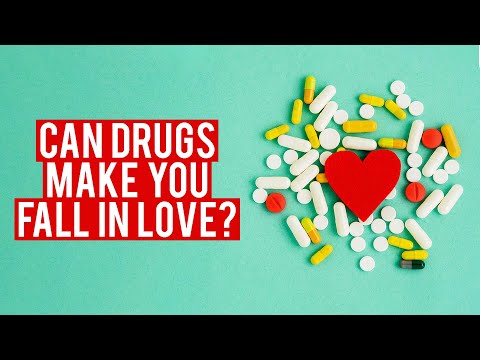
The Ethics Of Using Drugs To Fall In & Out Of Love - Brian D. Earp | Modern Wisdom Podcast 268
Brian D. Earp (guest), Chris Williamson (host)
In this episode of Modern Wisdom, featuring Brian D. Earp and Chris Williamson, The Ethics Of Using Drugs To Fall In & Out Of Love - Brian D. Earp | Modern Wisdom Podcast 268 explores should We Medicate Love? Ethics of Drugs, Desire, and Relationships Brian D. Earp and Chris Williamson explore how existing and emerging drugs can influence lust, attraction, attachment, and romantic love, and whether using them is ethically acceptable.
Should We Medicate Love? Ethics of Drugs, Desire, and Relationships
Brian D. Earp and Chris Williamson explore how existing and emerging drugs can influence lust, attraction, attachment, and romantic love, and whether using them is ethically acceptable.
They discuss a biopsychosocial model of love, the neurochemistry behind different stages of relationships, and how psychedelics and MDMA-assisted therapy may help couples break destructive patterns or rekindle connection.
The conversation also examines “anti‑love” drugs for abusive relationships or uncontrollable desires, the politics of altering sexual orientation, and tensions between bioconservative and bioliberal views on enhancing human nature.
Throughout, they wrestle with authenticity, agency, the risk of numbing meaningful suffering, and whether technology should reshape something as culturally sacred and personally defining as love.
Key Takeaways
Love is a complex biopsychosocial phenomenon, not just ‘chemicals’ or pure feeling.
Earp frames love as arising from biology (evolved mating and bonding systems), subjective experience (how it feels from the inside), and social scripts (cultural stories and values that tell us what ‘counts’ as love).
Get the full analysis with uListen AI
Existing drugs already shape our romantic lives, often without being studied as ‘love drugs’.
Common medications like SSRIs, hormonal contraception, and even Viagra can blunt or enhance desire, attachment, and relationship satisfaction, yet trials rarely measure interpersonal outcomes such as “Do you still love your partner?”
Get the full analysis with uListen AI
Psychedelics and MDMA may enhance therapy by disrupting rigid patterns, not by ‘manufacturing’ love.
In controlled settings, these drugs can lower defenses, quiet ego, and allow people to revisit trauma or entrenched couple conflicts with openness, potentially rekindling appreciation for a partner or resolving long-standing issues.
Get the full analysis with uListen AI
Anti-love pharmacology could help some people align actions with higher-order values.
For those stuck in abusive attachments or with exclusively harmful desires (e. ...
Get the full analysis with uListen AI
Authenticity depends less on ‘drug-free’ states and more on reflective endorsement.
Earp suggests feelings are authentic when, on reflection, they fit a person’s considered values and life narrative; a drug that removes barriers to genuine emotion (e. ...
Get the full analysis with uListen AI
Technological power over love and sexuality collides with social injustice and value conflicts.
Potential orientation-modifying or libido-suppressing interventions highlight tensions between individual choice, internalized stigma, religious commitments, and the risk that marginalized groups will be disproportionately pressured to ‘conform’ rather than society addressing its prejudices.
Get the full analysis with uListen AI
There is no simple rule for how far we should engineer human nature.
Bioconservatives warn that complex evolved systems are easy to damage and that we may over-medicalize problems better solved by social or lifestyle changes, while bioliberals argue that, given widespread suffering and maladaptive ‘tribal’ psychologies, cautious enhancement may be both rational and humane.
Get the full analysis with uListen AI
Notable Quotes
“Love sits at the interface of biological, subjective, psychological aspects and the wider social historical context.”
— Brian D. Earp
“Some people who have been in these trials say, ‘I look at my partner like when we first met again.’”
— Brian D. Earp
“If the effect of a drug was just uniformly to block people's ability to access genuine information from their emotional lives, that would be bad.”
— Brian D. Earp
“We're taking drugs already that have effects on our romantic neurochemistry. We just don't tend to think of them that way.”
— Brian D. Earp
“Feeling feelings is hard… but nerfing that, cutting off all of the sharp edges of life by deciding to tranquilize yourself away from bad feelings, to me seems like a cop-out.”
— Chris Williamson
Questions Answered in This Episode
How should we distinguish between a therapeutic use of ‘love drugs’ and a problematic attempt to escape normal emotional pain or responsibility?
Brian D. ...
Get the full analysis with uListen AI
Who, if anyone, should have the authority to decide when anti-love interventions (for abusive bonds or harmful desires) are ethically justified?
They discuss a biopsychosocial model of love, the neurochemistry behind different stages of relationships, and how psychedelics and MDMA-assisted therapy may help couples break destructive patterns or rekindle connection.
Get the full analysis with uListen AI
Can a relationship strengthened or rekindled under the influence of psychedelics or MDMA truly be considered authentic, or is it partly an artifact of the drug state?
The conversation also examines “anti‑love” drugs for abusive relationships or uncontrollable desires, the politics of altering sexual orientation, and tensions between bioconservative and bioliberal views on enhancing human nature.
Get the full analysis with uListen AI
In a world where social pressures around sexuality and gender are unequal, is it ever genuinely free choice to alter one’s sexual orientation or libido pharmacologically?
Throughout, they wrestle with authenticity, agency, the risk of numbing meaningful suffering, and whether technology should reshape something as culturally sacred and personally defining as love.
Get the full analysis with uListen AI
Where should society draw the line between improving mental health with drugs and over-engineering human nature in ways that could erode meaningful struggle, growth, and intimacy?
Get the full analysis with uListen AI
Transcript Preview
Supposing that these clinics arise in the next 10 years or so, where people will be able to have psychedelic-enhanced, uh, couples therapy, let's see what happens if we can just go into this place together, put our shared values on the table, talk with the therapist about what we want to accomplish, learn about the effects of this drug, recognize that it'll put us into a different state of mind for a while. The effects of the drug won't be permanent, but while we're in that altered state of mind, maybe we'll be able to kind of recapture, or rekindle, or explore some things together that, just because of the pattern that we're in, we aren't able to really do by our own volition, and, and see what happens. Some of the people who have been in these trials recently say, "I look at my partner like when we first met again." And for some people, having the direct influence of a drug to kind of wipe out some of their patterned ways of thinking and allow them to see what's right in front of them with new eyes does allow them to kind of remember and re-experience why it is that they value the relationship in the first place. And to me, that doesn't seem inauthentic. That just seems like we can get ourselves into inauthentic patterns by falling into habits that aren't good for us. (wind blows)
What is love?
That's a good question. I've spent a lot of time thinking about it, and obviously so have a lot of other people in a lot of different, uh, disciplines and using different lenses. Um, most of us, I think, probably start to think about love outside of our own experiences through art and literature and maybe philosophy. Um, more recently, scientists have taken an interest in love, and they're starting to figure out what's going on in our brains when we at least report subjectively that we feel that we're in love, and they start to try to triangulate in and see neurochemically what's happening. Um, so I end up adopting a view that tries to integrate all of these different perspectives. So, I think of love as kind of a bio-psychosocial phenomenon. It's something that feels a certain way, so there are subjective components to it. And if you report that you're in love and I report that I'm in love, we're kind of comparing notes and trying to see, is what you're feeling the same thing as what I'm feeling? And to do that, we'll often refer to tropes and scripts and concepts in the culture. So, you might say, "Well, it feels like that thing that's represented in that movie," or, "When I read this poem by so-and-so, it really makes me feel like that's what I'm feeling." And that's one of the ways in which we compare notes, is through cultural artifacts. And then there's also stuff going on in our brains, as I suggested. So, at the, at the very least, you know, love is scaffolded on top of things that are related to our ex- our nature as a sexually reproducing species. So, the reason why we're drawn toward at least some people in this passionate way, and we want to meld with them, uh, has got to be related to the fact that we reproduce sexually, and so we're gonna have to have mating partners, and love is wrapped up in that. Uh, there's some, some theorists that suggest love has kind of different phases or stages. So, there's a, a, a set of brain systems that are oriented around, uh, lust or libido, which is just to drive us toward a potentially range of mating partners. There's attraction, which narrows our focus in on a smaller number of people, maybe one in particular. And then attachment, which is this long-lasting kind of pair bond that exists in a lot of different mammal species and in ours, and that's more if toward child-rearing potentially, or long-term relationships. So, how that plays out in a given cultural or historical context, well, that depends on, you know, accidents of history and, um, you know, prevailing concepts and ideas. So, love just situ- sits, sits at the interface of these kind of biological, subjective, experiential, psychological aspects and the wider social historical context. That's, that's the best I can say of what love is.
Install uListen to search the full transcript and get AI-powered insights
Get Full TranscriptGet more from every podcast
AI summaries, searchable transcripts, and fact-checking. Free forever.
Add to Chrome