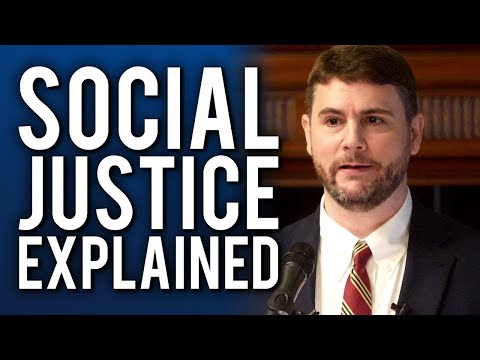
James Lindsay | Social Justice Explained: The Foundations Of Wokeness | Modern Wisdom Podcast 124
James Lindsay (guest), Chris Williamson (host), Narrator
In this episode of Modern Wisdom, featuring James Lindsay and Chris Williamson, James Lindsay | Social Justice Explained: The Foundations Of Wokeness | Modern Wisdom Podcast 124 explores james Lindsay Dissects Critical Theory, Social Justice, And Woke Ideology James Lindsay explains critical theory as a worldview that interprets all social relations through power dynamics and focuses on uncovering and dismantling perceived injustices in systems, rather than understanding how those systems work. He contrasts this with traditional theory and Enlightenment-style critical thinking, arguing that critical theory functions like a powerful solvent: useful in limited, careful applications but destructive when spread everywhere.
James Lindsay Dissects Critical Theory, Social Justice, And Woke Ideology
James Lindsay explains critical theory as a worldview that interprets all social relations through power dynamics and focuses on uncovering and dismantling perceived injustices in systems, rather than understanding how those systems work. He contrasts this with traditional theory and Enlightenment-style critical thinking, arguing that critical theory functions like a powerful solvent: useful in limited, careful applications but destructive when spread everywhere.
He then traces the intellectual roots of modern social justice and ‘wokeness’ from Marxism, the Frankfurt School, and Gramsci’s cultural hegemony, through French postmodernism (Foucault, Derrida), into 1980s–90s identity politics (Crenshaw, black feminism, queer theory), and finally to today’s intersectional, activist-driven framework.
Lindsay argues that contemporary social justice has become identity-first, quasi-religious, and self-contradictory, increasingly institutionalized in education and corporate life while simultaneously generating backlash from the right and a renewed interest in classical liberalism. He predicts that the ideology will partly collapse under its own weight, cause real institutional damage, intensify polarization, but also spur a ‘renaissance of liberalism’ as more people recognize both the value and dangers of critical approaches.
Throughout, he and host Chris Williamson discuss concrete examples (airplane seats, disability studies, deafness, ‘settlers of color’) to illustrate how a once-reasonable push for fairness can morph into extreme identity politics, infighting, and existential polarization between far-left social justice advocates and an increasingly radical right.
Key Takeaways
Understand critical theory as power-focused, not truth-focused.
Critical theory, per Horkheimer, is designed to find and frame injustices relative to a predetermined moral vision and to arm activists, rather than to neutrally understand how systems work; recognizing this helps you see why its analyses always foreground oppression and power.
Get the full analysis with uListen AI
Use ‘critical methods’ sparingly—like an industrial solvent.
Lindsay suggests critical analysis can be extremely useful for exposing blind spots and biases, but if applied indiscriminately across all domains, it dissolves functional structures without understanding or preserving what works.
Get the full analysis with uListen AI
Distinguish liberal social justice from its modern ‘woke’ mutation.
Early social justice aimed for reasonable accommodations and equal opportunity (e. ...
Get the full analysis with uListen AI
Be wary of identity-first politics and language conflations.
Shifting from ‘a person who is X’ to ‘an X person’ enables politics organized around identity categories, and conflating ‘normal’ (statistical) with ‘normal’ (morally good) fuels narratives that any deviation from the mean is morally oppressed by the ‘normals’.
Get the full analysis with uListen AI
Recognize how postmodern ideas power today’s intersectional activism.
Concepts from Foucault (power/knowledge, exclusion of the ‘abnormal’) and Derrida (binary hierarchies in language) were fused with Marxist and radical feminist thought in the 1980s–90s to produce an identity-centric, intersectional framework that now treats its own premises as unquestionable ‘known knowns’.
Get the full analysis with uListen AI
Expect both institutional capture and internal fracture in ‘woke’ movements.
Lindsay predicts more organizations will adopt social-justice frameworks (especially through education and corporate policy) even as the ideology becomes self-contradictory and cannibalistic, with competing victimhood claims (e. ...
Get the full analysis with uListen AI
Invest in liberal norms as an antidote to existential polarization.
Both far-left activists and far-right backlash now treat the other side as an existential threat, collapsing space for nuance; Lindsay argues that reviving liberal principles—free inquiry, individual rights, tolerance—across left and right is the most realistic path to de-escalation.
Get the full analysis with uListen AI
Notable Quotes
“I try to say that it's like a really strong industrial solvent. It has applications, it has uses, but man, you're not gonna spread it everywhere.”
— James Lindsay
“The point of a traditional theory is to understand a thing. The point of a critical theory is to understand how it goes wrong… and it must be applicable by activists.”
— James Lindsay
“There’s a trick being played here… the word normal means two things at once. They are actually waging a war against the normal because they feel like you can't have a neutral understanding of normal and abnormal.”
— James Lindsay
“Most of what is happening… ultimately comes down to a gigantic culture war between the sciences and the humanities that's been raging since like the '30s.”
— James Lindsay
“You can actually sit back for like two seconds and look at the dynamic and think, ‘Man, we're fucked.’ How does that stop?”
— James Lindsay
Questions Answered in This Episode
How can individuals and institutions responsibly use critical methods without sliding into the all-encompassing critical theory mindset Lindsay criticizes?
James Lindsay explains critical theory as a worldview that interprets all social relations through power dynamics and focuses on uncovering and dismantling perceived injustices in systems, rather than understanding how those systems work. ...
Get the full analysis with uListen AI
Where is the line between necessary, compassionate accommodation for minority experiences and the kind of identity-centric politics that becomes self-defeating or unjust to the majority?
He then traces the intellectual roots of modern social justice and ‘wokeness’ from Marxism, the Frankfurt School, and Gramsci’s cultural hegemony, through French postmodernism (Foucault, Derrida), into 1980s–90s identity politics (Crenshaw, black feminism, queer theory), and finally to today’s intersectional, activist-driven framework.
Get the full analysis with uListen AI
If education schools are a primary vector for spreading social-justice ideology, what concrete reforms—curricular or structural—could rebalance them toward liberal, pluralistic principles?
Lindsay argues that contemporary social justice has become identity-first, quasi-religious, and self-contradictory, increasingly institutionalized in education and corporate life while simultaneously generating backlash from the right and a renewed interest in classical liberalism. ...
Get the full analysis with uListen AI
Can postmodern insights about power and language be integrated into a liberal framework, or are they inherently corrosive to ideas like objective truth and individual rights?
Throughout, he and host Chris Williamson discuss concrete examples (airplane seats, disability studies, deafness, ‘settlers of color’) to illustrate how a once-reasonable push for fairness can morph into extreme identity politics, infighting, and existential polarization between far-left social justice advocates and an increasingly radical right.
Get the full analysis with uListen AI
What practical steps can people on both the left and right take to resist existential polarization and build the ‘renaissance of liberalism’ Lindsay hopes for?
Get the full analysis with uListen AI
Transcript Preview
(wind blowing) Somebody will get upset that I've said this, but the- truly, the whole thing is, is steeped in, like, psychoanalyzing people you disagree with, and paranoia, and it's all about systems of power and the way that those influence everything so that nothing can be authentic, and it's all kind of whining and complaining, and very pessimistic, very cynical. Um, it has that characteristic where... you've probably run into this, where you know it's wrong and it's not hard to see how it's wrong. It's easy to see how it's persuasive though, and it's gonna take you a lot of work to explain why it's wrong in a satisfactory way. And it's really a negative place to be. I don't think it's fun to do this (laughs) at all.
Are you the- the sort of the guy that's had to walk over hot coals to try and retrieve something of value from the other side a little bit? So, if it's you that's- that suffering this- this discomfort?
That is a good way to put it, yeah, in a sense. That's- I feel like that's kind of what I'm doing now is I- I really want to understand the mindset and understand it in a way that's faithful to what it actually is, that portrays it accurately, but also in a way that I- I can communicate that back to other people in plain language so that they can see it for what it is without having to go read, um, tons of it. And it is like walking back and forth, back and forth-
(laughs) Constantly.
... back and forth across the coals, knowing every single time that it's- (sighs) it's gonna be hot again, it's gonna be terrible.
(laughs)
Um...
I get it. Um, so, I mean, (clears throat) the listeners, you will have joined us. There's usually an intro, but me and James had too much to talk about, so welcome back. I'm joined by James Lindsay, and we are talking about an awful lot of different interesting things today, principally critical theory?
That's principally what I've been thinking about, yeah.
What is- what is critical theory? I don't know what critical theory is.
Critical theory is a way to view the world, um, the long and short of it is that it's a way to view the world that sees the world in terms of s- and there are multiple critical theories. There are many critical theories. Um, at- at its very bottom, it's a way to view the world where everything relevant in terms at- at least of social relations has to do with power dynamics that are in society between some group with power and other groups who don't have as much power. Um, and the object of critical theory is to say that the groups that have power carry certain assumptions and biases and the likes, and they bake that into the systems that they create without realizing that they're doing it. So, the critical theorist's job is to expose those biases and uncover those assumptions so that they can be critiqued and reexamined and usually discarded, dismantled, subverted, or, uh, otherwise overthrown.
Install uListen to search the full transcript and get AI-powered insights
Get Full TranscriptGet more from every podcast
AI summaries, searchable transcripts, and fact-checking. Free forever.
Add to Chrome