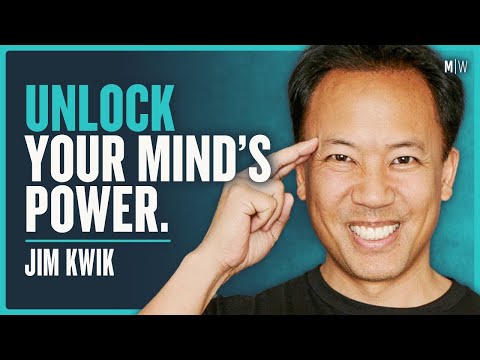
How To Fix Your Brain - Jim Kwik
Chris Williamson (host), Jim Kwik (guest)
In this episode of Modern Wisdom, featuring Chris Williamson and Jim Kwik, How To Fix Your Brain - Jim Kwik explores upgrade Your Brain: Jim Kwik’s Blueprint For Focus And Memory Mastery Jim Kwik and Chris Williamson discuss how modern life overloads our brains with information, eroding focus, memory, and executive function. Kwik argues that while technology amplifies distraction and stress, most cognitive performance is still within our control if we deliberately train our brains. They cover stress and fear’s impact on performance, the myths of fixed intelligence, and practical systems for memory, learning, and attention. Kwik outlines ten science-backed levers for brain health, introduces his Brain Animal typing model, and emphasizes that agency and consistent small actions can dramatically upgrade mental capability.
Upgrade Your Brain: Jim Kwik’s Blueprint For Focus And Memory Mastery
Jim Kwik and Chris Williamson discuss how modern life overloads our brains with information, eroding focus, memory, and executive function. Kwik argues that while technology amplifies distraction and stress, most cognitive performance is still within our control if we deliberately train our brains. They cover stress and fear’s impact on performance, the myths of fixed intelligence, and practical systems for memory, learning, and attention. Kwik outlines ten science-backed levers for brain health, introduces his Brain Animal typing model, and emphasizes that agency and consistent small actions can dramatically upgrade mental capability.
Key Takeaways
Stress and fear can literally shut down higher brain functions.
Chronic stress and fear keep you stuck in survival mode, shrinking parts of the brain, suppressing immunity, and blocking access to executive functions like creativity, problem‑solving, and memory. ...
Get the full analysis with uListen AI
Your self-talk programs your brain like software.
Repeated phrases such as “I have a bad memory” become self-fulfilling scripts that your brain follows. ...
Get the full analysis with uListen AI
Memory is a trainable skill, not a fixed talent.
Kwik breaks memory into encoding, storage, and retrieval, and shows that using imagery, emotion, and structures like memory palaces dramatically improves recall. ...
Get the full analysis with uListen AI
Focus often fails because tasks are too slow and passive, not too hard.
When reading or learning at a sluggish pace, the brain seeks stimulation elsewhere, leading to distraction. ...
Get the full analysis with uListen AI
Ten lifestyle levers can significantly boost brain performance.
Kwik outlines 10 drivers: good brain diet, killing negative thoughts, regular exercise, targeted nutrients/supplements, positive peer group, clean environment, quality sleep, brain protection, constant new learning, and stress management. ...
Get the full analysis with uListen AI
Learning with the intention to teach turbocharges understanding.
The “explanation effect” means that when you read or listen as if you’ll have to explain it to someone, you automatically focus more, take better notes, and integrate ideas more deeply. ...
Get the full analysis with uListen AI
Tailoring learning to your ‘Brain Animal’ type reduces friction and increases results.
Kwik’s Brain Animal model (Cheetah, Owl, Dolphin, Elephant) maps different cognitive and communication styles—fast-acting, analytical, visionary, and empathetic. ...
Get the full analysis with uListen AI
Notable Quotes
“If you fight for your limitations, you get to keep them.”
— Jim Kwik
“Your brain is this incredible supercomputer and your self-talk is the program that will run.”
— Jim Kwik
“We live in the millennium of the mind. It’s not our muscle power anymore, it’s our brain power.”
— Jim Kwik
“The good shit sticks.”
— Chris Williamson (via Tim Ferriss’s idea)
“With great responsibility comes great power.”
— Jim Kwik
Questions Answered in This Episode
Which of Kwik’s ten brain levers is currently my weakest, and what is one small action I can take this week to improve it?
Jim Kwik and Chris Williamson discuss how modern life overloads our brains with information, eroding focus, memory, and executive function. ...
Get the full analysis with uListen AI
How can I redesign my information diet so that I’m filtering more aggressively instead of trying to consume everything?
Get the full analysis with uListen AI
What automatic negative thoughts about my intelligence or memory have I been repeating, and how can I consciously rewrite them?
Get the full analysis with uListen AI
In what situations do stress and fear most obviously sabotage my performance, and what pre‑performance routine could I build to change my state?
Get the full analysis with uListen AI
Given my likely Brain Animal type, how should I adjust my study habits, work environment, and collaboration style to align with my natural strengths?
Get the full analysis with uListen AI
Transcript Preview
Are modern people's brains broken, in your opinion?
(smacks lips) Broken is a big word, (sighs) um, and I definitely can identify with being broken with my, uh, traumatic brain injury when I was a child, and my learning difficulties, and people teasing me, calling me broken, and I feel like our minds are under assault, for sure, you know, with, uh, technology. I don't think necessarily technology is, is the reason, but certainly, technology can amplify the issues of distraction and forgetfulness, and this kind of a overload information anxiety, and it's an interesting world. You know, the amount of information is doubling at dizzying speeds, but I feel like, uh, we're not really prepared. I, I don't know a lot of people who aren't struggling right now with forgetfulness or distraction, maintaining their concentration. It feels like taking a sip of water out of a fire hose nowadays just to kinda catch up and keep up. Yeah, how you, how you doing with this, uh, data deluge?
It's interesting because obviously I, I consume so much for the podcast, you know-
Yeah.
... prep for the guests and other reading and, and then my own reading, and then the useless consumption of everything from social media to YouTube when I'm watching, when I'm trying to eat my lunch and stuff. It's a mixed bag because there are so many amazing insights that I really value, and yet coming along for the ride is this kind of ambient distraction, almost like this habituated ADHD thing that comes in where I just find myself task switching, even though I don't need to.
Mm.
So, you know, from... You've spent forever studying the brain both for yourself and from a professional perspective.
Yeah.
How many of the problems that people are dealing with wh- when it comes to focus and attention are an in-built endemic part of being a human, and how many do you think are novel and can be laid at the feet of the modern world?
(inhales deeply) Well, things are, were definitely simpler for our brains as hunter and gatherers, right? We're, we wanna, we wanna be able to survive and that, that's a big prerogative. We wanna be able to reproduce, we wanna be able to know where all the, the fresh water is and the enemy tribe and the, and, you know, where the fertile soil is. Nowadays, though every day I feel like people are just really, they're sprinting just to catch up, right? New technology, new people, new ideas, fast changes, endless updates. You know, it's happening in our careers, in school and business, industry, and literally every, every person's daily life. And so if people feel a little overwhelmed by the growing, um, like the data clutter, stressed out by all the knowledge that you must absorb and process and read and, and recall.
Mm.
You know, the nature of my work is really how do you stay on top and, and deal with all that.
Install uListen to search the full transcript and get AI-powered insights
Get Full TranscriptGet more from every podcast
AI summaries, searchable transcripts, and fact-checking. Free forever.
Add to Chrome