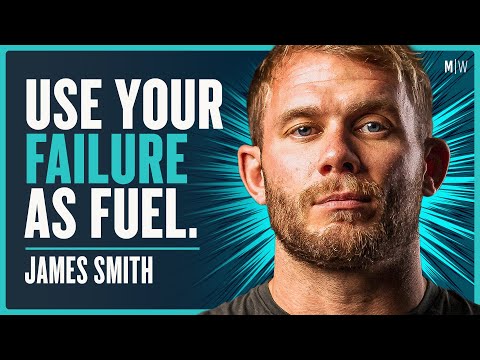
How Do You Develop Real Confidence? - James Smith
James Smith (guest), Chris Williamson (host)
In this episode of Modern Wisdom, featuring James Smith and Chris Williamson, How Do You Develop Real Confidence? - James Smith explores james Smith Redefines Confidence: From Open Loops To Daily Action Chris Williamson and James Smith explore what real confidence is, arguing it’s less a personality trait and more a byproduct of repeated action, failure, and competence built over time. They introduce the idea that 'low confidence' often serves as a socially acceptable excuse for chronic inaction, leaving people with endless mental 'open loops' and lifelong regret. The conversation ranges from diet culture and ‘food neutrality’ to rejection therapy, jiu-jitsu, alcohol, caffeine, and the mating market, consistently returning to how small, repeated actions reshape identity and expectations. They also discuss the challenges of male development in the modern world and the importance of honest vulnerability from successful figures, including James’ own struggles with celebrating wins and Chris’ hesitation about writing a book.
James Smith Redefines Confidence: From Open Loops To Daily Action
Chris Williamson and James Smith explore what real confidence is, arguing it’s less a personality trait and more a byproduct of repeated action, failure, and competence built over time. They introduce the idea that 'low confidence' often serves as a socially acceptable excuse for chronic inaction, leaving people with endless mental 'open loops' and lifelong regret. The conversation ranges from diet culture and ‘food neutrality’ to rejection therapy, jiu-jitsu, alcohol, caffeine, and the mating market, consistently returning to how small, repeated actions reshape identity and expectations. They also discuss the challenges of male development in the modern world and the importance of honest vulnerability from successful figures, including James’ own struggles with celebrating wins and Chris’ hesitation about writing a book.
Key Takeaways
Treat 'low confidence' as a potential excuse for inaction, not a fixed trait.
James argues many people invoke 'I’m not confident' to justify avoiding action at every fork in the road—whether asking for a raise, starting a conversation, or leaving a bad relationship—creating lifelong 'what ifs' that erode mental health.
Get the full analysis with uListen AI
Proactively close 'open loops' to reduce anxiety and build identity.
Using the Zeigarnik effect, they explain that unfinished tasks and unmade moves occupy mental bandwidth; each time you act (even if you fail), you close a loop, reinforce a more agentic identity, and reduce subconscious stress.
Get the full analysis with uListen AI
Use deliberate rejection and embarrassment as exposure therapy.
Exercises like asking for 10% off a coffee or the '100 days of rejection' build tolerance to 'no', showing that social failure isn’t annihilating and turning rejection into data rather than a verdict on your worth.
Get the full analysis with uListen AI
Pursue competence first; confidence will follow as a side effect.
They emphasize that years of practice—500+ podcasts, 10 years as a PT, countless jiu-jitsu rounds—create the effortless confidence people mistakenly attribute to natural personality, masking the real 'cheat code' of long-term consistency.
Get the full analysis with uListen AI
Reframe failure as a high-utility feedback mechanism.
From door-to-door sales to jiu-jitsu competitions and underperforming YouTube videos, each loss reveals what doesn’t work and shortens the path to mastery; avoiding failure means avoiding the very information you need to improve.
Get the full analysis with uListen AI
Adjust goals to your current 'next step' to beat anxiety.
Instead of setting impossibly high bars (e. ...
Get the full analysis with uListen AI
Recognize how crutches (alcohol, porn, dating apps, caffeine) can stall growth.
James describes stripping alcohol from dates and questioning dating apps and porn, arguing that these tools often mask insecurities and prevent you from doing the hard, growthful work that actually builds real-world confidence.
Get the full analysis with uListen AI
Notable Quotes
“Is not being confident a guise to excuse yourself for constantly picking the source of inaction?”
— James Smith
“Every single decision that you make now is going to engender a type of person that will make that same kind of decision in future.”
— Chris Williamson
“Stop avoiding failure because there is a massive utility to failing.”
— James Smith
“To become an extraordinary individual, to me, doesn’t seem like a particularly difficult pursuit. It just requires a little bit of movement.”
— Chris Williamson
“It’s not an impressive feat to write a book. It’s an impressive feat to believe you can do all of it together.”
— James Smith
Questions Answered in This Episode
In what areas of my life am I using 'low confidence' as a socially acceptable excuse to avoid action?
Chris Williamson and James Smith explore what real confidence is, arguing it’s less a personality trait and more a byproduct of repeated action, failure, and competence built over time. ...
Get the full analysis with uListen AI
Which specific 'open loops'—conversations, risks, or decisions—am I still carrying, and what small step could I take this week to close one of them?
Get the full analysis with uListen AI
How could I design my own 30-day 'rejection therapy' challenge to weaken my fear of embarrassment and social failure?
Get the full analysis with uListen AI
What crutches (alcohol, caffeine, porn, dating apps, social media) might be preventing me from developing genuine competence and self-belief?
Get the full analysis with uListen AI
If I chose one primary vehicle (skill, sport, craft, or project) to build a competence–confidence feedback loop, what would it be and what would the first week of deliberate practice look like?
Get the full analysis with uListen AI
Transcript Preview
If you go through life always taking the path of inaction, always opening these loops wondering whether or not the girl on the tube was single, whether or not your boss would have given you a pay rise, whether or not you could have got more responsibility at work, whether or not you could have told your partner how you really felt, is it all a guise? Is not being confident a guise to excuse yourself for constantly picking the source of inaction?
I'm very, very happy for the last couple of months for you. Some big wins. Another Sunday Times bestseller. Congrats, man.
Mate, thank you very much and the same goes for your camp. I mean, watching your trajectory over the last few months has been really good. Probably saw it before, like, probably six months ago when you went to Austin I was like, "This guy's, this guy's serious. This guy is gonna start moving in some big circles." And then some of the guests you've had on, I think have just bolstered your credibility, like, to that next level. Like, uh, yeah, you could see it from your first few years of effort where you were going and, uh, mate, it's been a pleasure to watch you kill it as well.
It's awesome to have a little community of people that are crushing it from the UK now. Really, really cool. And people that are all supporting each other, whether it's the Triggernometry boys or yourself, Darren's starting to step things up. You know, people are moving away to different countries, places that they know they can get more growth in. And it's really positive, so every time that you win, it makes me feel good, which is, uh, not necessarily something that I can say is a common culture in the UK. So I think setting that example is probably pretty good as well.
Yeah, I, um, I hired, like, my first proper employee to help me with my socials, like, uh, pretty much like a social digital manager. And when it was things like YouTube, I was like, "Chris Williamson, we need to be more like him." Your end cards, your content, the way things all connect together. See, an interest in paradox that I kind of created the other day, I call it the hater inspiration paradox and in essence, most of the people that probably hate on you or hate on me, if I use myself as an example, are often personal trainers or black belts in jujitsu. And the reason for that is they came to a fork in the roads where they could have been inspired by what I did or hate me for what I've done. And it's quite ironic that the majority of people that will criticize you could have all too easily taken the same path as you to get to success. It's very weird. They're not... The people that hate you the most aren't strangers. They're very similar to these kind of like two little forks. And they're... I'm sure that a lot of people back in the day would have seen what you'd done and could have had negati- negative things to say, but for me, I was like, "What he's doing successfully leaves clues." I was like, "I need to step my game up, even if I could just, you know, follow the spearhead, even if I could just get in your, your path of least resistance behind you, like a bird flying in formation." And, uh, yeah, it's good. When we, we kind of put up strengths, weaknesses of, you know, real basic who in the industry is killing it in these different social industries and your YouTube stuff is top level.
Install uListen to search the full transcript and get AI-powered insights
Get Full TranscriptGet more from every podcast
AI summaries, searchable transcripts, and fact-checking. Free forever.
Add to Chrome