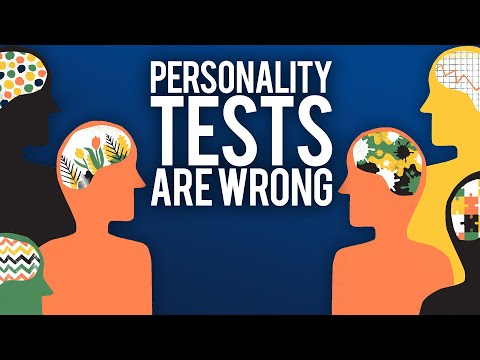
The Truth About Your Personality | Dr Benjamin Hardy | Modern Wisdom Podcast 185
Benjamin Hardy (guest), Chris Williamson (host)
In this episode of Modern Wisdom, featuring Benjamin Hardy and Chris Williamson, The Truth About Your Personality | Dr Benjamin Hardy | Modern Wisdom Podcast 185 explores designing Your Future Self: Why Personality Isn’t Permanently Fixed Dr. Benjamin Hardy argues that personality is not a fixed, innate trait but a flexible outcome of identity, environment, and choices over time.
Designing Your Future Self: Why Personality Isn’t Permanently Fixed
Dr. Benjamin Hardy argues that personality is not a fixed, innate trait but a flexible outcome of identity, environment, and choices over time.
He distinguishes between identity (how you define yourself) and personality (how you consistently act), emphasizing that identity should be consciously chosen and future-focused rather than passively inherited from the past.
The conversation challenges popular personality tests and horoscopes, showing how rigid labels create self-fulfilling limits and psychological rigidity.
Hardy outlines practical tools—like journaling, clarifying a future self, investing in that vision, and reframing past events—to deliberately reshape who you become.
Key Takeaways
Personality is changeable; identity should be consciously designed.
Personality is your consistent way of acting, but it is shaped by the identity you choose—how you define and describe yourself. ...
Get the full analysis with uListen AI
Stop over-identifying with past events and negative stories.
We often let single failures (a bad math test, a bad speech) define us permanently. ...
Get the full analysis with uListen AI
Use a clear future self to make better present decisions.
Research on the ‘psychology of your future self’ shows people underestimate how much they’ll change. ...
Get the full analysis with uListen AI
Beware rigid labels from personality tests and horoscopes.
Type-based tests (e. ...
Get the full analysis with uListen AI
Journaling and emotional ‘picture-making’ regulates emotions and identity.
Turning emotions into clear written stories, as Hardy did with his son, stops them from being overwhelming and lets you choose new meanings and next actions. ...
Get the full analysis with uListen AI
Tell people your goals to align behavior with your future self.
Openly sharing what you intend to become (e. ...
Get the full analysis with uListen AI
Invest money and environment into your future identity to lock in commitment.
Spending money (courses, coaching, domain names, trainers) and reshaping your environment around your future self signals belief in that identity and leverages sunk-cost and commitment effects, making it harder to drift back to old patterns.
Get the full analysis with uListen AI
Notable Quotes
“Human beings are works in progress that mistakenly think they’re finished.”
— Dr. Benjamin Hardy (quoting Daniel Gilbert)
“Your personality should be something you design yourself.”
— Dr. Benjamin Hardy
“Identity is how you define and describe yourself; personality is how you consistently act in the world.”
— Dr. Benjamin Hardy
“What we call the personality is often some genuine traits or coping mechanisms that are not actually the true you, but are actually the absence of the true you.”
— Dr. Benjamin Hardy (quoting Gabor Maté)
“You don’t discover your future self. You decide who you want to be.”
— Dr. Benjamin Hardy
Questions Answered in This Episode
If my personality isn’t permanent, what specific identity statement could I change this week that would most positively alter my behavior?
Dr. ...
Get the full analysis with uListen AI
Which past event am I still letting define me, and how might I reinterpret it so it ‘happened for me’ rather than ‘to me’?
He distinguishes between identity (how you define yourself) and personality (how you consistently act), emphasizing that identity should be consciously chosen and future-focused rather than passively inherited from the past.
Get the full analysis with uListen AI
What would my future self in 3 years be grateful I started doing—or stopped doing—today?
The conversation challenges popular personality tests and horoscopes, showing how rigid labels create self-fulfilling limits and psychological rigidity.
Get the full analysis with uListen AI
In what ways have I let personality tests or labels (introvert, Enneagram type, star sign) restrict my choices or relationships?
Hardy outlines practical tools—like journaling, clarifying a future self, investing in that vision, and reframing past events—to deliberately reshape who you become.
Get the full analysis with uListen AI
What concrete financial or environmental investment could I make now that would force me to commit more deeply to my chosen future self?
Get the full analysis with uListen AI
Transcript Preview
Your personality should be something that you design yourself. You know, that's obviously the core argument of the book is that it can be a choice. The research is pretty clear that over time your personality is going to change. You, as an example, are not the same person you were 5 or 10 years ago.
(wind blowing) Benjamin Hardy in the building. How are you doing, man?
Doing good. Happy to be with you, man. Really happy to be with you.
Very happy to be with you. Talking about personality today. How do we define it? What is a personality?
(laughs) Well, there's a lot of different ways to look at it, but I think kind of the most surface level, just basic way of looking at it is that it's your consistent attitudes and behaviors, you know, just a per- a person's consistent way of being.
Okay, so the way that you act in the world.
Yeah. A way... Yeah, very much act, you know, and how you kind of... And your attitudes, so it's how you show up regularly in situations.
Okay. That seems pretty basic. That doesn't seem like there should be any debate about what's going on with it.
(laughs)
You know? This is what you do, that's your personality. Okay. So, what are the biggest myths about personality?
Uh, one being that it's hardwired, that it's innate, that it can't change, um, that the best way to understand your personality is by looking to the past and, you know, uh, which makes sense. I mean, if, if you're trying to understand who a person's going to be, it makes sense to go and look to the past and be like, "Oh, well, that's how that person's been, so that's probably how they're always gonna be." Um, other kind of general views are that it's something you can discover. Because it's innate, because it's viewed as hardwired, your, your job is to discover it. And then once you've finally discovered who you truly are, then you can finally go and create that life that's tailor-made and fit perfectly for you, and you can find your perfect spouse and perfect friends so it all fits nice and neat, and you don't have to go through any change or grinding, you know. Just your life will be perfect once you've found that out.
Just falls into place?
Exactly.
Okay. So if you're not... or if that's a myth, if one of the myths is that you discover your personality, which by the definition that we came up with earlier on is the way that you act in the world, if you don't discover that by looking backwards, how do you discover what your personality is? Is there anything to discover?
Uh, I mean, it depends on how you wanna look at it. I think that there are things you can learn about yourself without question, um, but ultimately, your personality should be something you desi- you design yourself. You know, that's obviously the core argument of the book is that it can be a choice. The research is pretty clear that over time your personality is going to change. You, as an example, are not the same person you were 5 or 10 years ago. You know, you're, you actually have changed. Even... You've actually probably changed more than you think you have because we see the world through the lens of our identity, and so we think we've actually probably changed less than we actually have because we see the world through, through our identity. One, one important crucial thing here, just to clarify, is that identity and personality are two different things. Identity is how you define and describe yourself. It's your self-concept, whereas personality is how you consistently act in the world, but your identity is way more important. Your identity, again, is how you define and describe yourself. So if you said, "I'm an introvert," that's a statement about your identity. It may not actually be true. In fact, I would say it's not always true, but your, your self-concept drives your behavior, and your behavior over time becomes your personality. And so a big problem with identity is, is that we, we get very fixated on our identity, you know. We define ourselves certain ways. "This is the type of person I am." It's, it's shaped by the stories we tell about ourselves, and those stories are usually either pre- present-based or past-based. Very rarely will you hear someone talk about who they aspire to be.
Install uListen to search the full transcript and get AI-powered insights
Get Full TranscriptGet more from every podcast
AI summaries, searchable transcripts, and fact-checking. Free forever.
Add to Chrome