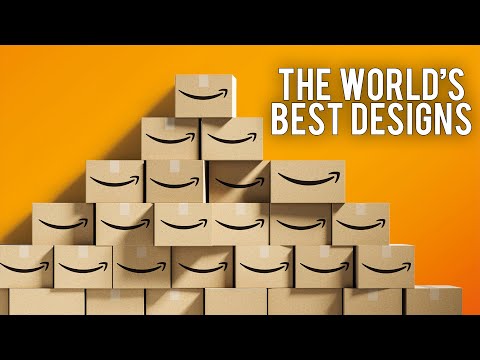
Designing The World's Biggest Brands | Bruce Duckworth | Modern Wisdom Podcast 167
Chris Williamson (host), Bruce Duckworth (guest)
In this episode of Modern Wisdom, featuring Chris Williamson and Bruce Duckworth, Designing The World's Biggest Brands | Bruce Duckworth | Modern Wisdom Podcast 167 explores inside Iconic Branding: The Story Behind Amazon’s Smile and More Bruce Duckworth, co‑founder of Turner Duckworth, explains how his agency created some of the world’s most recognizable brand identities, including Amazon’s smile logo and Coca‑Cola’s global packaging system.
Inside Iconic Branding: The Story Behind Amazon’s Smile and More
Bruce Duckworth, co‑founder of Turner Duckworth, explains how his agency created some of the world’s most recognizable brand identities, including Amazon’s smile logo and Coca‑Cola’s global packaging system.
He unpacks how great logos condense a brand’s personality and promise into simple, unmistakable visuals that work in a fraction of a second yet reward deeper attention over time.
The conversation covers client–designer collaboration, the commercial value of design, the impact of Apple’s iPhone on design standards, and the importance of honesty and consistency across every touchpoint, from packaging to emails.
Duckworth also shares failures and lessons, arguing that brands should avoid mediocrity, respect consumers’ intelligence, and strive to leave behind a “material culture” that future generations will recognize as thoughtfully designed.
Key Takeaways
A great logo compresses strategy into a simple, memorable visual idea.
The Amazon smile simultaneously communicates “everything from A to Z” and consumer friendliness; it solved Bezos’s brief in one mark by linking name, proposition, and emotion.
Get the full analysis with uListen AI
Design from the most tangible touchpoint outwards—often the packaging.
Because packaging is the closest thing to the product and something everyone sees, Turner Duckworth often starts there and then extends that visual system across all touchpoints for coherence.
Get the full analysis with uListen AI
Limit client options to avoid decision paralysis and protect quality.
Internally, they may generate 50 logo ideas, but clients usually see no more than three; showing dozens forces clients to act as creative directors and dilutes focus and conviction.
Get the full analysis with uListen AI
Effective briefs focus on what must be communicated, not pre‑baked solutions.
Duckworth stresses teasing out the few core words and truths a brand wants to express and then translating those into visuals, instead of clients dictating “what it should look like” upfront.
Get the full analysis with uListen AI
Honesty between product and packaging is non‑negotiable.
The failed Mr Kipling relaunch—gorgeous ‘home‑baked’ packs with unchanged factory cakes—spiked initial sales but backfired when reality didn’t match the promise, proving that design can’t compensate for misaligned products.
Get the full analysis with uListen AI
Designers must charge according to commercial value, not passion.
Because good design can drive billions in impressions and long‑term sales, creatives need separation between their enthusiasm and fee discussions, or they risk underpricing and unsustainable work.
Get the full analysis with uListen AI
Unmistakability and consistency build long‑term brand equity.
Elements like Coca‑Cola’s red, McDonald’s red and yellow, or Levi’s tabs and stitching create instant recognition, even in peripheral vision; every small touchpoint (even a drinks mat) is a chance to reinforce that distinctiveness.
Get the full analysis with uListen AI
Notable Quotes
“If you don’t like this logo, you don’t like puppies.”
— Jeff Bezos (as quoted by Bruce Duckworth, on the Amazon smile)
“What we’re always striving for is to be so unique that you’re unmistakable.”
— Bruce Duckworth
“The big enemy everyone has to have is mediocrity.”
— Bruce Duckworth
“We are producing the material culture of our era.”
— Bruce Duckworth
“Great graphic design gives you a smile in your mind.”
— Bruce Duckworth
Questions Answered in This Episode
How can small or early‑stage brands practically apply the idea of being ‘unmistakable’ without large budgets?
Bruce Duckworth, co‑founder of Turner Duckworth, explains how his agency created some of the world’s most recognizable brand identities, including Amazon’s smile logo and Coca‑Cola’s global packaging system.
Get the full analysis with uListen AI
Where is the line between clever visual storytelling (like hidden arrows) and over‑engineered design that consumers will never notice?
He unpacks how great logos condense a brand’s personality and promise into simple, unmistakable visuals that work in a fraction of a second yet reward deeper attention over time.
Get the full analysis with uListen AI
Given how much impact Apple had on design standards, what might the next big shift in mainstream design expectations look like?
The conversation covers client–designer collaboration, the commercial value of design, the impact of Apple’s iPhone on design standards, and the importance of honesty and consistency across every touchpoint, from packaging to emails.
Get the full analysis with uListen AI
How should brands balance the desire to refresh their look with the risk of alienating loyal customers or breaking hard‑won recognition?
Duckworth also shares failures and lessons, arguing that brands should avoid mediocrity, respect consumers’ intelligence, and strive to leave behind a “material culture” that future generations will recognize as thoughtfully designed.
Get the full analysis with uListen AI
What processes or safeguards can brands use to ensure that their visual promises (e.g., packaging) always match product reality and values?
Get the full analysis with uListen AI
Transcript Preview
... did you come up with the Amazon box smile design?
Yes.
How many people do you think have seen that?
"How many people?" is, is an interesting question. I think that somebody had worked it out that just the logo printed on packaging, had been printed on packaging about 100 billion times.
(laughs)
Um, and I've just never... You know, that's just extraordinary, isn't it?
Jeff Bezos said, "Anyone who doesn't like this logo doesn't like puppies."
That, that's exactly what he said. I mean, it was a response by somebody-
(laughs) Bruce, so good to speak to you. How are you?
I mean, I'm very well. I'm very well. The, the, the sun is shining in West Dorset, so I'm very happy. Very happy right now.
I know, uh, for the people that are only listening, you're gonna have to imagine, but I've got some color in me somehow today. I've spent couple of hours in the garden reading and, and prepping for this podcast, and somehow managed to get some color in me. Uh, I know it might not come across on the... It'll be Dean, it'll be video guy Dean filtering it out, that's the only reason that you can't see it.
Right.
Um, first, first things first, did you come up with the Amazon box smile design?
Yes. So that-
How many, how many people do you think have seen that? E- everyone that's listening, think about the last Amazon parcel you got, it was probably this morning. The fact that underneath Amazon, there's a little smiley face, but it didn't-
Yeah.
... used to be like that apparently. I went on your website, didn't used to be like that, used to be the other way-
Yes.
... like a frow- like a frowny face. That told us-
That's right.
T- tell us about that.
Yeah, so that's, um... "How many people?" is, is an interesting, um, question. I think that somebody had worked it out that just the logo printed on packaging, had been printed on packaging about 100 billion times.
(laughs)
Um, and I've just never... You know, that's just extraordinary, isn't it? That's just packaging. That's let alone, not on side of airplanes or lorries, or-
Gift cards.
... on websites which-
Yeah.
... of course, and gift cards, all the rest of it. So that's just an extraordinary thing, isn't it? When you, when you design something and you're responsible for drawing it, and then it's repeated so many hundreds of billions of times, it's just unbelievable, isn't it?
(laughs)
I suppose we didn't think it was ever gonna be as big as that, obviously, you know. I mean, who could have imagined? I- I'm sure even Jeff Bezos didn't realize it was quite as big as he's got now. Um, it was... I think it was about 20 years ago, um, Amazon were, um, they, th- they were the, the biggest bookseller, uh, online bookseller, if you remember, and that's all they did, just bookselling. And, um, and they... It was, uh, the... We, we had, uh, an office in San Francisco and, um, we were working on a lot of .com boom and the subsequent bust, um, kind of companies around the kind of '98 type, um, time. And, um, and, and Amazon, uh, wanted to change their business model from being just a- an online bookseller to sell everything on the internet. And so, um, the meeting, uh, with Jeff Bezos was we need to, um... The brief from him was, "We need to tell everybody, um, that we're now selling everything on the internet, uh, not just books. And we also need to tell everybody that we are the most consumer-friendly. We want to be the most consumer-friendly, um, company on the internet." Because at the time, although that seems like everybody does that now, at the time, that was quite a big deal. Um, and so those are the two things we had to communicate. And, uh, you know, logo design is about communication. And so you have to try and find a unique thing that is to do with their name, um, and what they're trying to communicate. So, um, Amazon, we were lucky or we looked hard, I guess, um, there's an A and a Z in Amazon, if you think of the name. And so it's, um... So an arrow that went from A to Z means everything, right? So we thought if we could, um, link the A to the Z, uh, with a smile, which was a sort of, you know, looks a bit like an arrow, but is also a smile, it goes from A to Z and it's sort of consumer-friendly. Um, which is a sort of, you know, that's, uh, you know, that's the answer, right, to the, to the brief. ... as it turned out, the logo before had a sort of an underline, which was a sort of like an, like a sort of frown smile, like an upside-down smile. So actually just by inverting that and adding the arrowhead to the end, we managed to move it, sort of manipulate it from being one look of a logo, um, into the new logo with meaning. And that, and I think that sort of, uh, has, has done us well. I mean, wherever I go in the world, (laughs) there is a piece of my work on someone's desk somewhere.
Install uListen to search the full transcript and get AI-powered insights
Get Full TranscriptGet more from every podcast
AI summaries, searchable transcripts, and fact-checking. Free forever.
Add to Chrome