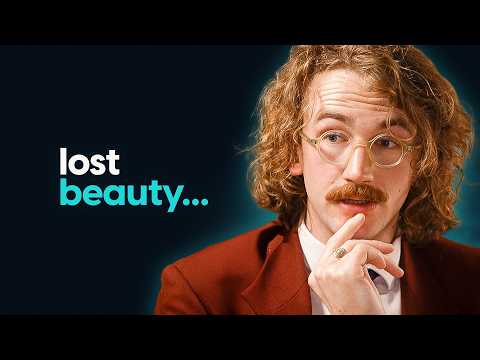
How Did The Modern World Get So Ugly? - Sheehan Quirke
Chris Williamson (host), Sheehan Quirke (guest), Narrator, Narrator, Narrator
In this episode of Modern Wisdom, featuring Chris Williamson and Sheehan Quirke, How Did The Modern World Get So Ugly? - Sheehan Quirke explores why Modern Design Feels Soulless: Boredom, Beauty, and Being Human Sheehan Quirke (The Cultural Tutor) argues that debating 'beauty vs. ugliness' is less useful than asking whether our world is interesting, charming, and meaningful, contending that modern design has become boring and generic rather than simply 'ugly.'
Why Modern Design Feels Soulless: Boredom, Beauty, and Being Human
Sheehan Quirke (The Cultural Tutor) argues that debating 'beauty vs. ugliness' is less useful than asking whether our world is interesting, charming, and meaningful, contending that modern design has become boring and generic rather than simply 'ugly.'
Using examples from drainpipes, water towers, fountains, and even sewage plants, he shows how past societies embedded playfulness and care into everyday infrastructure, and contrasts this with today’s hyper-functional, consumerist approach.
He stresses that modern architecture deserves credit for lifting billions from material squalor, but insists we can and should now demand more humane, enduring, and locally rooted design.
The conversation broadens into art, poetry, romance, and earnestness, arguing that engaging with deeper cultural works and speaking sincerely about love and meaning are essential antidotes to irony, boredom, and spiritual malnourishment in the modern world.
Key Takeaways
Stop arguing about 'beauty' and ask if things are interesting, charming, and meaningful.
Quirke suggests 'beauty' is overloaded and moralized; people fight over whether something is beautiful but can more easily agree if it’s boring, playful, or reflective of local history and people.
Get the full analysis with uListen AI
Boredom in our built environment harms us more than ugliness.
Humans can tolerate suffering and even ugliness, he argues, but boredom is unbearable and historically has even driven revolutions; sterile, generic design quietly drains mood, productivity, and mental health.
Get the full analysis with uListen AI
Function should include emotional impact, not just raw utility.
Drawing on Louis Sullivan’s 'form follows function,' Quirke insists that a drainpipe or water tower hasn’t fully 'fulfilled its function' if it doesn’t also make surroundings more humane, delightful, and less monotonous.
Get the full analysis with uListen AI
Modernist building solved material misery, but consumerism blocks the next step.
He defends modern architecture for rapidly housing people in safe, warm structures, but criticizes today’s profit-driven, short-lifespan, lowest-bid development culture for refusing small extra investments that would add character and longevity.
Get the full analysis with uListen AI
Beauty and traditional design are not inherently left- or right-wing.
Quirke pushes back on both sides: conservatives who romanticize the past and demonize modernism, and progressives who equate love of traditional architecture with reactionary politics, arguing for a cross-political consensus on better design.
Get the full analysis with uListen AI
Engaging with serious art and poetry is 'nutrition' for the soul.
He contrasts bingeable shows and infinite feeds with works like Shakespeare and First World War poetry, arguing that difficult, contemplative art reveals deeper truths about life and ourselves, much as good food and training benefit the body.
Get the full analysis with uListen AI
Romance and earnestness require embracing inconvenience and vulnerability.
In a culture obsessed with convenience, optimization, and ironic distance, he and Williamson argue that true romance and deep attachment demand risking rejection, disrupting schedules, and being sincerely 'uncool' about what and whom we love.
Get the full analysis with uListen AI
Notable Quotes
“Beauty is basically love manifest in the physical world.”
— Sheehan Quirke
“The one thing human beings cannot stand is being bored.”
— Sheehan Quirke
“If we can make drainpipes that do their job and make the world a more interesting place to live in, shouldn’t we be doing that?”
— Sheehan Quirke
“It’s not love if it’s convenient.”
— Sheehan Quirke
“The meaning of your life is whatever you’d be willing to give up that life for.”
— Sheehan Quirke
Questions Answered in This Episode
If cities and buildings genuinely affect our mood, how should citizens push back against boring, generic development in their own neighborhoods?
Sheehan Quirke (The Cultural Tutor) argues that debating 'beauty vs. ...
Get the full analysis with uListen AI
What practical steps could architects, planners, and policymakers take to add 'charm' and 'meaning' to everyday infrastructure without massively increasing costs?
Using examples from drainpipes, water towers, fountains, and even sewage plants, he shows how past societies embedded playfulness and care into everyday infrastructure, and contrasts this with today’s hyper-functional, consumerist approach.
Get the full analysis with uListen AI
How can individuals cultivate a 'romantic' or earnest approach to life in a culture that rewards irony, optimization, and emotional detachment?
He stresses that modern architecture deserves credit for lifting billions from material squalor, but insists we can and should now demand more humane, enduring, and locally rooted design.
Get the full analysis with uListen AI
What would a personal 'cultural diet' look like if we treated art and poetry with the same intentionality as exercise and nutrition?
The conversation broadens into art, poetry, romance, and earnestness, arguing that engaging with deeper cultural works and speaking sincerely about love and meaning are essential antidotes to irony, boredom, and spiritual malnourishment in the modern world.
Get the full analysis with uListen AI
If you had to choose only a handful of books, artworks, or films to preserve for the future, what would they be and why?
Get the full analysis with uListen AI
Transcript Preview
What is beauty?
It's one hell of a question. Um, I think the word is overused and misunderstood. The best way to think about beauty, the most helpful way, is to think of it as synonymous with the word love. Once you do that, all the complications kind of fade away. I think beauty is basically love manifest in the physical world. But anyway, so, so th- that's how I think of beauty, 'cause I think-
Because you're a hopeless romantic.
Oh, I'm a hopeless romantic. Well, I, I'm a hopeful romantic, let's say.
Okay. Yeah, yeah.
But I, I think the problem is, once you start talking about beauty, like what is beauty, it's kind of like asking, what is art? Right? It's a very, very interesting question, but you can end up talking... We, we could spend the whole, you know, two hours or however long we're gonna be here just talking about, well, maybe beauty's this, maybe beauty's that, but what about this? Same with art, I think it's very helpful to agree on a pretty simple definition and then move on to the more important stuff. So, so taking beauty, I think people obsess too much over the idea of, you know, beauty... Like, is the modern world beautiful? Is architecture beautiful? Is design beautiful? Is this room beautiful? I don't think it's helpful. I think more helpful words are interesting, charming, and meaningful. They're the words I prefer to use.
Delineate those for me.
So, (laughs) well, I think interesting is the opposite of, of boring. And I think, you know, a lot of what I write about online, um, and what (laughs) generates an awful lot of interest is when you talk about the ugliness of the modern world. But I think boringness is a much more important and powerful word, 'cause again, ugly and, and, and beautiful, they're, they're very... They feel very subjective. But when you say boring, it's a lot easier to agree on what is boring. And I think something being boring is a bigger problem. I, I've often said to my friends the one thing human beings cannot stand is being bored. Like, we can put up with a lot of stuff. We can put up with suffering and misery and, and-
And ugliness.
... and ugliness. We can put up with that. But being bored is, is, is, is the worst thing. And I, I think actually being bored has driven a lot of, uh, events and move- movements in, in, in human history. I often think a lot of revolutionaries end up being revolutionaries just because they're bored, and a revolution is exciting. It's the chance to be part of something. And, uh... Anyway, yeah.
Okay. So we've got interesting, which is the opposite of boring-
Mm-hmm.
... presumably sort of engaging-
Mm-hmm.
... captures attention, maybe memorable.
Yeah, yeah, yeah, yeah. And then, um, charming. Now, I love the word charming. It, it's probably my favorite word. It's my, it's my word of the year. You know charm when you see it. And charm, I think, is, is a kind of playfulness. It's not too serious, and it also respects the person looking at something or, or viewing something. When you make it charming, right, there's no obvious use to charm. You know, there, there's not really a profit margin there.
Install uListen to search the full transcript and get AI-powered insights
Get Full TranscriptGet more from every podcast
AI summaries, searchable transcripts, and fact-checking. Free forever.
Add to Chrome