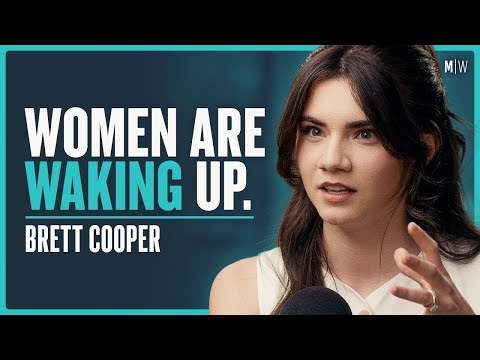
The Lie that Ruined a Generation - Brett Cooper (4K)
Chris Williamson (host), Brett Cooper (guest), Chris Williamson (host)
In this episode of Modern Wisdom, featuring Chris Williamson and Brett Cooper, The Lie that Ruined a Generation - Brett Cooper (4K) explores brett Cooper Attacks Modern Dating, Body Positivity, and Feminist Lies Brett Cooper discusses getting married at 22, why she prioritized marriage and future motherhood over maximizing her career, and how that decision is treated as 'radical' even in ostensibly pro-family conservative spaces.
Brett Cooper Attacks Modern Dating, Body Positivity, and Feminist Lies
Brett Cooper discusses getting married at 22, why she prioritized marriage and future motherhood over maximizing her career, and how that decision is treated as 'radical' even in ostensibly pro-family conservative spaces.
She and Chris Williamson dissect the collapse of healthy dating norms among Gen Z, the role of apps, unrealistic standards, and the cultural messages that tell women they’re perfect as they are while telling men they must change.
They explore a broader female ‘quiet rebellion’ against hookup culture, career-only feminism, body positivity, and medical gaslighting, alongside a parallel male shift toward self‑improvement and more right‑leaning views.
Cooper also exposes dysfunction in Hollywood and children’s media, the dangers of social media for kids (especially Instagram), the rise of Ozempic versus body positivity, and explains how she tries to stay hopeful, humorous, and responsible in a very online, polarized world.
Key Takeaways
Redefine success beyond career and status.
Cooper chose marriage and future motherhood as primary goals despite being on a steep career trajectory, arguing that building a life and family with the right partner is more stabilizing and meaningful than chasing marginal gains in status.
Get the full analysis with uListen AI
Treat dating as a skill you must deliberately practice offline.
She argues Gen Z was never taught how to date in person; reliance on apps killed low‑stakes social practice. ...
Get the full analysis with uListen AI
Align your standards with what you actually offer.
Both men and women hold fantasy-level checklists (6'5" financier or antidepressant‑free non‑leftist woman, etc. ...
Get the full analysis with uListen AI
Stop waiting for the world to change; adopt radical personal responsibility.
She contrasts male messaging (“you must change to fit the world”) with female messaging (“the world must change for you”) and calls that patronizing. ...
Get the full analysis with uListen AI
Recognize the cultural backlash brewing among young women.
Cooper sees growing numbers of non‑conservative women quietly rejecting hookup culture, anti‑motherhood propaganda, body positivity excesses, hormonal birth‑control norms, and political gaslighting—often before they’ll change how they vote or self‑label.
Get the full analysis with uListen AI
Approach health and body image with honesty rather than ideology.
She criticizes the body‑positivity movement for pathologizing weight loss and weaponizing identity, noting that Ozempic and widespread weight loss are exposing obesity as more of a lifestyle choice, while also insisting overweight people still deserve empathy—not infrastructure redesign and denial of health realities.
Get the full analysis with uListen AI
Protect kids from platforms that algorithmically erode their innocence.
Drawing on Wall Street Journal reporting, she says Meta’s products serve more sexual content to minors than to adults and facilitate predatory networks, while TikTok and Instagram fuel self‑harm, mental illness contagion, and unrealistic comparisons—arguing parents must set hard boundaries around devices and social media.
Get the full analysis with uListen AI
Notable Quotes
“Getting married at 22, in this industry, is pretty radical.”
— Brett Cooper
“Dating is not easy. Nobody likes being vulnerable and saying, ‘Stab me in the heart if you don’t like me.’”
— Brett Cooper
“Men are told the world is immutable and you are mutable; women are told the world is mutable and you are immutable.”
— Chris Williamson
“Your life is your fault. People see that as daunting, but it’s actually the most freeing thing you can do.”
— Brett Cooper
“We are better off than we have ever been in the history of the world—and my generation treats every hurdle as a reason to throw in the towel.”
— Brett Cooper
Questions Answered in This Episode
How can young women practically balance ambition for career with a desire for early marriage and motherhood without feeling like they’re sabotaging one or the other?
Brett Cooper discusses getting married at 22, why she prioritized marriage and future motherhood over maximizing her career, and how that decision is treated as 'radical' even in ostensibly pro-family conservative spaces.
Get the full analysis with uListen AI
If dating apps have eroded in‑person skills, what concrete steps should schools, parents, or communities take to rebuild normal social and romantic interaction for Gen Z?
She and Chris Williamson dissect the collapse of healthy dating norms among Gen Z, the role of apps, unrealistic standards, and the cultural messages that tell women they’re perfect as they are while telling men they must change.
Get the full analysis with uListen AI
Where is the ethical line between promoting body autonomy and enabling self‑destructive health narratives in the name of ‘body positivity’?
They explore a broader female ‘quiet rebellion’ against hookup culture, career-only feminism, body positivity, and medical gaslighting, alongside a parallel male shift toward self‑improvement and more right‑leaning views.
Get the full analysis with uListen AI
How should platforms like Meta and TikTok be regulated—or abandoned—given their documented harms to kids, versus leaving it entirely to parental responsibility?
Cooper also exposes dysfunction in Hollywood and children’s media, the dangers of social media for kids (especially Instagram), the rise of Ozempic versus body positivity, and explains how she tries to stay hopeful, humorous, and responsible in a very online, polarized world.
Get the full analysis with uListen AI
In such a polarized media environment, how can creators talk honestly about culture and politics without reinforcing the ‘false polarization’ that makes both sides hate a caricature of each other?
Get the full analysis with uListen AI
Transcript Preview
You got married.
I did.
How's that been?
It's the best thing I've ever done. Seriously. It's- it's... We got married on, um, March 30th of this year, so very recently. And best day of my life, best decision. Obviously, it's like a baby marriage. It's very new. Um, but it's been amazing. I'm grateful for him. I'm grateful for the institution of marriage. It's just... Yeah, it's been wonderful.
Getting married at 22 is a pretty radical thing-
Yeah.
...to do for someone with a career.
Yes, it is. It is. It was, um... It's interesting. I have always known I wanted to be married. I've always known that I wanted to be a mother. You know, I had a career in Hollywood. I was a child actor for 10-plus years. And I remember I had a conversation with my best friend at the time. We were walking through Burbank, I think I was, like, 15 years old, and we were talking about our dreams and hopes. And she had just, you know... She was pinned for a new series, and she was like, "This is all I've ever wanted," and we were talking about all of that. And I brought up a concern that I had had basically since I started in this industry and started working with adults, 'cause that's one of the cool things and also something that gets very dicey in Hollywood, is that you're working with adults constantly. For me, in my experience, it ended up working out very well 'cause I was exposed to people who were much more successful than I was, were further along in their careers. I got to see how they were operating, how they balanced their career and family and marriage, and I did not like what I saw. And so, like, in the back of my mind, I was like, "I know that I want to be the type of mother that my mom is, where she walked away from her career and she dedicated every fiber of her being to being a mother." That was her career. It was like, you know, very, very intentional. "I'm going to raise the best human beings possible." I wanted to be that engaged. And I saw the mothers that I worked with on shows, the fathers. I saw the 35-year-old series regulars on Netflix who were still living in condos with four other roommates, who couldn't afford to buy a house or support a family in Los Angeles. So, in my teen years, I was just like, "This is not... This isn't compatible. This isn't what I want." And I'd been, like, wrestling with that. And so in this conversation with my friend, I said, "You know, that isn't really, at the end of the day, what I want. What I want is to be a wife and a mother." And I never, like, actually expressed that to her, even though she was one of my best friends. And she tur- whipped her head around and was like, "You are willing to give up your career for that?" And I didn't even say that. I had not insinuated it. I was just saying, you know, "At the end of the day, that's what I want." She was like, "You're willing to walk away from everything and sacrifice. You will never be as successful because that's what you want." She was like, "I'm not willing to do that." And so it was kind of like the people who wanted to be married and wanted to be mothers didn't want it enough, um, and that those choices, those personal choices, weren't valid. And so that ha- that had always been what I had heard. And I was undeterred, obviously, and so, yes, it is pretty radical. But even in this industry of, like, being in media, being more on the right, I still heard it. Still heard it from conservatives, of like, "You're on the up and up. Are you sure you want to do that?" From people that are pro-family and pro-marriage. I was like-
Install uListen to search the full transcript and get AI-powered insights
Get Full TranscriptGet more from every podcast
AI summaries, searchable transcripts, and fact-checking. Free forever.
Add to Chrome