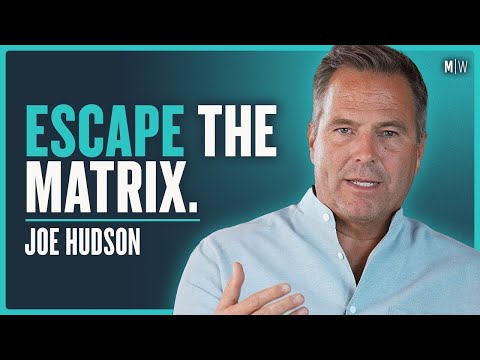
The Art Of Mastering Your Emotions - Joe Hudson
Chris Williamson (host), Joe Hudson (guest)
In this episode of Modern Wisdom, featuring Chris Williamson and Joe Hudson, The Art Of Mastering Your Emotions - Joe Hudson explores stop Resisting Emotions: How Enjoyment Supercharges Growth And Success Chris Williamson and coach Joe Hudson explore how our attempts to avoid unwanted emotions reliably recreate them, and why genuine change requires learning to welcome, not manage, our inner experience.
Stop Resisting Emotions: How Enjoyment Supercharges Growth And Success
Chris Williamson and coach Joe Hudson explore how our attempts to avoid unwanted emotions reliably recreate them, and why genuine change requires learning to welcome, not manage, our inner experience.
Hudson argues that much spirituality and self‑development is driven by the belief ‘I’m not good enough yet’, and proposes enjoyment, loving attention, and emotional fluidity as far more effective engines of growth and accomplishment.
They contrast head‑driven, hyper‑productive lives with emotionally integrated ones, showing how embracing anger, fear, sadness, and even joy leads to clearer decisions, healthier relationships, and more sustainable success.
Throughout, Hudson offers concrete experiments—like five‑star meetings, micro‑gratitude practices, and questioning the critical inner voice—that translate abstract insights into daily habits.
Key Takeaways
The emotion you most avoid is the one you keep recreating.
Hudson’s ‘Golden Algorithm’ says: name the emotion you don’t want, list how you avoid it, then see that each avoidance behavior (over‑caretaking, hardening, controlling) tends to bring about that exact experience again.
Get the full analysis with uListen AI
Welcoming emotions—not managing or resisting them—breaks destructive patterns.
Shifting from ‘I must not feel this’ to ‘I can’t wait to feel sadness/anger/fear/abandonment’ dissolves the compulsive cycle and lets the emotion move through, rather than stagnate as anxiety, shame, or depression.
Get the full analysis with uListen AI
Enjoyment is a powerful measure of true efficiency and effectiveness.
Hudson suggests tracking how much energy an activity gives or costs you; when you prioritize enjoyment (both by choosing better activities and learning to enjoy hard ones), productivity improves and burnout falls.
Get the full analysis with uListen AI
Self‑improvement driven by ‘I’m broken’ is slow, painful, and self‑defeating.
Framing growth as fixing a flawed self amplifies shame and the critical inner voice; framing it as a natural evolution of something already ‘perfect in every stage’ makes change faster, kinder, and more sustainable.
Get the full analysis with uListen AI
Your critical inner voice is scared and incompetent, not truthful or necessary.
Hudson argues nothing it says is fully true and its ‘motivate by abuse’ strategy backfires; experimenting with different responses—curiosity, humor, compassion—weakens its grip and builds genuine self‑trust.
Get the full analysis with uListen AI
You can’t be trusted—or truly known—if you can’t say no.
Chronic people‑pleasing creates resentment and makes your ‘yes’ meaningless; the ability to say no cleanly signals you’re in your truth, which deepens connection and makes relationships more reliable.
Get the full analysis with uListen AI
Emotional expression is a bodily skill set, not just a mental insight.
Anger needs movement and voice, fear needs shaking and trembling, sadness needs tears and gut release; learning to somatically express emotions (often away from others, not at them) restores clarity and resilience.
Get the full analysis with uListen AI
Notable Quotes
“The emotion you don’t want to feel is the emotion you invite in by the very way you try to avoid it.”
— Joe Hudson
“The spiritual path for so many is just another way to say, ‘I am not good enough yet.’”
— Joe Hudson
“When I do things with enjoyment, I use very little energy and often get energy from the doing.”
— Joe Hudson
“People don’t want you to be perfect. What they want is to feel connected with you.”
— Joe Hudson
“There is no self‑esteem that gets built by listening to that critical voice in your head and doing what it says.”
— Joe Hudson
Questions Answered in This Episode
Where in my life am I most obviously recreating the emotion I’m trying hardest to avoid?
Chris Williamson and coach Joe Hudson explore how our attempts to avoid unwanted emotions reliably recreate them, and why genuine change requires learning to welcome, not manage, our inner experience.
Get the full analysis with uListen AI
If I made ‘enjoyment’ my primary metric for a month, what would I stop doing, and what would I do differently?
Hudson argues that much spirituality and self‑development is driven by the belief ‘I’m not good enough yet’, and proposes enjoyment, loving attention, and emotional fluidity as far more effective engines of growth and accomplishment.
Get the full analysis with uListen AI
How would my relationships change if I practiced saying clean, honest no’s and stopped managing other people’s comfort?
They contrast head‑driven, hyper‑productive lives with emotionally integrated ones, showing how embracing anger, fear, sadness, and even joy leads to clearer decisions, healthier relationships, and more sustainable success.
Get the full analysis with uListen AI
What patterns in who I’m attracted to might be replaying unresolved childhood wounds—and what would ‘healing that pattern’ look like?
Throughout, Hudson offers concrete experiments—like five‑star meetings, micro‑gratitude practices, and questioning the critical inner voice—that translate abstract insights into daily habits.
Get the full analysis with uListen AI
If I related to my inner critic as a scared, incompetent helper instead of a truth‑teller, how would my self‑talk and decisions shift?
Get the full analysis with uListen AI
Transcript Preview
I have been falling in love with your work over the last few months. I feel like it's been very timely for me as I try to feel feelings and tap into emotions, and you're the guy. So I've scraped some of my favorite tweets and quotes from you that I've picked up, and I wanna go through some of those with you.
Okay.
First one, "How to see the matrix. One, name an unwanted emotion in your life. Two, list the ways you try to avoid it. Three, notice that every way you try to avoid it, you actually create it."
Yeah. (laughs) Yeah, it's a... Yeah, I call that... I have an episode on that one, it's called The Golden Algorithm. And, uh, and it's basically this idea that the emotion that we f- don't wanna feel is the emotion that we abite- invite in the exact way that we try to avoid it. So the perfect example of this in my life was I, you know, had this experience of being emotionally abandoned as a kid. And so I would just keep on finding emotional abandonment everywhere I looked, you know. It was like a... You know the guy who's like, close their e- close their eyes at a bar, throw a dart behind their back, and they're always gonna hit the wounded woman, and, like, they're gonna be attracted to one another, and that's how it's gonna work? Like, it was... So I always, you know, fa- created this abandonment, and so when I thought it was coming, when I saw the abandonment, even though maybe it wasn't there, I would harden up. I would like, mm, you know, get angry or something, which of course creates a more likelihood of abandonment. So I would try to not feel it, and in the way of not feeling it... Or I would, like, really try to caretake somebody, and that would create resentment in them, and then, then they would abandon me. So every way that I tried to avoid it, I was recreating it in my life. That just goes across the board everywhere, so whether I'm working with a CEO who's, like, trying to avoid their shame, I can, like, guarantee that they will do something to create shame and then have to deal with it in the, in the terms of their company, for instance. So this is, this is one of the realities of our lives. And it's an amazing thing because intellectually you can get it, but what I think people don't get is you can just literally look at every single place where you have pain, and you can backwards engineer it. You can go backwards and go, "Oh, hey. Right, so what am I trying to avoid? How am I avoiding it? How... That's how I'm creating it." Backwards engineer it.
Why is it so reliable that the way you try to avoid it creates it? Like, uh, to me, it doesn't seem, from first principles, like that could be the case. You could a- avoid it in a way that doesn't create it.
Install uListen to search the full transcript and get AI-powered insights
Get Full TranscriptGet more from every podcast
AI summaries, searchable transcripts, and fact-checking. Free forever.
Add to Chrome