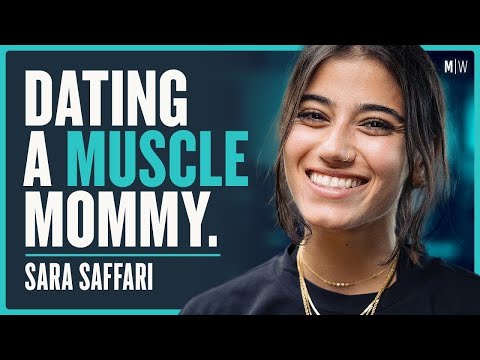
The Most Attractive Traits In A Guy - Sara Saffari (4K)
Chris Williamson (host), Sara Saffari (guest)
In this episode of Modern Wisdom, featuring Chris Williamson and Sara Saffari, The Most Attractive Traits In A Guy - Sara Saffari (4K) explores muscle Mommy Fame, Modern Dating, And The Cost Of OnlyFans Culture Chris Williamson and fitness creator Sara Saffari discuss shifting beauty standards, especially the rise of the “muscle mommy” aesthetic and the difference confidence makes to perceived attractiveness.
Muscle Mommy Fame, Modern Dating, And The Cost Of OnlyFans Culture
Chris Williamson and fitness creator Sara Saffari discuss shifting beauty standards, especially the rise of the “muscle mommy” aesthetic and the difference confidence makes to perceived attractiveness.
Sara unpacks her rapid rise as a Gen Z fitness influencer, the upsides (financial security, family support, creative fun) and the downsides (male-heavy attention, dating complications, business people trying to finesse her).
They explore gym culture debates, from “creep” TikToks and Gen Z risk-aversion to what women actually find attractive in men: ambition, competence, and genuine drive over partying and passivity.
The conversation also tackles OnlyFans and sexualization, influencer boxing, and how social media and parasocial platforms may be reshaping women’s long‑term relationship to work, sex, and self-worth.
Key Takeaways
Confidence can radically amplify attractiveness, beyond pure looks.
Both emphasize that how someone carries themselves—posture, social ease, self-belief—can move them several “points” up in perceived attractiveness, in ways that curated photos alone can’t convey.
Get the full analysis with uListen AI
Ambition and competence are top-tier attractive traits in men.
Sara says one of the biggest turn-ons is a man who is driven toward *anything*—plumbing, dentistry, astronaut—so long as he’s visibly improving and not merely drifting through life.
Get the full analysis with uListen AI
Influencer success brings freedom and pressure in equal measure.
Sara loves being able to support her family and treat the gym as joyful work, but notes added scrutiny in public, dating complications, and frequent attempts by brands and managers to underpay or ‘finesse’ her.
Get the full analysis with uListen AI
Social media can distort what counts as ‘creepy’ or unsafe behaviour.
They argue viral TikToks of men glancing at women in gyms can reset women’s anxiety thresholds based on internet reaction rather than real-life intent or context, potentially making both sexes more fearful and fragile.
Get the full analysis with uListen AI
Sexualized content is a one-way ratchet that’s hard to reverse.
Sara warns that once women lean into posting overtly sexual content, more modest posts rarely perform as well again, creating an algorithmic and psychological trap that nudges them toward constant escalation.
Get the full analysis with uListen AI
OnlyFans may feel ‘empowering’ short-term but carries hidden costs.
They question whether charging small monthly fees for sexual access truly empowers women, raising concerns about permanent online footprints, transactional views of men, blurred lines between real and performative intimacy, and future regret.
Get the full analysis with uListen AI
Structured physical training is a powerful anchor for mental health.
Sara went from severely underweight, depressed, and bedridden to confident and successful by committing to consistent lifting, better eating, and sleep—an approach she recommends to anyone unhappy with their body or mood.
Get the full analysis with uListen AI
Notable Quotes
“I think one of the biggest turn-ons a guy can have is being motivated or dedicated to something, even if that’s plumbing.”
— Sara Saffari
“If someone is confident, it can make them from a six to an eight, depending how they carry themselves.”
— Sara Saffari
“You’re almost outsourcing your anxiety level to the internet.”
— Chris Williamson
“For women, the second you start posting pictures of your ass, pictures of you in a nice, covering dress will never perform as well as they did before.”
— Sara Saffari
“I’d rather just be canceled or deleted off everything than start an OnlyFans.”
— Sara Saffari
Questions Answered in This Episode
How can young men realistically cultivate the kind of ambition and competence that women like Sara describe as truly attractive?
Chris Williamson and fitness creator Sara Saffari discuss shifting beauty standards, especially the rise of the “muscle mommy” aesthetic and the difference confidence makes to perceived attractiveness.
Get the full analysis with uListen AI
What practical boundaries should influencers set to protect their passion for fitness (or any craft) from being eroded by constant monetization?
Sara unpacks her rapid rise as a Gen Z fitness influencer, the upsides (financial security, family support, creative fun) and the downsides (male-heavy attention, dating complications, business people trying to finesse her).
Get the full analysis with uListen AI
Where is the line between genuine safety concerns and over-pathologizing normal social behavior in settings like gyms?
They explore gym culture debates, from “creep” TikToks and Gen Z risk-aversion to what women actually find attractive in men: ambition, competence, and genuine drive over partying and passivity.
Get the full analysis with uListen AI
In ten to twenty years, how might women who joined platforms like OnlyFans in their teens or early twenties feel about those decisions?
The conversation also tackles OnlyFans and sexualization, influencer boxing, and how social media and parasocial platforms may be reshaping women’s long‑term relationship to work, sex, and self-worth.
Get the full analysis with uListen AI
Given social media’s pressure toward sexualization, what strategies can women use to build strong brands without relying on increasingly explicit content?
Get the full analysis with uListen AI
Transcript Preview
Sara Saffari, welcome to the show.
Hello. Thank you for having me.
How are you?
Good. How are you?
Very good. Thank you. Talk to me about the muscle mommy movement. I'm hearing about it on the internet, that guys, there's like a move away from thin spo to fit spo to now muscle mommy, which is the step up. And even though you only just heard about the word today, it feels like you're part of that movement.
Yeah. People have been commenting on, like, guys comment on my posts, like muscle mommy sometimes, and like, I'm not gonna lie, I kind of like it. But today was the first time that I've heard, like, women addressing themselves as muscle mommy or each other as muscle mommy.
Gymshark did a muscle mommy T-shirt.
Yes. And I was at the event, and I, like even, you know, girls talking on the intercom or whatever, they'd be like, "Okay, muscle mommies," like, "Let's keep pushing." And I was like, "I've never heard this." Like, I haven't heard, like, women addressing women as muscle mommies. I thought it was more of like, um, like kind of joking, flirty type thing that guys comment on girls' posts on Instagram.
Taken the word and made it your own.
(laughs)
So, uh, you're 23?
22.
22. You probably growing up would have seen body types change from I guess when you were maybe 11, 12, 13, through to now.
For sure.
Talk to me about, like, that ideal female shape, and kind of the lessons that you took about what an attractive woman is-
Yeah.
... physically over time.
For me, growing up, um, at first I was really skinny, and then through high school, like I would always fluctuate in weight. Like, I'd go anywhere from 130 pounds to 100 pounds, um, which is a pretty big difference when you already weigh, like, kind of low. Um, but I would always be told by my mom, like, "Confidence is what makes you, like, most attractive. Like, it's not what you look like. It's who you are and how you carry yourself." Sorry. And so that's what, you know, I was taught growing up. But for me personally, if I ever saw a girl with abs, I loved it. I loved the look of it. I thought it was, like, so, I don't know, attractive to me. Like, that's what I was aiming for, that's what I wanted, but I never knew how to get there. Like, I didn't know, like, "Oh, how does a girl get abs?" Like, I thought it was just all genetics. But no, diet comes into play, working out comes into play. So, yeah.
And now there's this move, you remember when thigh gaps were a thing, when everybody wanted a thigh gap?
Bro, yes. I remember being at lunch in high school, and like girls would look at each other and be like, "Oh, you have it." "Oh, you don't." The most toxic thing ever. And I remember, like, I didn't have one at the time, or like, I, I don't think I ever had one, but I would go home and I'd like beat myself up about it, 'cause like girls would be pointing out how it's like good to have a thigh gap.
Install uListen to search the full transcript and get AI-powered insights
Get Full TranscriptGet more from every podcast
AI summaries, searchable transcripts, and fact-checking. Free forever.
Add to Chrome