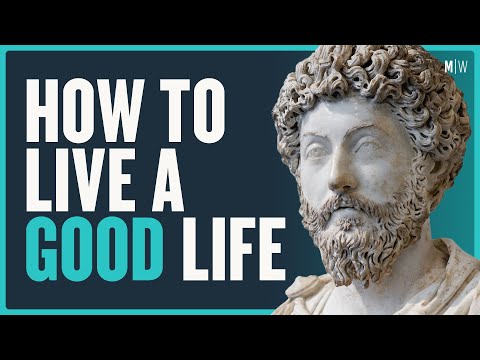
A Philosopher’s Guide To The Good Life - Meghan Sullivan & Paul Blaschko
Paul Blaschko (guest), Chris Williamson (host), Meghan Sullivan (guest)
In this episode of Modern Wisdom, featuring Paul Blaschko and Chris Williamson, A Philosopher’s Guide To The Good Life - Meghan Sullivan & Paul Blaschko explores philosophers Explain How Truth, Virtue, And Reflection Build Happiness Chris Williamson speaks with philosophers Meghan Sullivan and Paul Blaschko about how ancient philosophy can guide a modern good life. Using Socrates, Plato, Aristotle, the Stoics, and contemporary cases, they argue that loving truth, cultivating virtue, and examining one’s life are non‑negotiable for real flourishing. They connect classical ideas to current issues like political polarization, free speech, education, Hong Kong academic repression, Silicon Valley ethics, and AI risk. Their “Good Life Method” centers on virtue ethics—traits like love of truth, generosity, responsibility, and contemplative attention—as a practical framework for everyday decisions about money, career, relationships, and belief.
Philosophers Explain How Truth, Virtue, And Reflection Build Happiness
Chris Williamson speaks with philosophers Meghan Sullivan and Paul Blaschko about how ancient philosophy can guide a modern good life. Using Socrates, Plato, Aristotle, the Stoics, and contemporary cases, they argue that loving truth, cultivating virtue, and examining one’s life are non‑negotiable for real flourishing. They connect classical ideas to current issues like political polarization, free speech, education, Hong Kong academic repression, Silicon Valley ethics, and AI risk. Their “Good Life Method” centers on virtue ethics—traits like love of truth, generosity, responsibility, and contemplative attention—as a practical framework for everyday decisions about money, career, relationships, and belief.
Key Takeaways
Prioritize loving truth over winning arguments or preserving status.
Socrates’ willingness to die rather than stop questioning models a life where truth outranks comfort, reputation, and even survival; this orientation changes how we argue, consume media, and make decisions.
Get the full analysis with uListen AI
Treat disagreement as a shared search for better answers, not a battle.
Plato’s alternative to sophistry is to cultivate a genuine desire for the right answer—even when it overturns our current view—so debates become cooperative truth‑seeking rather than performances for our tribe.
Get the full analysis with uListen AI
Recognize that education and free inquiry are politically powerful and fragile.
From Socrates’ execution to Hong Kong academics facing jail, the right to ask hard questions is repeatedly threatened; defending that process, not just particular opinions, is essential for any healthy society.
Get the full analysis with uListen AI
Build a life around virtues—stable excellences of character—rather than external success.
Virtue ethics reframes the good life as cultivating traits like love of truth, generosity, responsibility, and good friendship, which in turn guide concrete choices about career, money, family, and politics.
Get the full analysis with uListen AI
Use philosophical ‘exercises’ to manage anxiety and be present, not to become invincible.
Stoic practices and CBT‑style tools can help align our thoughts with reality and reduce needless worry, but the goal isn’t emotional numbness or total self‑protection; vulnerability and shared flourishing remain central goods.
Get the full analysis with uListen AI
Interrogate the stories you tell about your own actions to cultivate real responsibility.
Following Elizabeth Anscombe, how you describe what you did—excusing versus owning—shapes your agency and character; practicing more honest, ‘thicker’ descriptions helps you see where you’re genuinely at fault or virtuous.
Get the full analysis with uListen AI
Take the ethical stakes of wealth and technology seriously, especially at scale.
Cases like Elizabeth Holmes and looming AGI show that ‘fake it till you make it’ and speed‑over‑truth can carry civilizational risks; future founders and builders need a deep, shared ethical framework before they can safely wield such power.
Get the full analysis with uListen AI
Notable Quotes
““The unexamined life is not worth living.””
— Socrates (via Paul Blaschko and Meghan Sullivan)
“Socrates was willing to die for the right to ask questions, not for a particular belief.”
— Meghan Sullivan
“A huge part of the problem is that we just don’t have this really fundamental attitude, a love for the truth.”
— Paul Blaschko
“We are furless, toothless, kind of awkwardly designed creatures. The only thing we have is our wits.”
— Meghan Sullivan (paraphrasing Plato)
“You can’t believe that myth. You have to believe there’s some truth out there that’s worth making the anchor of your decision‑making.”
— Meghan Sullivan
Questions Answered in This Episode
How would my online and in‑person disagreements change if I genuinely valued truth over ‘my side’ winning?
Chris Williamson speaks with philosophers Meghan Sullivan and Paul Blaschko about how ancient philosophy can guide a modern good life. ...
Get the full analysis with uListen AI
Which virtues—truthfulness, generosity, responsibility, courage—are currently underdeveloped in my life, and what daily practices could I adopt to strengthen them?
Get the full analysis with uListen AI
Where am I telling a flattering story about my actions instead of an honest one, and what would it look like to rewrite that story truthfully?
Get the full analysis with uListen AI
If I treated my money and career choices as ethical decisions rather than purely personal ones, what might I do differently over the next five years?
Get the full analysis with uListen AI
What beliefs or practices would I consider so essential to a good life that I’d be willing to pay a real cost—social, financial, or professional—to maintain them?
Get the full analysis with uListen AI
Transcript Preview
Marcus Aurelius is constantly writing to himself. He's like, "Look, don't think about how you might lose the things you love in the future. Return to the present and realize they're here right now. And in worrying about them, you're missing out on what's so good about them."
So I want to start with a quote, "Are you not ashamed of your eagerness to possess as much wealth, reputation, and honors as possible, while you do not care nor give thought to wisdom or truth or the best possible state of your soul?" What's that mean to you?
I can start. So that's a very famous passage from Socrates' Apology. Uh, 2,400 years ago, Socrates, the kind of founder of philosophy, was put on trial by the Athenian government for, among other things, corrupting the youth of Athens for asking too many hard questions and being a, a bit too aggressive and pushy about whether Athens was pursuing the things that were really valuable in life versus just kind of inflating their own egos. And one of the things I love about that quote, we, uh, we shout that and read it to, to undergraduates here at Notre Dame quite a bit. You can imagine somebody saying to their enemy or, like, their opposition, "You guys don't care about the right things. All you care about is money," or, "All you care about is fame. You don't care about what's really good." But Socrates, uh, is not saying that to his enemies. He's saying it to his friends and students. That's one of the quotes that got him into trouble, is he's going around to people he really cares about and saying, like, "Paul, I think you're getting too addicted to these, like, cultural lies about money and honor, and I really think you need to work harder on, like, going after things that are really worth having." And that was a threatening idea in Athens.
Why was it so threatening?
Yeah. Well, I mean, so for one thing, uh, Athens is a direct democracy, right? Uh, and so the ability to argue and the ability to persuade people could be literally a life or death matter, right? If somebody got up and accused you of something, uh, in front of, uh, uh, the assembly, you just had to stand up and you had to argue. You had to say like, "This is, you know, why this isn't true," uh, or, "This is why somebody else owes me a bunch of money," or whatever it might be. And so the ability to just win arguments at all costs is something that was a really valuable skill. And there were actually professional, you know, we call them argument or debate coaches, they're, they're called the Sophists, right? Uh, who would be hired, uh, often by sort of the wealthy, uh, uh, i- in Athens to train Athenian citizens on how to argue, right? Uh, and it's easy to see how you might lose, uh, the truth in all of that, right? Uh, or lose the desire for the truth, lose the love for the truth, uh, because if it doesn't matter, you know, whether your argument's true or not, if it just matters like whether you're persuading people, um, there's not really, uh, as much incentive, right, to, to focus on, uh, you know, whether your reasons that you're giving are good. Um, so this is one of the reasons why I think Socrates is such a revolutionary figure, both in his own time and also ours. I mean, like, a- as we sort of did the research and we're wri- looking at ancient Athens, I was just struck by how many parallels there are between, you know, the (laughs) complaints that Socrates has about his own time and the complaints that, you know, a lot of us have when we sort of look at the, the state of, of political debate or the state of, uh, debate on Twitter and, you know, people trying to sort of own each other on Twitter or, you know, just, uh, you know, exert some sort of power without any sort of respect for or love, uh, of the truth. And that's, you know, it's an over, uh, generalization. It's not always the case. It's not what's always going on. Um, but it certainly resonates, right? Uh, the message sort of resonates, and as I read, you know, Socrates' critique, I just, like, constantly found myself nodding along and thinking like, "Yeah, I recognize this."
Install uListen to search the full transcript and get AI-powered insights
Get Full TranscriptGet more from every podcast
AI summaries, searchable transcripts, and fact-checking. Free forever.
Add to Chrome