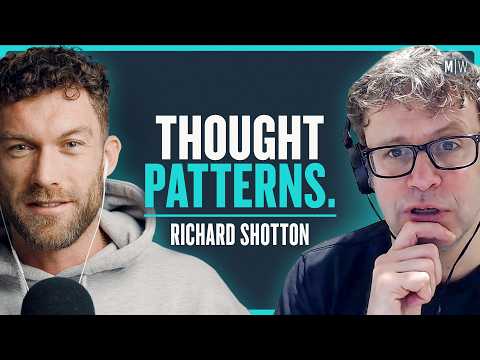
11 Psychology Tricks From the World’s Best Brands - Richard Shotton
Chris Williamson (host), Richard Shotton (guest)
In this episode of Modern Wisdom, featuring Chris Williamson and Richard Shotton, 11 Psychology Tricks From the World’s Best Brands - Richard Shotton explores how top brands exploit psychology to shape pricing and demand This conversation breaks down “psychology tricks” behind successful brands like Five Guys, Red Bull, Guinness, Liquid Death, Starbucks, KFC, and Pringles, tying each to specific research findings.
How top brands exploit psychology to shape pricing and demand
This conversation breaks down “psychology tricks” behind successful brands like Five Guys, Red Bull, Guinness, Liquid Death, Starbucks, KFC, and Pringles, tying each to specific research findings.
Shotton emphasizes that consumer judgments are heavily shaped by heuristics—rules of thumb about focus, effort, scarcity, relativity, messengers, and framing—often more than by objective product qualities.
A recurring theme is that perception is part of the product: packaging, provenance, effort stories, and context can alter both willingness to pay and the experienced enjoyment.
They also discuss modern implications, especially how AI can undermine perceived effort/merit, and why internal teams resist new ideas (Semmelweis Reflex), requiring marketers to “sell” behavioral insights inside organizations too.
Key Takeaways
Doing fewer things can increase credibility more than adding benefits.
The goal dilution effect shows extra reasons can dilute belief in the core claim (tomatoes + heart health scored lower when an extra benefit was added). ...
Get the full analysis with uListen AI
Perceived value is relative—change the comparison set to change willingness to pay.
People price by reference to “similar” purchases, not objective utility. ...
Get the full analysis with uListen AI
Higher prices can increase experienced quality, not just signal it.
In Baba Shiv’s wine study, the same wine rated far higher when labeled with a higher price. ...
Get the full analysis with uListen AI
Make effort visible to make products feel higher quality—especially in premium categories.
The labor/effort illusion means stories like Dyson’s “5,127 prototypes” raise perceived premiumness even when technically irrelevant. ...
Get the full analysis with uListen AI
AI can damage perceived quality unless you reframe the effort story.
A 2023 experiment (Cobi Millet) found identical art rated much worse when labeled AI-made (large drop in purchase intent). ...
Get the full analysis with uListen AI
Admitting a flaw can increase likability when paired with competence.
The Pratfall Effect (Aronson) found high performers became more appealing after a minor mishap. ...
Get the full analysis with uListen AI
Scarcity works best when it’s enforced behavior, not just claimed marketing copy.
KFC’s “max four bags per person” made the deal feel more valuable because the restriction signals sell-out risk or margin sacrifice. ...
Get the full analysis with uListen AI
Restricting frequency can increase enjoyment and long-term demand.
Habituation reduces pleasure with repeated access; interruptions can raise enjoyment (massage chair study improved ratings despite less “on” time). ...
Get the full analysis with uListen AI
Influencers work when they combine neutrality, credibility, and relatability.
Messenger effect research (Hovland & Weiss) shows the same argument persuades more when attributed to a credible source. ...
Get the full analysis with uListen AI
Loss framing is powerful, but fear can backfire into avoidance.
A loss-framed pitch (“wasting 75 cents/day”) sold more insulation than a gain frame (“saving 75 cents/day”). ...
Get the full analysis with uListen AI
Break big costs into smaller units to increase perceived affordability.
The penny-a-day effect makes identical totals feel cheaper when expressed per day/per unit; similarly, “$1. ...
Get the full analysis with uListen AI
Concrete language is remembered far better than abstract benefits.
People recall concrete phrases (e. ...
Get the full analysis with uListen AI
Rhymes and fluency increase believability without people noticing.
Rhyming proverbs (“woes unite foes”) were judged more truthful than non-rhyming equivalents, while participants denied the rhyme influenced them. ...
Get the full analysis with uListen AI
Don’t ask consumers ‘why’ and trust the answer—observe behavior.
Shotton highlights that people rationalize after the fact (Timothy Wilson; Ogilvy’s line about consumers). ...
Get the full analysis with uListen AI
Behavioral science must be used internally—new ideas face reflexive rejection.
The Semmelweis Reflex describes rejecting innovations that threaten existing beliefs/status. ...
Get the full analysis with uListen AI
Notable Quotes
“Be very, very careful about adding extra reasons to believe, because what they will gradually do is undermine believability in the core reason to buy your product.”
— Richard Shotton
“People, to a degree, experience what they expect to experience.”
— Richard Shotton
“If you don’t have attention, everything else you do in marketing communication is academic.”
— Richard Shotton
“Consumers don’t think how they feel, they don’t say what they think, and they don’t do what they say.”
— Richard Shotton (quoting David Ogilvy)
“All these principles aren’t just about influencing consumers… you need to use those principles when you are trying to sell your ideas internally.”
— Richard Shotton
Questions Answered in This Episode
Goal dilution: How do you decide when a “second benefit” strengthens a brand versus dilutes it—are there product categories where multiple benefits increase credibility instead of reducing it?
This conversation breaks down “psychology tricks” behind successful brands like Five Guys, Red Bull, Guinness, Liquid Death, Starbucks, KFC, and Pringles, tying each to specific research findings.
Get the full analysis with uListen AI
Price relativity: If a challenger brand can’t change package format (like Red Bull’s can), what are other practical ways to shift the comparison set in-store or online?
Shotton emphasizes that consumer judgments are heavily shaped by heuristics—rules of thumb about focus, effort, scarcity, relativity, messengers, and framing—often more than by objective product qualities.
Get the full analysis with uListen AI
Effort illusion vs honesty: Where’s the ethical line between signaling genuine craftsmanship and manufacturing “effort theater” (e.g., artificial loading bars or exaggerated iteration counts)?
A recurring theme is that perception is part of the product: packaging, provenance, effort stories, and context can alter both willingness to pay and the experienced enjoyment.
Get the full analysis with uListen AI
AI strategy: What messaging frameworks have you seen successfully preserve perceived quality when AI is used—especially in creative work like design, music, or copy?
They also discuss modern implications, especially how AI can undermine perceived effort/merit, and why internal teams resist new ideas (Semmelweis Reflex), requiring marketers to “sell” behavioral insights inside organizations too.
Get the full analysis with uListen AI
Guinness/Pratfall: What are examples of brands that tried to “lean into the flaw” and failed—what conditions make the Pratfall Effect backfire?
Get the full analysis with uListen AI
Transcript Preview
What did you learn from Five Guys?
So, Five Guys is the opening chapter, and we talk about something that they did very powerfully, which is when they launched, they were relentless at focusing on just doing burger and chips. So people like McDonald's had got seduced by the fact that they could launch filet-o-fish and, and chicken burgers. But Five Guys relentlessly honed down on just doing burgers. Now, some of the benefit of that is a, you know, ability just to get better at cooking, better at producing your core product. But psychologists argue there's something else on top of it. So there's an idea called the goal dilution effect, and the first studies were done by Zang and Fishbach back in two thousand and seven, and they did a very simple experiment: recruit a group of people, randomize them into two subgroups, and the first set of people are told, "If you eat tomatoes, it's very good for your heart health. Here are the reasons." And that group are asked to say whether they think eating tomatoes is worth doing for their heart health. Second group of people, they see exactly the same text, exactly the same reasons, and logic, and facts about why tomato eating is so good for cardiovascular health, but they are also told, "If you eat tomatoes, it will improve your eye health. It will reduce degenerative diseases." Now, when that second group are asked to say how good, um, eating tomatoes is for heart health, they come back with a twelve percent lower score. So even though they've seen the same facts, because in this second group, there was an additional reason thrown in, it reduced-- it diluted the believability in that, that core reason. So there's, there's a psychological as well as practical benefit about communicating that you do one thing well. Uh, people have a rule of thumb in their head that you can't be a jack of all trades, you know, or you-- if you are, you'll be a master of, of none of them. So there's, there's a sacrifice in credibility and believability if you claim to do multiple things.
What does that say about sort of underlying human psychology? Is it that we have a kind of a zero sum or a, a, a resource limitation on how much we think w-we should be able to distribute between the traits of a particular offer?
I, I, I think a lot of these biases that behavioral scientists identify, that psychologists identify, they're generally true. I mean, all things being equal, you tend to beget better at a task if it is the sole focus of your attention. If you spend forty hours a week being a cyclist, you're gonna be a better cyclist than I, if I spent ten hours a week. So people have a sensible rule of thumb in their head, but then the danger is they overapply it in situations where it's not relevant. Like in the situation Zang set up, people got the same facts about cardiovascular health, but because they threw in this second benefit, it seemed to detract from it. So I think it's often the misapplication of a generally, generally sensible rule of thumb.
Install uListen to search the full transcript and get AI-powered insights
Get Full TranscriptGet more from every podcast
AI summaries, searchable transcripts, and fact-checking. Free forever.
Add to Chrome