How To Think Politically | Graeme Garrard | Modern Wisdom Podcast 107
Chris Williamson (host), Graeme Garrard (guest), Narrator
In this episode of Modern Wisdom, featuring Chris Williamson and Graeme Garrard, How To Think Politically | Graeme Garrard | Modern Wisdom Podcast 107 explores why Politics Needs Both Power And Principles, Not Just Winning Graeme Garrard and Chris Williamson explore what politics is, framing it as the management of disagreement through language instead of force, and rejecting the idea that war is simply politics by other means.
Why Politics Needs Both Power And Principles, Not Just Winning
Graeme Garrard and Chris Williamson explore what politics is, framing it as the management of disagreement through language instead of force, and rejecting the idea that war is simply politics by other means.
They unpack the central role of power in politics but argue that any serious understanding must also include justice, ideas, values, and conceptions of the good life.
The conversation traces how identity-driven, intolerant politics is historically normal, suggesting our recent era of civility and tolerance was an anomaly that may now be receding.
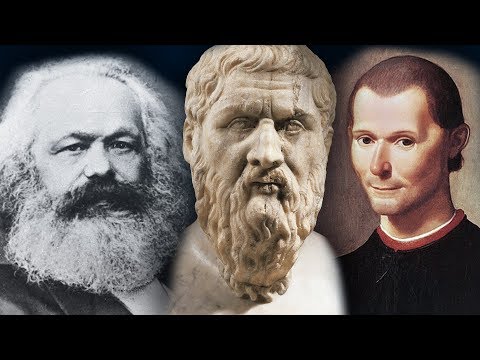
Drawing on thinkers from Socrates and Machiavelli to Nietzsche and Marx, they discuss how past political philosophers suffered for their ideas and how their insights reveal modern malaise, decadence, and the crisis of meaning in contemporary societies.
Key Takeaways
Politics is the management of disagreement without resorting to violence.
Garrard defines politics as resolving conflicts through argument, persuasion, and rhetoric; when bullets start flying, politics has ended and war has begun, even if the boundary between the two is often blurry.
Get the full analysis with uListen AI
Power is central to politics, but power alone cannot explain it.
While struggles over scarce resources and competing interests make power unavoidable, Garrard rejects the ‘House of Cards’ or purely Machiavellian view and insists that justice, values, and ideas are equally essential to understanding political life.
Get the full analysis with uListen AI
Today’s identity-charged, intolerant politics is a historical norm, not an anomaly.
For most of history, political positions were tightly bound to religion and identity, and dissent was often punished harshly; the recent Western phase of tolerance and civility is the exception that now appears to be fading.
Get the full analysis with uListen AI
Serious political thought has always been risky and often punished.
From Socrates’ execution and Machiavelli’s torture to Locke, Rousseau, and Marx’s exiles, major political thinkers routinely paid a high personal price for challenging orthodoxies, highlighting how fragile freedom of thought has been.
Get the full analysis with uListen AI
Material comfort can create existential malaise and a ‘flabby’ civilization.
Following Nietzsche, they argue that when basic needs are met, life can lose tension, struggle, and drama; without contrast and hardship, individuals and societies risk mediocrity and a crisis of meaning rather than genuine flourishing.
Get the full analysis with uListen AI
Modern politics overemphasizes cynical pragmatism and underemphasizes guiding ideas.
Garrard contrasts ‘naive idealists’ with ‘naive realists’ and criticizes leaders like David Cameron for lacking a deep sense of values and ends; this becomes a serious problem when societies face fundamental disagreements, such as Brexit or the rise of populism.
Get the full analysis with uListen AI
Political debate can and should be elevated toward wisdom, not just horse-race tactics.
Although he doesn’t expect philosopher-kings, Garrard believes that infusing public discourse with the insights of major political thinkers can rebalance politics toward deeper reflection on justice, identity, and the purposes of collective life.
Get the full analysis with uListen AI
Notable Quotes
“When shooting breaks out, then politics ends, and you have war.”
— Graeme Garrard
“All politics involves power, but not all power involves politics.”
— Graeme Garrard
“What you’re referring to now, which is becoming more dominant, is something of a return to the normal in history.”
— Graeme Garrard
“The cure Nietzsche prescribed was much worse than the illness.”
— Graeme Garrard
“We’ve moved too far into the Frank Underwood view of politics.”
— Graeme Garrard
Questions Answered in This Episode
If politics is defined as managing disagreement without violence, where exactly should we draw the line between intense political conflict and the onset of war or coercion?
Graeme Garrard and Chris Williamson explore what politics is, framing it as the management of disagreement through language instead of force, and rejecting the idea that war is simply politics by other means.
Get the full analysis with uListen AI
How can modern citizens and leaders practically integrate questions of justice and values into politics without becoming ‘naive idealists’ detached from real constraints?
They unpack the central role of power in politics but argue that any serious understanding must also include justice, ideas, values, and conceptions of the good life.
Get the full analysis with uListen AI
Are there ways to preserve the material comforts of modern life while intentionally reintroducing meaningful struggle and ‘tension in the bow’ that Nietzsche thought was necessary for greatness?
The conversation traces how identity-driven, intolerant politics is historically normal, suggesting our recent era of civility and tolerance was an anomaly that may now be receding.
Get the full analysis with uListen AI
Given that intolerance of dissent has been the historical norm, what institutional or cultural safeguards are most effective at preventing a slide back into persecution of heterodox political views?
Drawing on thinkers from Socrates and Machiavelli to Nietzsche and Marx, they discuss how past political philosophers suffered for their ideas and how their insights reveal modern malaise, decadence, and the crisis of meaning in contemporary societies.
Get the full analysis with uListen AI
What concrete steps could media, education systems, or political parties take to raise public debate from short-term power struggles toward the level of wisdom and long-term purpose described in the discussion?
Get the full analysis with uListen AI
Transcript Preview
Has it always been that your political leaning has then been taken as the foundation upon which the rest of your person is built?
That, that has been more the norm in, in history, I think-
Okay.
... tha- than what we've been used to until recently-
Mm-hmm.
... which, which is more of an aberration.
(laughs)
I thi- I think, I mean, as sad as it is to say, I think that what, what you're referring to now, which is becoming more dominant, is, uh, uh, something of a return to (laughs) to the normal in history, where, um, uh, people have been less tolerant, perhaps, um, of differences of opinion, where people's political views have been more closely linked to fundamental things like religion, identity, and that sort of thing. I think if you look at history, you'll find that that's more the norm and that we've sort of gotten used to, in recent history, that not being the case. But I think we're going back to that to some degree, and, um, that's maybe what's causing the, the temperature to go up in political debate and the, um, reluctant, increasing reluctance in some quarters to tolerate differences of opinion.
(wind blowing) I'm joined by Graham Garrard, and we're gonna learn how to think politically today, right? That's correct?
Yes, indeed. Yes.
(laughs) Welcome to the show. How are you today?
Thank you very much. Yes, uh, glad to be here.
Yeah. It's gonna be interesting. We've, uh, been delving into politics and history a little bit recently on the show, so the listeners should be, uh, in the mood for it, at least appetites that have been whet. So, uh, uh, to begin the discussion in its purest form, what is politics and why do we need it?
(smacks lips) Well, politics is a way of managing human societies, um, (smacks lips) that, uh, uses, um, arguments, debate, um, (smacks lips) rhetoric, persuasion, um, but doesn't resort to use of force. Um, it's uniquely a human thing because we have language. Um, when, uh, when shooting breaks out, uh, then politics ends, and you have war. (laughs) Um, not everyone accepts that view, though there are lots of different conceptions of what politics is, but really generally, um, that's what it is. Um, some of your viewers may be familiar with a quotation that's often used, um, by a theorist of war, a German theorist of war named Clausewitz, who said that, um, (smacks lips) uh, "War is just, uh, politics by other means." So, that's a view of politics that I'm rejecting.
(laughs)
Um, my view is that when, uh, when, uh, war begins, politics ends. It's not always clear where the boundary is between the two, but, um, that's a view of politics that I have. Um, so politics is obviously important if you want to resolve differences, um, in a way that doesn't resort to force. So, um, all human societies involve some element of agreement and som- some element of disagreement. Um, if you didn't agree on anything, you wouldn't have a political community at all to start with, right? Um, but if you agreed on everything, you wouldn't need politics. So politics lies somewhere between those two extremes. Um, people agree and disagree, and so politics is really about how you manage those disagreements. Um, so they, they takes all kinds of different forms. So the one we're most familiar with is, is democracy, uh, although even that takes different forms. Um, but there are other forms of politics that aren't democratic. Indeed, um, most of human history, um, has been, uh, characterized by forms of politics that are not democratic. In fact, um, the, the greatest democracy of them all perhaps was ancient Athens, and then for almost 2,500 years, there really wasn't any democracy to speak of. Um, then it was reborn in, uh, sort of 18th century, 19th century, and now it's the dominant form in m- large parts of the world. Um, (clears throat) but, uh, you know, there are other forms. So in the particular form of democracy that we know best in the West, in the modern West, um, you know, we have institutions that we use to manage society, uh, to, um, allow us to cooperate, to pursue our common ends, but also allow us to manage conflict and difference when we disagree so that we're not killing each other.
Install uListen to search the full transcript and get AI-powered insights
Get Full TranscriptGet more from every podcast
AI summaries, searchable transcripts, and fact-checking. Free forever.
Add to Chrome