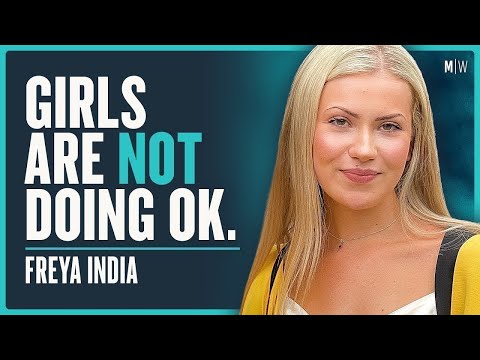
When Feminism Stopped Being About Women - Freya India
Chris Williamson (host), Freya India (guest)
In this episode of Modern Wisdom, featuring Chris Williamson and Freya India, When Feminism Stopped Being About Women - Freya India explores gen Z Girls, Social Media, And The Marketed Mental Health Crisis Chris Williamson and writer Freya India explore why Gen Z, especially girls, are experiencing unprecedented levels of anxiety, depression, self‑harm, and body dysmorphia, arguing that social media and online culture are key accelerants rather than neutral tools.
Gen Z Girls, Social Media, And The Marketed Mental Health Crisis
Chris Williamson and writer Freya India explore why Gen Z, especially girls, are experiencing unprecedented levels of anxiety, depression, self‑harm, and body dysmorphia, arguing that social media and online culture are key accelerants rather than neutral tools.
Freya outlines an ecosystem where beauty, pharmaceutical, therapy, and tech companies monetize normal adolescent distress—medicalizing everyday emotions and glamorizing diagnoses and medication through influencers and targeted advertising.
They examine how algorithm-driven platforms radicalize girls’ insecurities (about looks, gender, mental health, and relationships), reshape dating and sexual norms, and encourage public performance of vulnerability at the expense of resilience and genuine privacy.
The conversation also critiques contemporary feminism, gentle parenting, and the glamorization of divorce for sidelining discipline, family stability, and long-term meaning in favor of hyper-individualism, consumerism, and short-term emotional comfort.
Key Takeaways
Social media timing and usage patterns strongly correlate with Gen Z’s mental health decline, particularly for girls.
Freya connects the sharp rise in anxiety, self-harm, and suicide after 2012 with the proliferation of smartphones, Instagram, and editing apps, noting that girls spend more time on these platforms and are more vulnerable to comparison and appearance-based content.
Get the full analysis with uListen AI
Normal adolescent distress is being medicalized and monetized by therapy platforms and pharmaceutical companies.
She argues that ‘unlimited messaging therapy’ and mental-health-first marketing teach young people to pathologize everyday emotions and view every negative feeling as a diagnosable problem solvable through subscriptions and pills, undermining resilience.
Get the full analysis with uListen AI
Algorithms push young users along “conveyor belts” toward extreme content in whatever they’re insecure about.
Whether it’s beauty, gender identity, or mental health, initial mild curiosity (e. ...
Get the full analysis with uListen AI
Mental health diagnoses, pills, and struggles are increasingly glamorized and turned into identity and content.
Trends like ‘hot girl pills’, antidepressant merch, and hashtags such as ‘Post Your Pill’ encourage teens to showcase medication and diagnoses publicly, which Freya sees as irresponsible and potentially locking young people into identities they may later outgrow.
Get the full analysis with uListen AI
Constant documentation and performance of intimate life moments erode authenticity and diminish real experience.
From filming births and proposals to curated ‘sad’ content, they argue that orienting meaningful events around how they’ll look online pulls attention away from living them and pressures even ordinary people to treat their lives as marketable media products.
Get the full analysis with uListen AI
Contemporary feminism often aligns with corporate interests, prioritizing work, consumption, and autonomy over family and long‑term meaning.
Freya contends that ‘empowerment’ messaging is frequently just a sales strategy for products, surgeries, and lifestyles that serve the market, while marriage, children, and stable families—sources of deep, non-market meaning—are downplayed or framed as burdens.
Get the full analysis with uListen AI
Coddling culture and progressive ‘gentle’ approaches avoid hard truths about agency, discipline, and being a better person.
She maintains that both mental health campaigns and parenting trends over-emphasize validation and comfort, rarely inviting young people—especially girls—to examine their behavior, build character, or accept that risk, discomfort, and responsibility are necessary for flourishing.
Get the full analysis with uListen AI
Notable Quotes
“It’s the marketization and medicalization of normal distress.”
— Freya India
“There’s pressure from beauty companies to have a perfect face, then you have pressure from therapy companies to have a perfect soul that never experiences negative emotions.”
— Freya India
“This is real life for a lot of young people. This is the majority of their day.”
— Freya India
“Where is the female Jordan Peterson saying, ‘No, this behavior is not good’?”
— Freya India
“It’s the prioritization of immediate emotional comfort over long-term flourishing.”
— Chris Williamson
Questions Answered in This Episode
How can parents and educators practically counteract algorithm-driven ‘conveyor belts’ that push teens toward extreme content without simply banning technology?
Chris Williamson and writer Freya India explore why Gen Z, especially girls, are experiencing unprecedented levels of anxiety, depression, self‑harm, and body dysmorphia, arguing that social media and online culture are key accelerants rather than neutral tools.
Get the full analysis with uListen AI
Where should we draw the line between healthy openness about mental health and harmful public performance or glamorization of diagnoses and medication?
Freya outlines an ecosystem where beauty, pharmaceutical, therapy, and tech companies monetize normal adolescent distress—medicalizing everyday emotions and glamorizing diagnoses and medication through influencers and targeted advertising.
Get the full analysis with uListen AI
What would a genuinely pro-woman, non-corporate feminism look like for Gen Z girls in terms of relationships, work, and family?
They examine how algorithm-driven platforms radicalize girls’ insecurities (about looks, gender, mental health, and relationships), reshape dating and sexual norms, and encourage public performance of vulnerability at the expense of resilience and genuine privacy.
Get the full analysis with uListen AI
How can society encourage girls to cultivate resilience, responsibility, and character without triggering accusations of ‘stigmatizing’ or ‘blaming’ them?
The conversation also critiques contemporary feminism, gentle parenting, and the glamorization of divorce for sidelining discipline, family stability, and long-term meaning in favor of hyper-individualism, consumerism, and short-term emotional comfort.
Get the full analysis with uListen AI
If stable two‑parent families are so protective, what realistic cultural or policy changes could help reverse the trend of family breakdown for the next generation?
Get the full analysis with uListen AI
Transcript Preview
Is Gen Z in a mental health crisis?
Yes. Yeah. (laughs) Um, basically, since the early 2010s, our mental health has just tanked, um, especially for girls. So we started to see these spikes in anxiety and depression, things like eating disorders, um, but also rise in self-harm and suicide. So for example, in the US between 2012 and 2019, the suicide rate for white middle-aged men increased by 3%. But for girls aged between 12 and 14, it increased by 138%. And the- the statistics on self-harm are equally as horrific. So something happened around 2012 that is particularly affecting girls, but a- as a whole is affecting the entirety of Gen Z.
How much of this is laid at the feet of social media do you think?
Well, I would say a lot, but obviously there's- you know, it's debatable. So some studies show like a negligible impact of social media, others show that it's terrible. Um, but the thing is with those is some of the studies kind of lump in screen time with social media. So they'll say like, you know, "Screen time is bad for you," but that could be texting friends, that could be scrolling through Instagram. So they're kind of unreliable. But I think the most compelling bit of evidence is the timeline, so mental health started to decline in the early 2010s. The iPhone came out in 2007, Instagram came out in 2010, editing apps started to come out around 2013. Um, and also the fact that it's particularly affecting girls. We know that girls spend a lot more time on social media. All the other explanations don't really seem to add up when it comes to why it would be girls, so things like people say the housing ladder or the economy or the climate crisis, and none of them quite fit that explanation apart from social media for me anyway.
Yeah, why is it that women would be particularly concerned about the housing crisis or about the future-
Yeah.
... temperature or the amount of carbon in the atmosphere? What is it that's causing, beyond just the excessive use of social media, what's the- what's the type of use of social media that's causing this, uh, disparate effect on girls?
Yeah, well, I think there's- there's different aspects to it. So there's how girls are using social media, so things like obviously social comparison, comparing yourself to everybody and comparing your productivity and your looks and your lifestyle to everyone all the time, which is terrible for mental health. So there's that, but then there's also how social media enables companies to have close access to girls. So the targeted advertising, um, and the ability to monitor them, to collect data, and to sell that data to platforms who then bombard them with advertisements. Um, so I think a big part of this is the industries that are now able to follow girls around and kind of inundate them. It's an onslaught of advertising, and it's, you know, specific to that young girl's insecurities or vulnerabilities. So, you know, if a girl was anxious about how she looks, she'll get bombarded with beauty companies who are trying to sell her fixes to her specific worries. So it's kind of both at the same time. It's how they're spending their time on social media, but also how companies are utilizing that to exploit them for profit.
Install uListen to search the full transcript and get AI-powered insights
Get Full TranscriptGet more from every podcast
AI summaries, searchable transcripts, and fact-checking. Free forever.
Add to Chrome