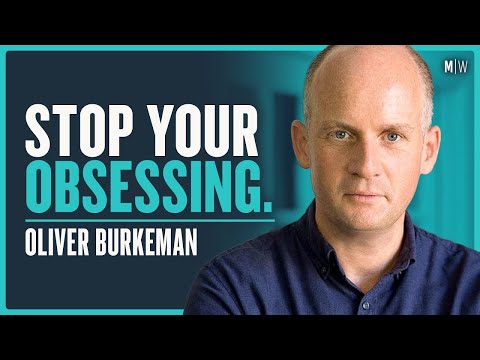
The Dark Side Of Being A Perfectionist - Oliver Burkeman
Chris Williamson (host), Oliver Burkeman (guest)
In this episode of Modern Wisdom, featuring Chris Williamson and Oliver Burkeman, The Dark Side Of Being A Perfectionist - Oliver Burkeman explores perfectionism, Control, And The Hidden Misery Of Overachievers Unpacked Chris Williamson and Oliver Burkeman explore why so many high achievers are driven by insecurity, perfectionism, and a compulsive need to prove their worth through productivity.
Perfectionism, Control, And The Hidden Misery Of Overachievers Unpacked
Chris Williamson and Oliver Burkeman explore why so many high achievers are driven by insecurity, perfectionism, and a compulsive need to prove their worth through productivity.
They link this to cultural forces (Protestant work ethic, capitalism), personal psychology (conditional love, fear of emotions), and our modern illusion of control over life and time.
Burkeman argues that chasing total control and ‘perfect’ productivity backfires, creating anxious, joyless overachievers who confuse suffering with virtue and defer happiness indefinitely.
Instead, they advocate embracing limitation, self-compassion, flexible systems, and using intrinsic desire rather than self-cruelty as fuel for meaningful work.
Key Takeaways
Stop equating suffering with legitimacy or worth.
Many high achievers feel an accomplishment ‘doesn’t count’ unless it was painful, which leads them to bypass working hard and jump straight to making themselves suffer; separating difficulty from value allows for effort without self-torture.
Get the full analysis with uListen AI
Treat your need for control as the problem, not the solution.
Modern tools trick us into believing total control is possible, so every disruption feels like an injustice; accepting that life is inherently unpredictable reduces frustration and frees you to actually do things instead of endlessly optimizing.
Get the full analysis with uListen AI
Use “little and often” and flexible structures instead of rigid time-boxing.
Burkeman’s approach (e. ...
Get the full analysis with uListen AI
Harness what you genuinely feel like doing as a valid source of fuel.
Ignoring your own excitement and interest in favor of rigid plans is wasteful; intentionally using enjoyment and curiosity to decide what to work on can increase both output and sustainability, without turning you into a slacker.
Get the full analysis with uListen AI
Challenge the internal tyrant that runs your life on ‘productivity debt.’
Many people wake each day feeling they must ‘earn’ basic peace or joy by achieving enough; noticing and questioning this mindset (and experimenting with self-compassion) loosens its grip without destroying your standards.
Get the full analysis with uListen AI
Recognize and retire ‘vestigial’ strategies that no longer serve you.
Tactics that worked at one life stage (all-nighters, grinding, doing everything yourself) often become liabilities later; periodically updating your methods, even if it feels scary, is essential for sustainable success and well-being.
Get the full analysis with uListen AI
Stop deferring happiness to a mythical future when life ‘really’ starts.
The fantasy that real life begins after you hit certain goals leads to a “provisional life” where you constantly postpone contentment; orienting around how you feel now, rather than only chasing future milestones, makes your current days count.
Get the full analysis with uListen AI
Notable Quotes
“People look to high achievers to try and find something that they have that the normal person doesn't, but they've got it the wrong way round. The people who are the high achievers are lacking something everyone else does have, which is an off button.”
— Chris Williamson (quoting his friend Alex)
“The control that we crave is a control that you don't get to have as a human being, ultimately, and that you wouldn't actually want if you achieved it.”
— Oliver Burkeman
“We presume the reason that we chase success is that hopefully when we have sufficient success, we will finally allow ourselves to be happy, but in the process of becoming successful, we make ourselves miserable.”
— Chris Williamson
“The catastrophe you fear will happen has already happened.”
— Oliver Burkeman (quoting Donald Winnicott)
“If your system for organizing your day makes it more likely that an interruption is painful, then it's not necessarily a good thing.”
— Oliver Burkeman
Questions Answered in This Episode
How do I know if my drive for achievement has tipped into ‘insecure overachievement’ that’s actually making me miserable?
Chris Williamson and Oliver Burkeman explore why so many high achievers are driven by insecurity, perfectionism, and a compulsive need to prove their worth through productivity.
Get the full analysis with uListen AI
Which of my current productivity practices are genuinely helpful, and which are just rituals that keep my anxiety at bay without moving my life forward?
They link this to cultural forces (Protestant work ethic, capitalism), personal psychology (conditional love, fear of emotions), and our modern illusion of control over life and time.
Get the full analysis with uListen AI
What fears or emotions am I trying to avoid by obsessing over control, efficiency, and planning?
Burkeman argues that chasing total control and ‘perfect’ productivity backfires, creating anxious, joyless overachievers who confuse suffering with virtue and defer happiness indefinitely.
Get the full analysis with uListen AI
If I stopped deferring happiness to a future milestone, what would I need to change about how I structure and experience my days now?
Instead, they advocate embracing limitation, self-compassion, flexible systems, and using intrinsic desire rather than self-cruelty as fuel for meaningful work.
Get the full analysis with uListen AI
Where in my life am I still using outdated strategies that once worked (e.g., grinding, doing everything myself) but now block growth, creativity, or peace?
Get the full analysis with uListen AI
Transcript Preview
Why do you think that so many of us have such an obsession with being productive?
Wow. These, these kind of causal questions I always feel like you can answer on so many levels, right? So this could be an ar- this could be answer about the Protestant work ethic, about sort of Anglo-American culture and the religious idea that to try to get on the right side of God you have to spend your life being very industrious. Could be like a capitalism, uh, that is a capitalism argument, but it could be a sort of late capitalism argument about how we feel that so intensely today. It could be psychotherapeutic, about how so many of us are raised with some kind of sense that we need to prove ourselves, that we're gonna be, that we're, that we get love from the world for, through our accomplishments instead of just being ourselves. Um, and, you know, then there's kind of more positive and less, uh, less pessimistic accounts, like, it, it, we live in times when it's possible for all sorts of reasons for, to, for relatively, you know, ordinary people to do exciting and interesting and meaningful things that, you know, in a very different era they might not have been able to. So it's, it's cool to try to figure out how to make sure that happens.
I think about all of those things all the time. The Protestant work ethic was something I was intimately familiar with, especially in my 20s. Uh, I, I even used to feel guilty if something had gone well but I hadn't suffered enough-
Right. (laughs)
... in the achievement of it.
Yeah, yeah.
Which is a particularly malignant version of what we're talking about.
Yeah, totally. That, um, that way in which it is easier, it's actually easier to ex- to have it be hard, i- in a, in a sort of upside-down way, and that for lots of us, I, I expect in this respect we are similar, me and you and plenty of people, uh, in the audience. Um, it actually feels kind of strange or, or dangerous or subversive or something to, to wonder if something could actually be quite, quite easy. Um, I read a, there was a comment to a New York Times piece that, that, well, the comment went viral, r- um, on social media, which doesn't often happen, where, um, uh, a woman was, was referring to this concept, uh, that she'd come to call, um, uh, maximum economy of ass.
Huh.
About how, um, actually it, often it's the right thing to do to half-ass things, that's where the, that's where the idea comes from, right? The idea that you should always be spending as much ass as possible in the, in the completion of a task. It just makes no sense, right? It doesn't, it's not how... it's not how it should work. There should be no shame in the idea that if something comes easily to you, it should feel easy to do, and then you save your-
Install uListen to search the full transcript and get AI-powered insights
Get Full TranscriptGet more from every podcast
AI summaries, searchable transcripts, and fact-checking. Free forever.
Add to Chrome