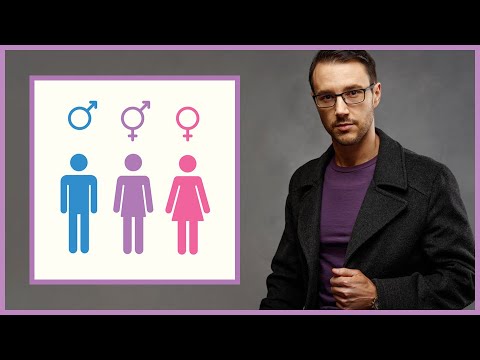
The Battle Between Gender & Biology - Colin Wright | Modern Wisdom 251
Colin Wright (guest), Chris Williamson (host)
In this episode of Modern Wisdom, featuring Colin Wright and Chris Williamson, The Battle Between Gender & Biology - Colin Wright | Modern Wisdom 251 explores colin Wright Challenges Gender Ideology, Academic Bias, And Postmodern Drift Colin Wright, an evolutionary biologist, discusses how debates over sex and gender have become distorted by ideology, semantic games, and academic groupthink. He argues that biological sex is a clear, binary reproductive category, distinct from the far more nebulous and variably defined concept of gender. Wright describes how activist-driven theories, postmodernism, and institutional pressures are warping research, constraining acceptable conclusions on topics like racism, sex differences, and policing. He worries that this cultural and epistemic drift, amplified by technology and status games, is undermining science’s ability to track reality at precisely the time civilization faces serious existential risks.
Colin Wright Challenges Gender Ideology, Academic Bias, And Postmodern Drift
Colin Wright, an evolutionary biologist, discusses how debates over sex and gender have become distorted by ideology, semantic games, and academic groupthink. He argues that biological sex is a clear, binary reproductive category, distinct from the far more nebulous and variably defined concept of gender. Wright describes how activist-driven theories, postmodernism, and institutional pressures are warping research, constraining acceptable conclusions on topics like racism, sex differences, and policing. He worries that this cultural and epistemic drift, amplified by technology and status games, is undermining science’s ability to track reality at precisely the time civilization faces serious existential risks.
Key Takeaways
Biological sex is a clear, binary reproductive category, distinct from gender.
Wright defines sex by gamete type (small sperm vs large ova) or developmental organization of gonads (testes vs ovaries), emphasizing there is no third gamete and thus no third sex; gender, by contrast, has multiple competing, often vague definitions tied to roles, identity, or stereotypes.
Get the full analysis with uListen AI
Gender and sex debates are largely driven by semantics and strategic wordplay.
He describes activists routinely swapping ‘sex’ and ‘gender’ mid-argument, redefining terms on the fly, and using emotionally loaded reinterpretations (e. ...
Get the full analysis with uListen AI
Academic research is increasingly distorted by ideological gatekeeping and social coercion.
Wright cites examples like a major policing study being retracted without data problems, diversity statements as political litmus tests, and colleagues publicly denouncing him under social pressure, arguing this produces a biased literature that reflects moral preferences over truth.
Get the full analysis with uListen AI
Postmodern and critical-theory frameworks are eroding the idea of objective knowledge.
He argues that approaches grounded in narratives, power, and assumed systemic explanations (e. ...
Get the full analysis with uListen AI
Some scientific fields are more vulnerable to ideological capture than others.
Areas like ecology, psychology, and humanities lack obvious, immediate ‘bridge collapse’ failures, making them more susceptible to unfalsified narratives, whereas engineering and hard physics still face hard external reality checks that constrain postmodern creep.
Get the full analysis with uListen AI
Status signaling and tribal identity drive much of the current culture war.
Wright interprets behaviors like pronoun-in-bio usage as in-group markers that have evolved into tools for identifying and punishing out-groups, fitting into an evolutionary-psychology understanding of coalition-building and moral grandstanding.
Get the full analysis with uListen AI
Technological advances may accelerate epistemic breakdown at a dangerous moment.
He and Williamson worry that deepfakes, VR, and global social media will further erode our ability to agree on facts just as we confront existential risks like misaligned AGI, pandemics, and advanced bioweapons, potentially acting as a ‘great filter’ on civilization’s progress.
Get the full analysis with uListen AI
Notable Quotes
“We just need to have a more sober conversation where we don't leave some explanations off the table before the conversation even begins.”
— Colin Wright
“It seems pretty cut and dry that we can just distinguish between what biological sex is and what gender identity is and know that these things are completely different things and just move on from there.”
— Colin Wright
“If we can reject something as clear-cut in most cases as biological sex is, if that can be just dismissed en masse, there's just nothing else that… what other things are we going to start just saying aren't real?”
— Colin Wright
“You can't trust the experts anymore. The environment is so salted and scorched earth that it's not a friendly environment to actually go into and try to ask a question and be okay with any outcome.”
— Colin Wright
“This could be the great filter… if the thing that kept us together below Dunbar's number is the thing that stops us from colonizing the galaxy, we didn't deserve to do it.”
— Chris Williamson
Questions Answered in This Episode
How can institutions design safeguards that separate scientific inquiry from activist or ideological pressure without ignoring genuine injustices?
Colin Wright, an evolutionary biologist, discusses how debates over sex and gender have become distorted by ideology, semantic games, and academic groupthink. ...
Get the full analysis with uListen AI
What concrete criteria should we use to define and operationalize ‘gender’ in law, medicine, and research, given its many competing definitions?
Get the full analysis with uListen AI
Which empirical tests or datasets would most decisively clarify controversial claims about sex differences, racism, and policing—and who is willing to run them?
Get the full analysis with uListen AI
How can ordinary people protect themselves from semantic manipulation and deepfake-driven misinformation in an environment of collapsing trust?
Get the full analysis with uListen AI
What practical steps could scientists and policymakers take now to keep postmodern and tribal dynamics from undermining our response to existential risks like AGI or engineered pandemics?
Get the full analysis with uListen AI
Transcript Preview
I think the things we need to talk about, it's not necessarily things we're not talking about. I just think we're talking about things in the complete opposite way we should be talking about them. Like, I think it's important to talk about things like racism in society. It's important to talk about whether or not there are environmental components to behavioral differences between sexes or- or whatever species you're talking about. But we just need to have a more sober conversation where we don't leave some explanations off the table before the conversation even begins. You can't talk about things like any sort of cultural inertia that any population might have, regardless of where it's coming from in the world. Like, we can't talk about any of those sort of factors, like any cultural factors whatsoever that could be predictive of differential group outcomes. Like, that's just off the table. You can't talk about those at all. (wind blowing)
Colin flippin' Wright in the building. How are you doing, man?
(laughs) I'm doing well. That's a good intro. (laughs)
(laughs) Yeah, when you-
I like that. It's the best intro I've had so far.
What can you say? When I'm away, I'm on holiday, I'm just in a jovial mood, you know, just ready to discuss some evolutionary biology.
I'm down. Let's do it.
I love it. So what's the most undiscussed topic in evolutionary biology which you think should be talked about more?
So right out of the gates there. Um.
Yeah, there's very limited foreplay in this show, Colin. It's kind of straight in.
Yeah. And so there's- there's these bigger overarching questions about just, like, human evolution, um, how we evolve certain complex traits behaviorally and otherwise. But I'd- I'd say, it's- it's really gonna depend who you ask on some of these issues. Some people think that we can explain all the diversity of life and all the behavior with current models of evolutionary thinking, just gradualism, you know, mutation, selection. And then you have some people, like I've- I've heard people like Bret Weinstein, for instance. He's- he thinks there's like a missing component that, you know, we need to have some sort of paradigm shift and we- we need something to explain things like peacocks' tails and, uh, why there's so much diversity in the tropics and things like that. And I'm sort of in the camp that we've- we've figured out, like, the main big trends and, like, how, at least in principle, how these things could have arisen. Uh, I'm- haven't been totally convinced that there's any massive discoveries to be made in terms of, you know, that is gonna, like, completely change the way we think about evolutionary biology. Um, I think if- from this point forward, it's gonna be more, like, tweaking bits. And I'm sure, I mean, there can be some substantial insight we might gain from areas, but, um, yeah, I think- I think it's gonna be largely applying the same principles of, you know, Darwinian natural- neutral selection to- to sort of things that we already kind of know about. Then you can also go the other route and say, well, the important things to learn about are things that we- we kind of already know but we're not really allowed to say, maybe, or, to some degree, because there's sort of a social taboo against things. And I think that's probably more threatening to evolutionary biology in the short term and maybe even long term, depending on, you know, how long sort of these cultural norms last that won't let people, you know, speak freely about certain controversial topics or something, uh, or they only, even worse, they only allow sort of one side, the- the side that is sort of, uh, aligns more with our morality or something, that they only allow that side really to get published because it just- they s- they- they'll go through review a lot faster because they- they kind of are leaning towards all the preconceptions and views that reviewers might already have or something. So then you get like a biased literature that's not really reflective of reality but it's sort of reflective of what we'd kind of like to be true in a sense. So, uh, yeah, that's sort of my overarching take on sort of evolution at the moment.
Install uListen to search the full transcript and get AI-powered insights
Get Full TranscriptGet more from every podcast
AI summaries, searchable transcripts, and fact-checking. Free forever.
Add to Chrome