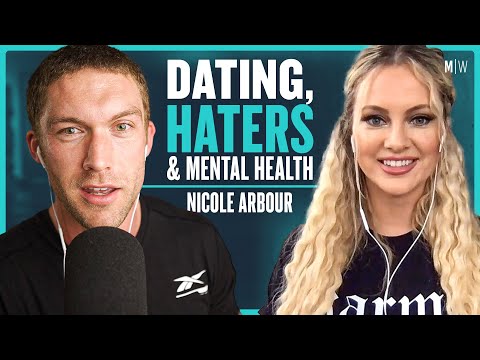
Nicole Arbour - Dating, Haters & Mental Health | Modern Wisdom Podcast 335
Nicole Arbour (guest), Chris Williamson (host)
In this episode of Modern Wisdom, featuring Nicole Arbour and Chris Williamson, Nicole Arbour - Dating, Haters & Mental Health | Modern Wisdom Podcast 335 explores nicole Arbour on Comedy, Culture Wars, Pain, Dating, and Resilience Nicole Arbour joins Chris Williamson to discuss navigating internet fame, political polarization, and personal transformation after a decade-long battle with chronic pain. She argues that conservatives should stop playing defensive “culture war” games and instead lead by creating great art, being likable, and modeling strong values. They explore victimhood culture, cancel culture, national differences in attitude (US/UK/Canada), and how online toxicity intersects with identity politics and dating norms. Arbour also details how catastrophic injuries reshaped her views on beauty, work, and criticism, turning pain and depression into a core source of resilience and purpose.
Nicole Arbour on Comedy, Culture Wars, Pain, Dating, and Resilience
Nicole Arbour joins Chris Williamson to discuss navigating internet fame, political polarization, and personal transformation after a decade-long battle with chronic pain. She argues that conservatives should stop playing defensive “culture war” games and instead lead by creating great art, being likable, and modeling strong values. They explore victimhood culture, cancel culture, national differences in attitude (US/UK/Canada), and how online toxicity intersects with identity politics and dating norms. Arbour also details how catastrophic injuries reshaped her views on beauty, work, and criticism, turning pain and depression into a core source of resilience and purpose.
Key Takeaways
Stop playing defense in culture wars; create compelling alternatives instead.
Arbour argues conservatives and libertarians waste energy reacting to left-wing excesses instead of building their own films, music, and media that are aspirational and attractive, which would naturally draw people toward their values.
Get the full analysis with uListen AI
Victimhood and identity signaling often mask a lack of substantive achievement.
Using Chris’s ‘Inner Citadel’ example, they suggest many people who can’t succeed in conventional arenas redefine the rules, demanding attention for identities or grievances rather than creating work that truly merits recognition.
Get the full analysis with uListen AI
Cancel culture thrives where grace is absent and perfection is demanded.
Arbour criticizes retroactive punishment over old tweets or mistakes, arguing for a norm where people can admit “that was gross, I’ve changed,” be corrected, and move on—especially in a world where everyone is flawed.
Get the full analysis with uListen AI
National traits have both benefits and dark sides.
British and Canadian traits like politeness, queuing, and self-deprecation help maintain order and humor but can enable cowardice, tall poppy syndrome, and over-compliance (as Arbour believes happened in Canada during COVID restrictions).
Get the full analysis with uListen AI
Mindset and environment are crucial in recovering from severe health crises.
After being given a ‘disability for life’ certificate, Arbour fired pessimistic doctors, immersed herself in positive content, used affirmations, changed her diet, tried non-surgical treatments, and slowly rebuilt her capacity, showing the compound effect of belief plus disciplined action.
Get the full analysis with uListen AI
Deep suffering can make criticism and ‘haters’ far less powerful.
Having endured extreme nerve pain, cognitive issues, and depression, Arbour frames online hate as trivial by comparison; she uses it as feedback when true, and as noise when it reflects others’ projections or competition anxiety.
Get the full analysis with uListen AI
Dating quality improves when you prioritize character over ‘hotness.’
Both guests emphasize shifting focus from superficial markers (looks, clout, lifestyle flexing) to deeper beauty—kindness, loyalty, peace, and integrity—and note how social media and hookup culture often reward the opposite, especially in people’s 20s.
Get the full analysis with uListen AI
Notable Quotes
“The greater the risk that you're taking in your content, in your life, in who you declare yourself to be publicly, the more hate there will be. Period.”
— Nicole Arbour
“Imagine we stopped giving attention to their stupidity and just started making awesome shit.”
— Nicole Arbour
“It's a lot harder to create amazing art and things of value than it is to say, 'Why aren't you giving me attention for who I put my dick in?'”
— Nicole Arbour
“We lie constantly, and then we get mad at the results of our own lies.”
— Nicole Arbour
“For every 100 that they've got, they've got something that compensates for it. There's no one that you know that's got all of their attributes maxed out at 100.”
— Chris Williamson
Questions Answered in This Episode
Is Nicole Arbour’s proposed ‘offense over defense’ strategy realistic for conservatives in a media ecosystem dominated by legacy institutions and platforms that often lean progressive?
Nicole Arbour joins Chris Williamson to discuss navigating internet fame, political polarization, and personal transformation after a decade-long battle with chronic pain. ...
Get the full analysis with uListen AI
Where is the line between calling out genuine injustice and engaging in the kind of performative victimhood or ‘Inner Citadel’ behavior they criticize?
Get the full analysis with uListen AI
How can individuals distinguish between legitimate moral growth (changing standards over time) and destructive forms of cancel culture that weaponize past behavior?
Get the full analysis with uListen AI
To what extent can mindset, positivity, and firing pessimistic doctors influence recovery from serious injury or chronic illness, given biological and socioeconomic constraints?
Get the full analysis with uListen AI
How might someone practically transition from prioritizing ‘hotness’ to valuing ‘beauty’ in their dating life, especially when social media and peer groups reward superficial traits?
Get the full analysis with uListen AI
Transcript Preview
There's gonna be haters. It's gonna happen. It's not possible for it not to happen. And the greater the risk that you're taking in your content, in your life, in who you declare yourself to be publicly, the more hate there will be, period.
Is this the easiest time in the world to find inspiration for comedy 'cause all that you have to do is just read headlines?
Yes, 100%. 100%. I'm, I'm so overwhelmed with how much material there is, I'm almost, like, frozen on the spot. It's like my fight or flight is, like, for comedy right now, there's so much. (laughs)
It's weird, right, because you guys haven't been able to do much live stuff, and everyone that's been doing things on the internet, it's kinda made sense 'cause it's all internet stories and then internet commentary.
Yep. Uh, I think it's great because I started doing the online stuff five, probably six years ago and all my standup friends were making fun of me. They were like, "Mm, that's not real comedy. That's not..." And then they were all forced to do it during the pandemic, and now they get it, and they get how fun it is, and they get that we can reach a bigger audience. So, I was there first. (laughs)
And now you have endless content.
Yeah.
Yeah, it's mental. It really is. Well, I guess, 'cause in the UK, we see some of the stuff that trickles through from America, right?
Mm-hmm.
And I don't know, it's, it must feel like every single day, there's far too much for you to even comment on.
There is. That's why I have to stop and focus myself, and go, "Okay, wait, what projects am I actually working on?" 'Cause I can go on Twitter and be there all day, and just make fun of these headlines or make TikToks or make whatever it is. So I have to, I have to focus myself.
Here's something-
It's a, it's a smorgasbord right now of comedy content.
Yeah. Well, the world is. Something that I realized a couple of weeks ago, 'cause I listen to a good bit of The Daily Wire and I'm mates with some of the producers there, which I know you're in Nashville, right? That's the hometown-
Oh. Yeah, yeah, yeah.
... now for them.
Yeah, yeah.
And, um, it hasn't felt like they've had to come up with anything to talk about for about a year.
Mm-hmm. Yeah.
Like, they're just constantly being 'Cause people don't like being called reactionaries.
Yeah.
But when there's more stuff to react to than there is stuff for you to talk about from your side, d'you, d'you understand, it really feels like the left is kind of throwing everything they have at the world, and then the right is just playing defense at the moment.
Install uListen to search the full transcript and get AI-powered insights
Get Full TranscriptGet more from every podcast
AI summaries, searchable transcripts, and fact-checking. Free forever.
Add to Chrome