By playing, you agree to uListen's Terms and Privacy Policy and YouTube's Terms of Service.
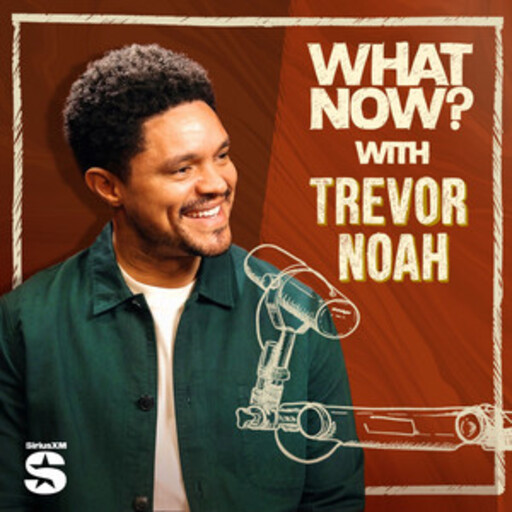 What Now? With Trevor Noah
Have We Missed The Message? with Ta-Nehisi Coates | What Now? with Trevor Noah Podcast
 Summaries, chapters, transcripts, and FAQs on this page are made by uListen, not YouTube.
Great conversations run long. Their best ideas don't have to.
uListen is free on iPhone, iPad, Android, Chrome, and Claude.
See howAt a glance
WHAT IT’S REALLY ABOUT
Ta-Nehisi Coates on The Message: Context, Complicity, Kinship, and Storytelling
- Coates says his deepest worry about the attention around his book is becoming the designated spokesperson, rather than clearing space for people who can speak with more authority than he can.
- Discussing the contentious CBS interview, Coates argues that removing context from Israel-Palestine is essential to those who want to avoid asking why, and he holds that horror at October 7th and attention to Palestinian oppression can coexist.
- Coates explains that the Israel chapter is not really about Palestinians; it asks Americans to see themselves in Zionism and in US complicity, and he compares the nationalist impulse he grew up around to one that became a state.
- Coates describes his first trip to Senegal as unresolved, as he wrestles with a kinship he can feel but not name, and Christiana adds perspective on colorism, bleaching, and tribal versus racial identity.
- The conversation closes on the writer's duty to go and see for oneself, with Noah using South African apartheid and a Ryan Coogler story to show how information and perspective shape reality.
IDEAS WORTH REMEMBERING
5 ideasCoates fears becoming "the guy" more than he fears blowback
He says he anticipated the backlash, but worries about speaking for others and not making space for people who truly know. He is thinking about structural, non-public ways to advance that aim.
Removing context is how people avoid asking why
Coates says that if you start asking why, you get into trouble. He argues that the violence of the oppressed is always the stated reason, and that this reasoning never justifies segregation or apartheid.
Moral horror and historical understanding can coexist
Coates says human life is at the core of his politics, so he feels horror at October 7th and says it should have mattered on October 6th too. Using Nat Turner and an imagined Gazan upbringing, he says he does not know whether he would draw the line at the same point.
The Israel chapter turns the lens on America and on ourselves
Coates says the point is that this is "our horrible thing," citing US weapons supplied to Israel, and that it only works if you can see yourself in Zionism. He recognized both colonial discourse and a yearning that echoed Malcolm X.
Dehumanization works through numbers and euphemism
Noah argues that turning people into statistics, "collateral damage," or a group label lets us avoid questioning our own humanity. Coates adds that torture becomes "enhanced interrogation."
WORDS WORTH SAVING
5 quotesI am rarely the smartest person in any room. I'm not the funniest. I'm not the best looking. I'm not the most, most athletic.
— Ta-Nehisi Coates
I have an African name that nobody in Africa has, right?
— Ta-Nehisi Coates
if human life matters on October 7th, it should've mattered on October 6th and October 5th, too.
— Ta-Nehisi Coates
They think if they lived in the time of slavery that they would not have been enslavers. And I always tell them, "You would've."
— Ta-Nehisi Coates
Either you think there are good reasons for segregation, apartheid, Jim Crow, or you don't. You know what I mean? And in my mind, there is never any reason.
— Ta-Nehisi Coates
Ask ChatGPT about this episode
Get its key ideas, plus a summary of each chapter linked to that point in the video, right in your chat.
Add uListen AI to ChatGPT.
Install uListen AI in ChatGPT (opens in a new tab)Needs a ChatGPT account.Paste this prompt into a new chat.
Use uListen AI to give me this episode's key ideas and a chapter-by-chapter summary, with timestamps: https://www.youtube.com/watch?v=IPbD9PZ5FP4
SPEAKERS
Trevor Noah
hostComedian and TV host, creator/host of the podcast "What Now? with Trevor Noah."
Ta-Nehisi Coates
guestWriter and journalist known for books and essays on Black history, politics, and culture.
Christiana
hostCo-host/producer on "What Now? with Trevor Noah" and longtime collaborator from Trevor Noah’s early Daily Show era.
High quality AI-generated summary created from speaker-labeled transcript.


