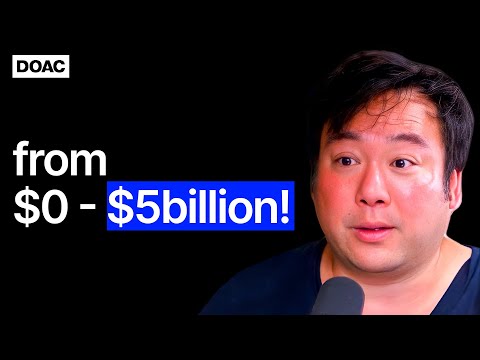
Deliveroo Founder: From £0 to £5 Billion: Will Shu | E88
Will Shu (guest), Steven Bartlett (host)
In this episode of The Diary of a CEO, featuring Will Shu and Steven Bartlett, Deliveroo Founder: From £0 to £5 Billion: Will Shu | E88 explores humble Hedge-Fund Analyst Builds Deliveroo Into Global Food Powerhouse Will Shu, the unassuming founder of Deliveroo, recounts how a personal frustration with London’s takeaway options led him to build one of Europe’s fastest-growing tech companies.
Humble Hedge-Fund Analyst Builds Deliveroo Into Global Food Powerhouse
Will Shu, the unassuming founder of Deliveroo, recounts how a personal frustration with London’s takeaway options led him to build one of Europe’s fastest-growing tech companies.
He explains the realities behind the romanticized startup story: years of doing deliveries himself, operating with no money, losing a $600m funding round days before closing, and enduring a 16‑month antitrust process while facing COVID‑era layoffs.
Shu’s narrative stresses obsession with solving a real problem, timing with mobile technology, disciplined frugality, and deep respect for riders shaped by his own experience on the road.
He also reflects on the emotional cost of founding—anxiety, loneliness, strained relationships—and his struggle to separate his own identity and life ambitions from the company’s trajectory.
Key Takeaways
Build to solve a problem you personally feel, not to “be an entrepreneur.”
Shu never set out to “start a company”; he was a hungry banker in Canary Wharf shocked that late-working professionals were eating Tesco microwave meals in a world‑class food city. ...
Get the full analysis with uListen AI
Timing and enabling technology can make or break a business model.
He tried to start Deliveroo in 2008 but abandoned it because it would have required bespoke hardware in restaurants and for riders. ...
Get the full analysis with uListen AI
Scarcity of capital can force better decisions and true first-principles thinking.
In the early days Shu was self‑funding, hiring via Gumtree, and working out of an illegal, windowless £1,000/month office. ...
Get the full analysis with uListen AI
Founder resilience often hinges on not hedging and being all-in.
Shu refused to run multiple side projects or treat Deliveroo as a part‑time experiment. ...
Get the full analysis with uListen AI
Major external shocks require brutal decisions and emotional stamina.
Deliveroo lost a roughly £600–700m round from the world’s largest fund just days before close, forcing Shu to blitz 25 investor meetings to re‑raise elsewhere. ...
Get the full analysis with uListen AI
Firsthand experience at every layer of the business sharpens judgment and culture.
Shu spent a year as a rider in the early days and still does deliveries, including five the night before the interview. ...
Get the full analysis with uListen AI
The future of online food is emotional, not just transactional.
Shu argues food is perishable and deeply emotional, unlike buying toilet paper on Amazon. ...
Get the full analysis with uListen AI
Notable Quotes
“I’m not obsessed with the idea of building a business. I’m obsessed with the business I’m building.”
— Will Shu
“We’re about to get all this money in the company, and then suddenly it was just gone… It was like 600 million, something like that.”
— Will Shu
“We were running low on money… COVID kicks off… our users were disappearing because there were no restaurants left on the platform. I had to do the hardest thing I ever had to do. I had to lay off a significant number of people.”
— Will Shu
“I definitely know what it was like to walk in their shoes, because I did that job for a long time.”
— Will Shu
“It is a hard, hard job, and anyone that tells you otherwise is either having an exceptional experience or they’re not being honest.”
— Will Shu
Questions Answered in This Episode
You’ve said you’re not obsessed with ‘being an entrepreneur’ but with solving a food problem. If Deliveroo disappeared tomorrow, what specific problem outside of food, if any, do you feel equally obsessed with solving?
Will Shu, the unassuming founder of Deliveroo, recounts how a personal frustration with London’s takeaway options led him to build one of Europe’s fastest-growing tech companies.
Get the full analysis with uListen AI
Looking back at the Amazon/CMA saga, is there anything you would now do differently in how you engaged regulators or structured the deal to avoid 16–18 months of capital being frozen?
He explains the realities behind the romanticized startup story: years of doing deliveries himself, operating with no money, losing a $600m funding round days before closing, and enduring a 16‑month antitrust process while facing COVID‑era layoffs.
Get the full analysis with uListen AI
You still insist Deliveroo’s model is best for riders, yet you also see firsthand the precarity and disrespect they can face. What concrete changes—pay floors, benefits, representation—would you personally implement if regulation and competition were no constraint?
Shu’s narrative stresses obsession with solving a real problem, timing with mobile technology, disciplined frugality, and deep respect for riders shaped by his own experience on the road.
Get the full analysis with uListen AI
You and Steven both admitted to being ‘five out of ten’ friends and struggling with relationships because of obsession with work. If you were advising a first‑time founder today, what specific boundaries or routines would you tell them to put in place from day one to avoid your mistakes?
He also reflects on the emotional cost of founding—anxiety, loneliness, strained relationships—and his struggle to separate his own identity and life ambitions from the company’s trajectory.
Get the full analysis with uListen AI
You talked about wanting Deliveroo to evolve from a transactional utility into an emotional food experience. What’s the most controversial product or content feature you’ve seriously considered to move in that direction, and why hasn’t it shipped yet?
Get the full analysis with uListen AI
Transcript Preview
I just knew this city needed something better than the classic takeaways. That's how I got the idea for Deliveroo. (instrumental music plays) I definitely know what it was like to walk in their shoes, because I did that job for a long time. I did, you know, five deliveries last night. And that's why, you know, treating riders with respect and making sure their voices are heard is so important to me. We're running low on money, 'cause we couldn't get money in for, whatever, 14 months. COVID kicks off. Our users were, were disappearing because there were no restaurants left on the platform. So we see this plummeting growth. I had to do the hardest thing I ever had to do. (dramatic music plays) I had to lay off, you know, a significant number of people at the company. I'm so proud of what we've built and I'm so excited about the future, but it is a hard, hard job. And anyone that tells you otherwise are not being honest. We're about to get all this money in the company, and then suddenly it was just gone. Right?
Like, in a-
Big number. 600 million? Something like that. (fingers snap) And I was like, "Holy shit." You know? "What do we do?" (dramatic music plays)
(instrumental music plays) Deliveroo, one of the fastest-growing technology companies in Europe. You probably know the company. You've probably used it. But you probably don't know where it came from. You probably don't know the founder and his story, his unconventional, very, very humble journey. Deliveroo went from an idea that one guy had in London while working in the city to becoming a multi-billion dollar company in record time. But the crazy thing about my conversation today with Will is, he is not your typical founder. He's not your typical CEO. Doesn't feel like your typical entrepreneur. This was really his first business. And the really puzzling thing about my conversation with Will is, he doesn't fit the typical stereotype of what you expect an entrepreneur to be. And I think that is amazing, because it just goes to show that entrepreneurs don't all share the same fundamental characteristics. They're not all these big, braggadocious characters with huge egos. And you can achieve great success with great humility. Will is an anomaly, and I think you'll feel that today. He's incredibly humble. He isn't that introspective, doesn't analyze himself that much, and he feels like a very simple, straightforward character. But what he's achieved wasn't simple. It was excruciatingly difficult. And as he'll tell you today, it still is. Without further ado, I'm Steven Bartlett, and this is The Diary of a CEO. I hope nobody's listening, but if you are, then please keep this to yourself. (instrumental music plays) Will, I am... Sometimes when I have guests on this podcast I don't really know where to start. But with you it's slightly different. Um, as I was reading about your story, and I've... You know, as I said to you before we started recording, I've been... I think actually in 2015 I was Deliv- Deliveroo's biggest customer. So I'd like you to confirm that and re- reward me accordingly. But I think I was. Um, and I've watched the journey over the years and been absolutely blown away by it because of the disruption you caused to such a big incumbent industry. However, when I read into your story, I kept seeing this phrase that you'd say, and it really boggled my mind because it's so atypical of the guests I have on this podcast, and it's that every time you're asked about your childhood or whatever else, you'd always respond with, "I'm just a normal guy." And when I think about what you've achieved, you, you built what is now, you know, at least it was at one point, Europe's fastest-growing company. You couldn't possibly be just a normal guy.
Install uListen to search the full transcript and get AI-powered insights
Get Full TranscriptGet more from every podcast
AI summaries, searchable transcripts, and fact-checking. Free forever.
Add to Chrome