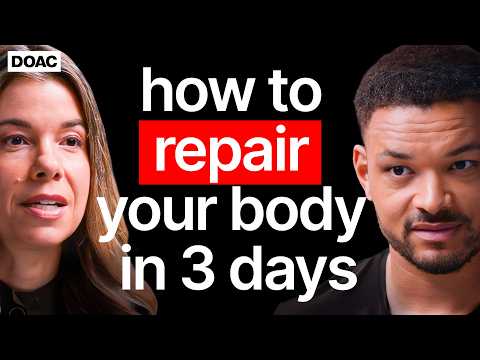
Anti-Aging Expert: Stop Touching Receipts Immediately! The Fast Way To Shrink Visceral Fat!
Steven Bartlett (host)
In this episode of The Diary of a CEO, featuring Steven Bartlett, Anti-Aging Expert: Stop Touching Receipts Immediately! The Fast Way To Shrink Visceral Fat! explores visceral fat, fasting, toxins, and supplements for peak performance longevity Visceral fat is metabolically active, drives inflammation and insulin resistance, and is linked to higher early mortality and worse cancer and metabolic outcomes even in people who look lean.
Visceral fat, fasting, toxins, and supplements for peak performance longevity
Visceral fat is metabolically active, drives inflammation and insulin resistance, and is linked to higher early mortality and worse cancer and metabolic outcomes even in people who look lean.
Sleep loss, caloric excess from ultra-processed foods, stress, and alcohol can rapidly increase visceral fat and impair metabolic health without changing body weight.
Intermittent fasting primarily helps visceral fat loss by reducing calorie intake and enabling a “metabolic switch” into fat-burning/ketosis, while also supporting cellular repair processes during fasting windows.
Common daily exposures (receipts, food packaging, nonstick cookware, black plastic, blender lids, and some water systems) can increase endocrine-disrupting chemical exposure, potentially affecting hormones and health.
Patrick outlines a practical supplement hierarchy (omega-3, vitamin D, multivitamin, creatine, magnesium) and discusses newer candidates (curcumin, urolithin A) plus the situational use and caveats of exogenous ketones and GLP-1 drugs.
Key Takeaways
Visceral fat is a high-risk fat depot that can be hidden.
It surrounds organs, secretes inflammatory cytokines, and can be high even in thin people; waist circumference and DEXA scans are suggested proxies/measurements.
Get the full analysis with uListen AI
Visceral fat and insulin resistance reinforce each other in a vicious cycle.
Visceral fat keeps releasing free fatty acids and worsens insulin signaling, leading to glucose dysregulation, cravings, fatigue, brain fog, and eventually higher type 2 diabetes risk.
Get the full analysis with uListen AI
Poor sleep can increase visceral fat fast—even without weight gain.
Patrick cites a study where healthy young men sleeping ~4 hours/night for two weeks gained ~11% visceral fat with minimal change on the scale, highlighting body composition shifts.
Get the full analysis with uListen AI
Ultra-processed caloric excess can impair liver and brain metabolism within days.
In a short-term overeating study (~1200–1500 extra calories/day), participants showed visceral fat gain, fatty liver signals, and brain insulin resistance after ~5 days.
Get the full analysis with uListen AI
Aerobic exercise is emphasized as the strongest lever for visceral fat reduction.
Resistance training helps metabolic health and glucose handling, but Patrick stresses vigorous aerobic work (running/cycling/swimming) as more directly effective for reducing visceral fat.
Get the full analysis with uListen AI
Intermittent fasting works mainly by making calorie deficit easier, plus ketosis/repair benefits.
She frames fasting as a tool to reduce intake without counting calories and to extend the fasted window long enough to deplete liver glycogen (~10–12 hours) and enter fat-burning/ketosis.
Get the full analysis with uListen AI
Fasted training can enhance endurance adaptations, but duration and fueling matter—especially for women.
Shorter aerobic sessions may benefit from fasted states, but high volume plus inadequate refueling can disrupt reproductive hormones and lead to amenorrhea in susceptible athletes.
Get the full analysis with uListen AI
Everyday “endocrine disruptors” may contribute to hormone declines, not just lifestyle factors.
BPA/BPS, phthalates, and PFAS are discussed as hormone- and thyroid-disrupting exposures from receipts, packaging, nonstick pans, and other products; mitigation focuses on reducing habitual exposure.
Get the full analysis with uListen AI
Kitchen choices materially change exposure: heat, acidity, and friction are key multipliers.
Hot/acidic foods in plastic, black plastic (often from recycled electronics), nonstick pans, and plastic blender lids can increase leaching/shedding; glass/stainless steel and nitrile gloves for receipts are recommended.
Get the full analysis with uListen AI
Vigorous exercise appears disproportionately protective versus “steps” goals.
Citing accelerometer-based data, she argues 1 minute vigorous can equal multiple minutes moderate/light for reducing mortality risks, and advocates shifting messaging from 10,000 steps to ~10 minutes/day of heart-rate-raising activity.
Get the full analysis with uListen AI
A simple, evidence-weighted supplement stack starts with omega-3 and deficiency prevention.
Her top picks prioritize omega-3 fish oil, vitamin D (avoid deficiency), a quality multivitamin (notably avoiding iron for most men), creatine for muscle/brain, and magnesium given common shortfalls.
Get the full analysis with uListen AI
GLP-1 drugs can be life-changing for obesity, but rebound and lean-mass loss are real concerns.
She notes likely long-term use for many due to weight regain and intense returning hunger; she flags nausea/GI issues, gallstones, possible muscle/bone loss without protein and resistance training, and signals like kidney cancer needing study.
Get the full analysis with uListen AI
Exogenous ketones can boost cognition but may temporarily reduce fat burning.
They raise circulating BHB (helping focus/calm for some) but can suppress lipolysis during the active window, so she advises caution if fasting primarily for fat loss.
Get the full analysis with uListen AI
“Peakspan” reframes longevity as maintaining near-peak function, not just avoiding disease.
Patrick defines peakspan as staying within ~90% of peak capacity (e. ...
Get the full analysis with uListen AI
Notable Quotes
““This visceral fat… is going to double your risk of early mortality. Full stop.””
— Dr. Rhonda Patrick
““Healthy young men… only sleeping four hours a night for two weeks… gained eleven percent visceral fat… but not a pound on the scale.””
— Dr. Rhonda Patrick
““It’s not a good idea to eat a big meal fewer than three hours before bed.””
— Dr. Rhonda Patrick
““Receipts are… covered with BPA… If you work in this industry, really, really please wear nitrile gloves.””
— Dr. Rhonda Patrick
““I think we need to ditch 10,000 steps a day and say 10 minutes a day… getting your heart rate up.””
— Dr. Rhonda Patrick
Questions Answered in This Episode
Visceral fat: what specific DEXA thresholds or clinical cutoffs do you use to define “too high,” and how do those compare to waist circumference guidelines?
Visceral fat is metabolically active, drives inflammation and insulin resistance, and is linked to higher early mortality and worse cancer and metabolic outcomes even in people who look lean.
Get the full analysis with uListen AI
You mention visceral fat doubles early mortality—what is the study design behind that claim (observational vs interventional), and what confounders were controlled?
Sleep loss, caloric excess from ultra-processed foods, stress, and alcohol can rapidly increase visceral fat and impair metabolic health without changing body weight.
Get the full analysis with uListen AI
In the sleep-restriction study (4 hours/night for 2 weeks), did visceral fat rise because of increased intake, cortisol changes, reduced activity, or all three—and what’s the best real-world countermeasure?
Intermittent fasting primarily helps visceral fat loss by reducing calorie intake and enabling a “metabolic switch” into fat-burning/ketosis, while also supporting cellular repair processes during fasting windows.
Get the full analysis with uListen AI
On intermittent fasting, how do you decide between 14:10, 16:8, and longer fasts for different goals (visceral fat loss vs performance vs longevity)?
Common daily exposures (receipts, food packaging, nonstick cookware, black plastic, blender lids, and some water systems) can increase endocrine-disrupting chemical exposure, potentially affecting hormones and health.
Get the full analysis with uListen AI
For women in perimenopause, what are the most effective combinations of fasting, protein targets, and resistance training to prevent belly-fat gain without harming hormones?
Patrick outlines a practical supplement hierarchy (omega-3, vitamin D, multivitamin, creatine, magnesium) and discusses newer candidates (curcumin, urolithin A) plus the situational use and caveats of exogenous ketones and GLP-1 drugs.
Get the full analysis with uListen AI
Transcript Preview
We are being bombarded with disrupting chemicals. A lot of them, they're in our products.
Okay, let's go to my kitchen. Come with me. So this is my fridge.
So the first thing I notice is this, 'cause that's, like, the worst.
Can I get a bin bag? [packaging rustling]
This is made from recycled electronics.
What about this?
This is a problem also.
And this?
Ding, ding, ding. This is great.
I'm gonna do utensils next.
Heating it up, the plastic is getting into your food.
What about a receipt?
That's bad. It's covered with BPA, and a study in adolescent boys showed that it was associated with a fifty percent reduction in testosterone. And then this is one that people often miss.
Oh, [beep] .
The biomedical scientist and anti-aging doctor Rhonda Patrick is back. This time she's talking about health optimization, maintaining peak performance- And the environmental toxins disrupting your body.
Dr. Rhonda Patrick, let's talk about something that I've never heard of before, peakspan. What the hell is peakspan?
So it's essentially being within ninety percent of your peak function. For example, muscle mass, bone density, that kind of peaks around twenty-five years old, and then they kind of steadily start to decline.
You're joking.
And the same goes for cognitive function.
So I'm on the way down.
Yeah. And I'm definitely on the way down, but we can do things in our life to help maintain that peakspan. Like if you exercise five hours a week, do some high intensity interval training in there, and you can reverse heart aging by twenty years. And then sleep, very, very important for preventing your immune system from aging rapidly. And then another thing that you can do that's really important for brain aging is... And this is associated with a rapid decrease in Alzheimer's disease risk. But what I really wanna talk about is intermittent fasting, Ozempic, supplements, and being sedentary.
So don't wanna talk about all of that, but we've gotta talk about this in my hands at the moment.
So if you have this, it's going to double your risk of early mortality.
Double your risk?
Yes. Double. Double.
Okay. So talk me through this. I want as much detail as possible. This is super interesting to me. My team give me this report to show me how many of you that watch this show subscribe, and some of you have told us, according to this, that you are unsubscribed from the channel randomly. So favor to ask all of you, please could you check right now if you've hit the subscribe button, if you are a regular viewer of the show and you like what we do here. We're approaching quite a significant landmark on this show in terms of a subscriber number. So if there was one simple free thing that you could do to help us, my team, everyone here, to keep this show free, to keep it improving year over year and week over week, it is just to hit that subscribe button and to double-check if you've hit it. Only thing I'll ever ask of you. Do we have a deal? If you do it, I'll tell you what I'll do. I'll make sure every single week, every single month, we fight harder and harder and harder and harder to bring you the guests and conversations that you wanna hear. I've stayed true to that promise since the very beginning of The Diary of CEO, and I will not let you down. Please help us. Really appreciate it. Let's get on with the show. [upbeat music] Dr. Rhonda Patrick, I am fascinated by so many of the things that you talked about, and they're front of mind for me at the moment because I'm a thirty-three-year-old man, and I know from doing this podcast and looking at graphs like this one, which we'll talk about today, which I don't think most people have ever seen in their lives, that this is the age where things might start changing direction from here on over the next decade. And there's things I can do to set myself up now, if I listen to your advice, for the remaining decades of my life to be remarkably different. I'm playing with this in my hands at the moment. It's, for anyone that can't see, you should probably look at the screen right now. It's a yellow blob of squidgy, slightly disgusting material. What is this, and why does this matter?
Install uListen to search the full transcript and get AI-powered insights
Get Full TranscriptGet more from every podcast
AI summaries, searchable transcripts, and fact-checking. Free forever.
Add to Chrome