Cognitive Decline Expert: The Disease That Starts in Your 30s but Kills You in Your 70s
Steven Bartlett (host), Louisa Nicola (guest), Louisa Nicola (guest)
In this episode of The Diary of a CEO, featuring Steven Bartlett and Louisa Nicola, Cognitive Decline Expert: The Disease That Starts in Your 30s but Kills You in Your 70s explores neuroscientist argues Alzheimer’s largely preventable through exercise, sleep, hormones, supplements Nicola claims ~95% of Alzheimer’s cases are preventable because most risk is driven by modifiable lifestyle factors rather than deterministic genetics, with midlife (30s–60s) as the key intervention window.
Neuroscientist argues Alzheimer’s largely preventable through exercise, sleep, hormones, supplements
Nicola claims ~95% of Alzheimer’s cases are preventable because most risk is driven by modifiable lifestyle factors rather than deterministic genetics, with midlife (30s–60s) as the key intervention window.
She frames “cognitive reserve” as the brain’s stress-buffering capacity, built through exercise (especially heavy resistance training), learning/novelty, and attention-demanding activities—while warning that short-form scrolling trains distraction via dopamine-driven habits.
A major theme is the brain–heart–metabolism connection: VO2 max and blood pressure management support brain perfusion, protect capillaries and the blood–brain barrier, and reduce dementia risk; she highlights high-intensity intervals (Norwegian 4x4) and strength work as high-ROI.
For women, she emphasizes perimenopause/menopause as an ‘energy crisis’ in the brain tied to declining estrogen, discussing ketogenic diets and the nuanced, still-evolving evidence around hormone replacement therapy (HRT) for dementia risk reduction.
Key Takeaways
Alzheimer’s prevention is largely a midlife lifestyle project.
Nicola argues the disease process begins decades before symptoms (often starting in the 30s), so habits in midlife—exercise, sleep, cardiovascular control, and diet—meaningfully shape late-life cognitive outcomes.
Get the full analysis with uListen AI
Cognitive reserve determines how well the brain tolerates pathology.
She describes people with high reserve who can function despite amyloid burden, versus those with low reserve who show impairment earlier; reserve is built through repeated, effortful mental and physical challenges.
Get the full analysis with uListen AI
Heavy resistance training is portrayed as the highest-ROI brain exercise.
She cites trials (e. ...
Get the full analysis with uListen AI
Strong legs are a proxy for healthier brains.
Using an identical-twins study example, she highlights that the twin with greater leg power had larger gray-matter volume and better cognitive outcomes, underscoring lower-body strength as a key target.
Get the full analysis with uListen AI
VO2 max and high-intensity intervals support longevity and brain perfusion.
She calls VO2 max a leading predictor of all-cause mortality and recommends Norwegian 4x4 intervals (4 min hard at ~90–95% HRmax, 4 min easy, repeated 4 times) as a potent way to raise it.
Get the full analysis with uListen AI
Sedentary time can undermine health even if you exercise—so “exercise snacks” matter.
She recommends frequent movement breaks (e. ...
Get the full analysis with uListen AI
Sleep is positioned as a core Alzheimer’s defense mechanism.
She links deep sleep to glymphatic “washout” of amyloid and claims even one night of sleep deprivation measurably increases amyloid-beta burden, advocating intentional “training for sleep” (cooling, light control, routines).
Get the full analysis with uListen AI
Women face unique Alzheimer’s risks tied to perimenopause/menopause energetics.
She claims a ~30% reduction in brain glucose metabolism with estrogen decline and suggests ketogenic strategies may help during this energy gap; she presents HRT as potentially helpful but not conclusively proven to prevent dementia.
Get the full analysis with uListen AI
Blood pressure control protects brain capillaries and the blood–brain barrier.
She explains how hypertension damages one-cell-thick capillaries, contributing to BBB breakdown (“leaky brain”) and cognitive decline; she promotes home BP monitoring and lifestyle stress reduction, noting drug evidence like SPRINT for intensive control.
Get the full analysis with uListen AI
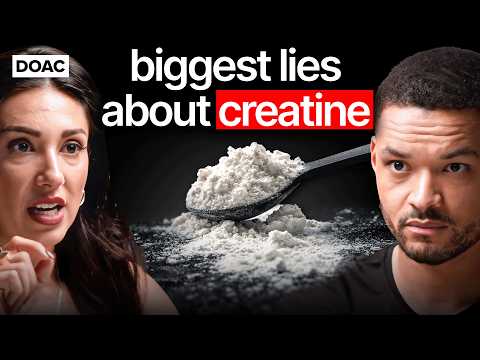
Creatine is presented as a broadly beneficial brain-energy supplement—especially at higher doses.
She highlights emerging studies using ~15–20g/day (and up to ~30g/day in certain contexts) for cognitive/energy support and resilience to stressors like sleep loss and concussion, while advising better kidney assessment via cystatin C rather than creatinine alone.
Get the full analysis with uListen AI
Notable Quotes
““Ninety-five percent of them could have been prevented… it’s a disease of lifestyle.””
— Louisa Nicola
““This disease… generally starts in our 30s. It starts in our 30s, but the first symptoms show up in our late 60s, 70s, and beyond.””
— Louisa Nicola
““Exercise is one of the most potent stimulus for brain health… The more you exercise, the bigger your brain.””
— Louisa Nicola
““Sleep is… the most underrated Alzheimer’s disease prevention tool that we have.””
— Louisa Nicola
““Doing hard things is what is going to improve brain function over the lifespan.””
— Louisa Nicola
Questions Answered in This Episode
You say “95% of cases are preventable.” Which specific epidemiology or meta-analyses support that number, and how much of it is attributable to changing behavior vs changing environment (pollution, food systems, etc.)?
Nicola claims ~95% of Alzheimer’s cases are preventable because most risk is driven by modifiable lifestyle factors rather than deterministic genetics, with midlife (30s–60s) as the key intervention window.
Get the full analysis with uListen AI
You recommend ~80% 1RM lifting for “neural effects.” What’s the minimum effective dose (sets/week, major lifts, progression) for someone older or injury-prone who can’t safely train that heavy?
She frames “cognitive reserve” as the brain’s stress-buffering capacity, built through exercise (especially heavy resistance training), learning/novelty, and attention-demanding activities—while warning that short-form scrolling trains distraction via dopamine-driven habits.
Get the full analysis with uListen AI
On Zone 2 vs Zone 5 for women: what outcomes are you using to define “return on investment” (VO2 max gains, glucose control, cognition measures, mood), and what’s the evidence base for sex differences?
A major theme is the brain–heart–metabolism connection: VO2 max and blood pressure management support brain perfusion, protect capillaries and the blood–brain barrier, and reduce dementia risk; she highlights high-intensity intervals (Norwegian 4x4) and strength work as high-ROI.
Get the full analysis with uListen AI
The hourly “10 air squats” claim is striking—what study was that, what population was studied, and does it generalize to people with mobility limits? What are alternative ‘exercise snacks’ that achieve similar metabolic effects?
For women, she emphasizes perimenopause/menopause as an ‘energy crisis’ in the brain tied to declining estrogen, discussing ketogenic diets and the nuanced, still-evolving evidence around hormone replacement therapy (HRT) for dementia risk reduction.
Get the full analysis with uListen AI
For perimenopausal women, how do you decide between ketogenic diet, moderate-carb, or other dietary strategies—especially given adherence issues and potential lipid changes?
Get the full analysis with uListen AI
Transcript Preview
We have this white powder in front of me. You've got a big smile on your face.
I do, because I don't care who you are, you should definitely be having this. [ding] So let's talk about creatine. Phenomenal research shows you can creatine your way out of sleep deprivation. It can protect your brain against a concussion, stroke, from stress, and there was a study done on Alzheimer's disease patients, and they found that patients not only preserved their cognitive functions, but they had more energy, and they were able to exercise more. And I know this because I'm a clinician, and over the last decade I've been surrounded by the greatest neurosurgeons in the world studying the brain. And so I'm here to tackle one disease, and that is Alzheimer's, because it generally starts in our 30s, and sixty million people worldwide have Alzheimer's, seventy percent being women. And I get angry, and I get passionate because women have been lied to, they've been underrepresented, they downplay their symptoms, or they're too scared to ask their doctor for advice. And what people don't really know is that it is a preventable disease, but it's like end-stage cancer. Once you get the diagnosis, there is no cure, and the fact that so many people are at the mercy of a disease that is preventable is not okay with me, and I don't think people understand these things. Like, people don't really know that we're becoming more sedentary, which is a disease. And there was a study that was done on this that showed that if you do ten air squats every hour, this can compensate for your sedentary lifestyle. And then we have several lifestyle factors that can lower your risk of getting Alzheimer's disease, as well as showing you what five minutes a day can do for your brain performance, just using a tennis ball and an eye patch.
[drumbeat] Guys, I've got a quick favor to ask you. We're approaching a significant subscriber milestone on this show, and roughly sixty-nine percent of you that listen and love this show haven't yet subscribed for whatever reason. If there was ever a time for you to do us a favor, if we've ever done anything for you, given you value in any way, it is simply hitting that Subscribe button. And it means so much to myself, but also to my team, 'cause when we hit these milestones, we go away as a team and celebrate. And it's the thing, the simple, free, easy thing you can do to help make this show a little bit better every single week. So that's a favor I would ask you, and, um, if you do hit the Subscribe button, I won't let you down, and we'll continue to find small ways to make this whole production better. Thank you so much for being part of this journey. It means the world, and, uh, yeah, let's do this. [upbeat music] Louisa, what is it you do, in simple terms? And I guess most importantly, why is it that you do it, and why now?
Install uListen to search the full transcript and get AI-powered insights
Get Full TranscriptGet more from every podcast
AI summaries, searchable transcripts, and fact-checking. Free forever.
Add to Chrome